

On this page
It happens when the acceptance letters finally arrive. Your teenager got into a great programme, but it is a long train ride away. You wonder if they are ready to live on their own, manage their time, and handle a sudden illness without you nearby.
It is tempting to think that sending a teenager to a distant city automatically makes them independent. It certainly forces them to solve daily problems—from budgeting their allowance to doing laundry and buying groceries. But it also removes their immediate support network just when the academic pressure of university spikes.
Does distance equal independence?
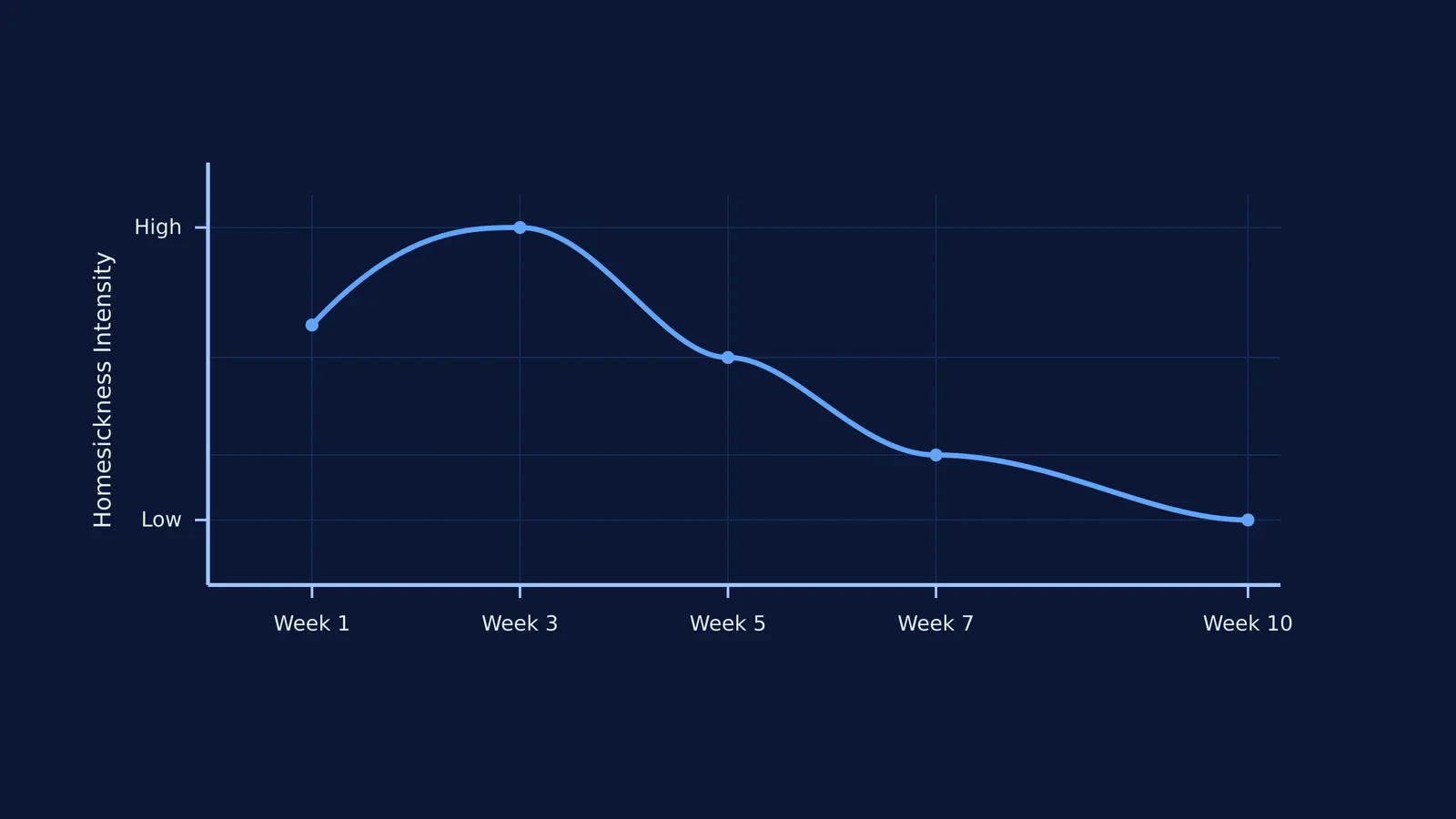
Moving away is a critical period for developing autonomy, but the psychological toll is real. A 2017 study published in the journal *Emotion* tracked first-year university students and found that 94% reported experiencing homesickness during their first ten weeks of term (English et al., 2017). The feeling is practically universal, peaking early in the term before slowly receding.
Intense homesickness is more than just missing family; it is a serious risk to their education. Research published in the *Journal of American College Health* found that students experiencing intense homesickness are three times more likely to drop out of university than their peers (Thurber & Walton, 2012). Distance removes the safety net, which forces independence but also increases the stakes if they stumble. When they struggle, the absence of a familiar home environment can turn a small academic setback into a major crisis.
Should a child go to college far from home?
When making the decision, weigh these practical factors rather than just looking at the prestige of the college brand:
Academic fit: Is the specific course significantly better than local options? A slightly higher overall ranking does not always justify a massive move if the local syllabus and faculty are just as strong.
Financial cost: Look beyond the tuition. Out-of-state travel, hostel fees, rental deposits, and flights home for holidays add a substantial hidden cost to the degree.
Safety and health: Does the distant campus have robust medical facilities and a strong support system for first-year students? If they get sick, who will they call first?
Academic momentum: Will they be able to keep up with the workload while managing a household for the first time?
If they struggle to plan their time in a new environment, they might need structured help to stay on track. A student can bring a topic or a problem set to Fermi's AI tutor, and it works out what they already know and builds a plan for the session. This gives them a clear path forward when they sit down to study alone, even when you are not there to guide them.
Is it better to go to college close to home?
For many students, staying closer to home provides a smoother transition to higher education. It allows them to focus entirely on their challenging coursework without the immediate shock of cooking, cleaning, and navigating an unfamiliar city. If you are debating this path, you face many of the same questions as families Moving cities for coaching or staying home: questions to weigh.
To test their readiness for a distant college, try a month-long independence trial at home. Can they wake up on time without your reminders? Do they manage their own study schedule and meet deadlines without you asking? Have they handled a bureaucratic task, like filling out a bank form or tracking an online application, completely independently? If the answers are mostly no, a local college might be a safer stepping stone for their bachelor's degree, leaving the distant move for a postgraduate course.
How to deal with homesickness at college?
If you do decide that the distant college is the right choice, you have to shift your role from a daily manager to an advisor. The advice in How parents can help children learn without adding pressure applies just as much when they are far away.
Set a communication schedule: Agree on a weekly video call rather than constant text messages. Continuous texting can actually make homesickness worse by keeping their mind tethered to home instead of engaging with their new environment.
Encourage campus connections: Push them to join at least one club, society, or study group early on. Social integration is the strongest buffer against feeling isolated, and finding peers with similar interests helps them build a new home base.
Plan the first visit: Knowing exactly when they will see you next—whether it is Diwali, a long weekend, or the semester break—makes the distance feel temporary and manageable.


