

On this page
Around age 8, children transition from "learning to read" to "reading to learn". It is an exciting time, but it is also a fragile one. The Scholastic Kids & Family Reading Report shows a sharp "decline by nine", where the frequency of children reading for fun drops as they reach age nine.
However, the same report found a powerful motivator. According to the Scholastic Kids & Family Reading Report, 89% of children say their favourite books are the ones they picked out themselves. The secret to keeping an 8-year-old reading is finding books that match their interests and their reading level. Autonomy is critical, but children still need gentle guidance to find stories they can actually finish. Here is how to do that.
How do you test a book's reading level?
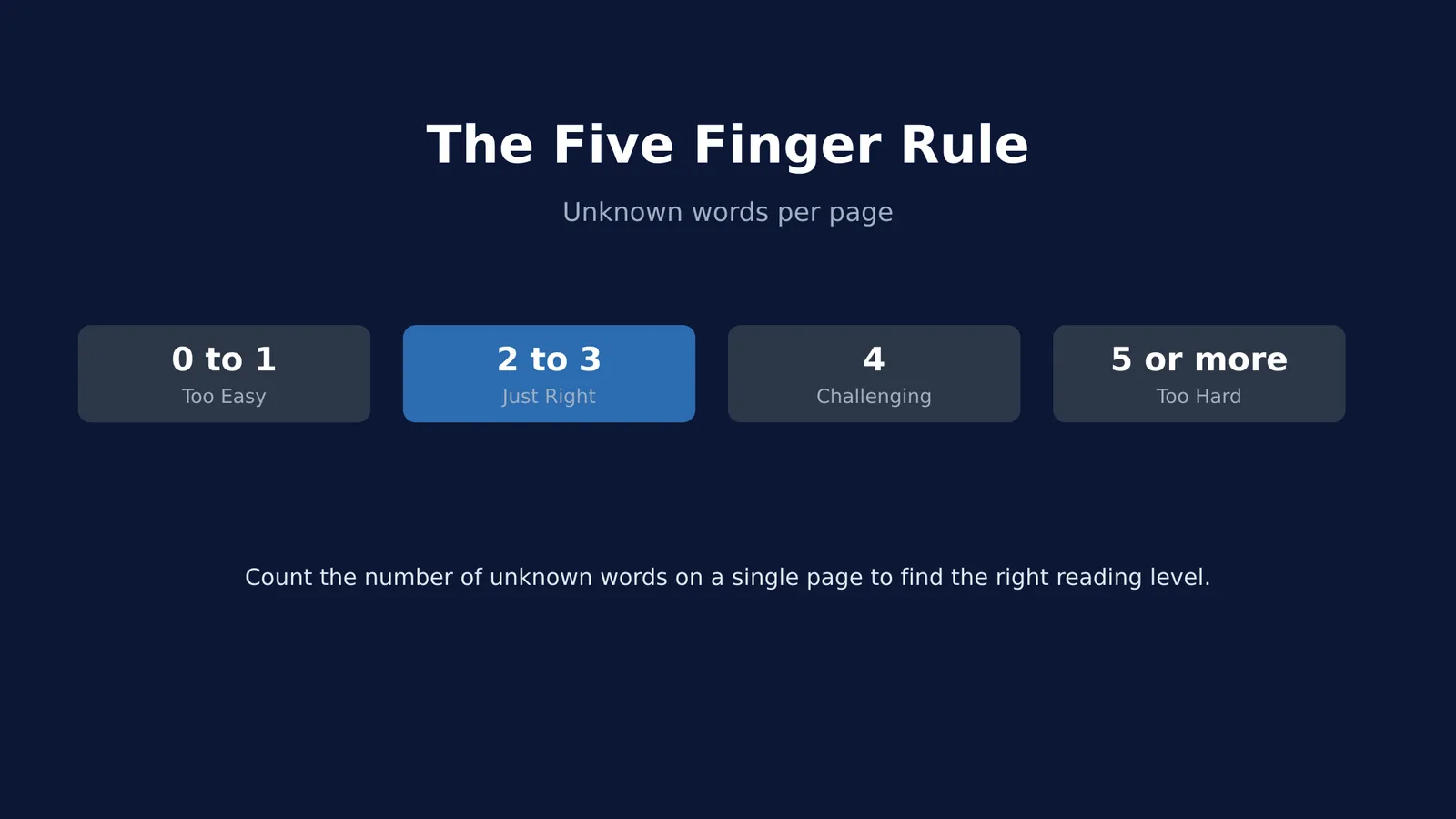
Finding the right difficulty level stops children from getting frustrated before they even finish the first chapter. The Five Finger Rule is a quick method to test if a book is at the right reading level by counting unknown words on one page.
Have your child pick up a book they want to read, open it to a random page in the middle, and read it aloud. For every word they do not know or cannot pronounce, they hold up one finger.
0 to 1 fingers: The book is too easy. It is great for building reading speed and fluency, but it will not challenge them to learn new words. It is perfect for a relaxed weekend read.
2 to 3 fingers: This is a good choice. The text is challenging enough to grow their vocabulary, but not so hard that they lose the plot. This is the level you want for daily independent reading.
4 fingers: The book is quite challenging. It is better saved for shared reading with an adult, where you can take turns reading pages and explain new words.
5 or more fingers: The book is too hard for now. Put it back on the shelf and try again in a few months.
Why do series books build reading stamina?
If your child struggles to read for more than a few minutes at a time, book series are often the answer. Reading a series reduces a child's cognitive load, which is the mental effort required to process new information.
When a child reads a standalone book, they have to learn the setting, the characters, and the author's tone from scratch. In a series, that heavy lifting is already done in the first book. By book two, they already know the protagonist's quirks and the rules of the world. This allows them to read faster, focus on the plot, and build the reading stamina needed to finish longer chapter books.
To get the most out of a series, have the second book ready as soon as they finish the first. The momentum of wanting to know what happens next is often enough to keep them turning pages.
What about graphic novels and comics?
Parents sometimes worry that graphic novels do not count as "real reading". In fact, they are an excellent tool for 8-year-olds. Graphic novels offer visual scaffolding—the pictures provide context clues that help children guess the meaning of unfamiliar words. Because there is less text on each page, children turn pages faster. This gives them the psychological win of finishing a thick book quickly, which builds tremendous confidence.
What if they prefer non-fiction?
Not every 8-year-old wants to read fantasy stories or graphic novels. Many are fascinated by dinosaurs, space, or machines. Non-fiction books are an excellent way to keep these children engaged, but the vocabulary can be steep because technical words often fail the five-finger test. Let them choose topics they already love, and do not worry if the books seem too easy or too hard.
If your child is exploring non-fiction and gets stuck on a hard science or maths idea, Fermi's AI tutor can help. It works out what they already know and teaches through the concept, drawing figures and running simulations to explain the idea rather than just printing an answer.
Encouraging them to pick their own books, whether facts or fiction, is the best way to keep them reading for pleasure well beyond age eight. Setting up a dedicated family study hour where everyone reads together can also cement the habit.


