

On this page
Every year, lakhs of students move to coaching hubs like Kota with the dream of cracking the Joint Entrance Examination (JEE) or the National Eligibility cum Entrance Test (NEET). For parents, the decision to send a child away involves balancing the promise of an intense academic environment against the financial burden and the loss of family support.
Before making the choice between a coaching hub and preparing in your hometown, it helps to look at the data on costs, success rates and student wellbeing.
What is the real cost of studying in a coaching hub?
The financial commitment of sending a child to Kota goes far beyond the tuition fees. The total annual cost for a student in Kota typically ranges from ₹2.5 lakh to ₹4.5 lakh, depending on the institute and lifestyle.
While coaching fees for JEE or NEET typically run between ₹1 lakh and ₹1.5 lakh annually, the cost of living often exceeds the tuition. Hostel fees with food can cost anywhere from ₹1 lakh to over ₹2 lakh per year. In addition, many students enroll in "dummy schools" (non-attending schools) which add another ₹30,000 to ₹50,000 to the annual budget. When deciding, compare this to the cost of local coaching or online platforms where living expenses remain unchanged.
Academic success rates: Do the numbers add up?
There is no denying that Kota produces top rankers, but the raw numbers tell a story of extreme competition. According to an analysis by IIT Kanpur for the JEE Advanced 2025 exam, every fourth student (25%) who secured admission to an IIT prepared in Kota. Furthermore, the Delhi zone (which includes Rajasthan) had the highest conversion rate, successfully placing 36.78% of its qualified students into IITs.
However, it is crucial to distinguish between the sheer volume of successful students and the overall success rate. Because hundreds of thousands of students migrate to these hubs, the statistical chance of an average student securing a top-tier government medical seat or an IIT admission remains incredibly slim. For the vast majority, the academic outcome may not be significantly different from preparing diligently at home.
What happens to mental health and supervision away from home?
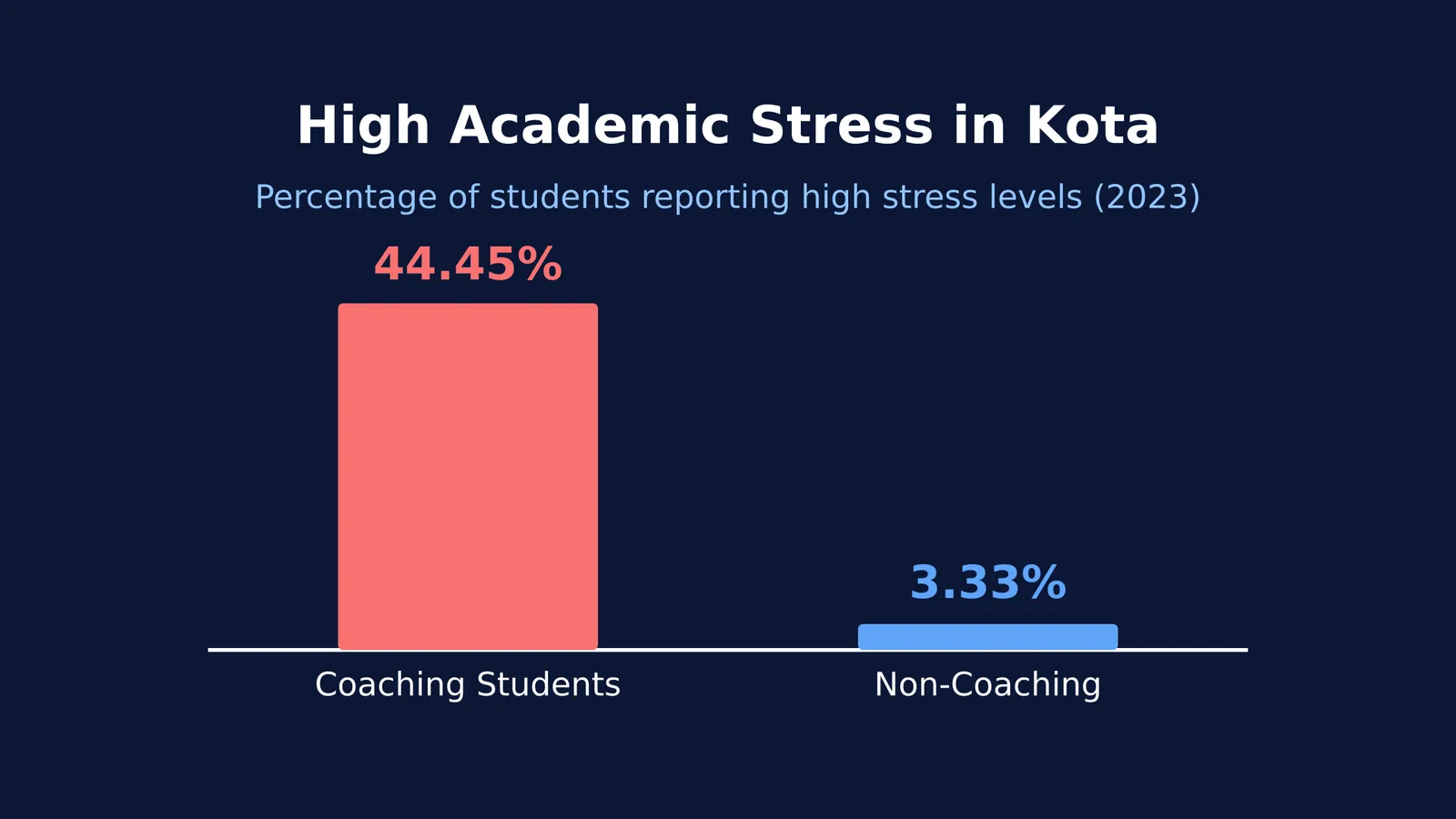
The most significant trade-off when moving to a coaching hub is the sudden loss of family support during a highly stressful period. A 2023 comparative study published in the *Industrial Psychiatry Journal* found that 44.45% of coaching students in Kota suffered from high levels of academic stress, compared to just 3.33% of non-coaching students.
The study also noted that students living away from home often resort to avoidance coping strategies rather than active problem-solving. Without parents to monitor daily habits, students are more susceptible to sleep deprivation—with research indicating that students lacking sufficient sleep are at a significantly higher risk for severe psychological distress. At home, parents can watch for signs of burnout, ensure proper nutrition, and help maintain motivation through two years of JEE preparation.
Staying in the hometown: Online coaching and AI support
Staying at home no longer means missing out on top-tier education. With the rise of high-quality online courses and intelligent learning tools, a student can access expert teaching from their own desk. Preparing at home allows students to maintain a healthy sleep schedule, eat home-cooked food, and lean on their family during low phases.
Technology has also bridged the gap in personalised doubt resolution, which was traditionally the main advantage of offline hubs. For instance, Fermi's AI tutor works out what a student already knows and builds a plan for the session, noticing where they are stuck and deciding whether to explain, ask, or show. This allows a student to receive one-to-one guidance and work through hard concepts without the pressure or isolation of a crowded coaching batch.
A checklist for parents before deciding
If you are struggling to make the choice, sit down with your child and evaluate these four areas:
Self-discipline: Can your child stick to a rigorous study schedule without constant supervision? If they struggle with procrastination, being alone in a hostel may worsen the habit.
Stress response: How does your child handle failure or poor marks in unit tests? A coaching hub magnifies academic pressure, making emotional resilience essential.
Financial comfort: Will spending up to ₹4.5 lakh a year cause significant strain on the family? Financial guilt is a common stressor for students living away.
Current academic pace: Is your child already struggling with the school syllabus? Consider How Much NEET Syllabus Should Be Done in Class 11? before throwing them into an accelerated coaching program.
Ultimately, the right environment is the one where your child feels both challenged academically and supported emotionally.


