

On this page
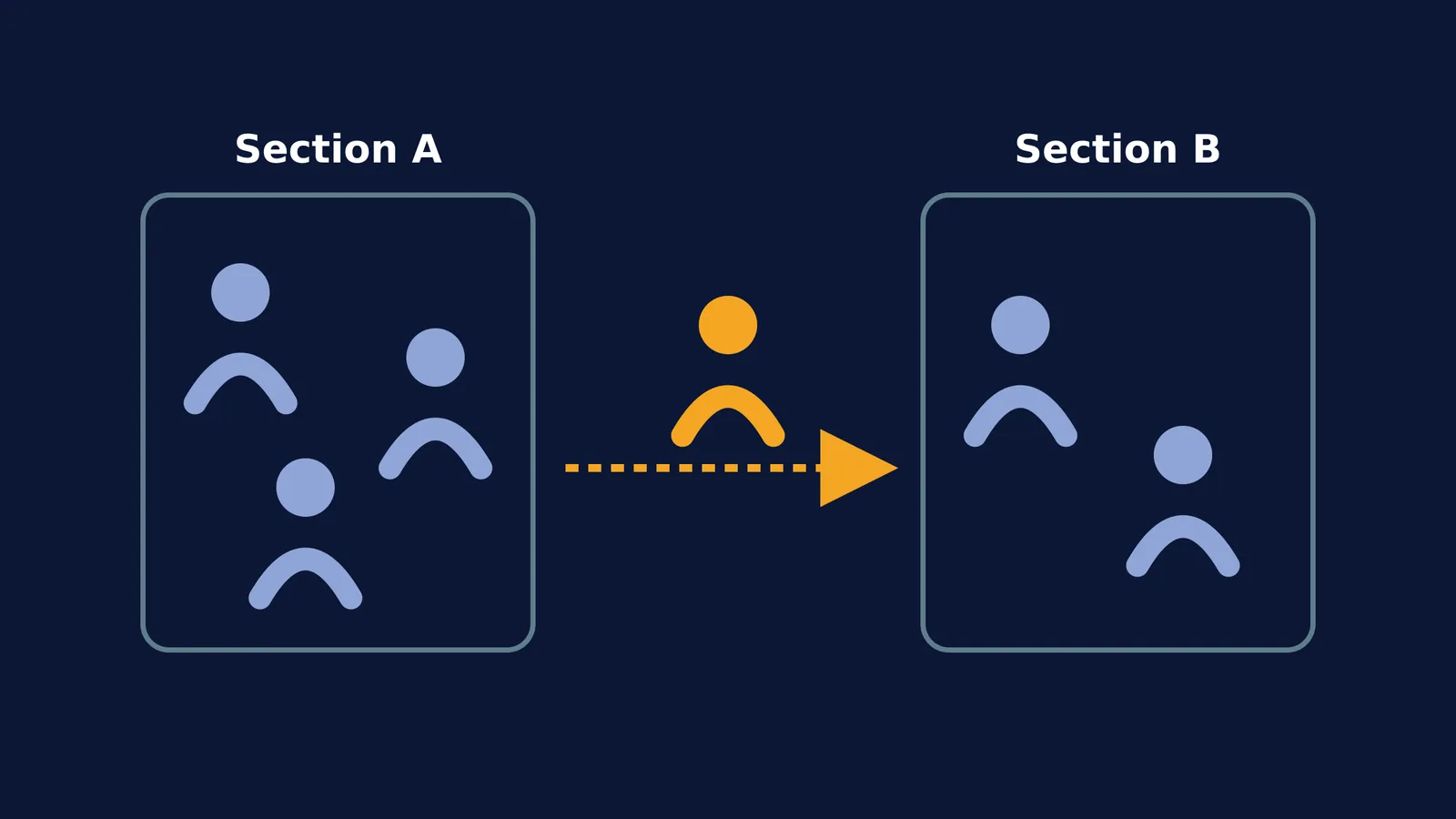
Why do students ask for a section change?
Children rarely ask to move just for a change of scenery. Usually, the request comes down to two things: social environment and teacher fit.
First, friendships and peer relationships drive motivation. Students who feel isolated or targeted by bullying in their current section often disengage from their studies. A 2022 study from Florida Atlantic University showed that classroom seating and assignments directly shape social networks; students are much more likely to form friendships with the students seated near them. Peer relationships influence how students approach their assignments through several psychological mechanisms. Positive peer relations are strong predictors of classroom engagement. When students work with peers they respect, it builds accountability and a sense of belonging, which is a baseline for academic success.
Second, the student might be struggling with a particular teacher's instructional style. Research on person-environment fit shows that the quality of the student-teacher relationship is a primary driver of success, explaining up to 34% of the variance in academic achievement scores. If a student feels anxious or misunderstood, their engagement drops. A good "fit" keeps students psychologically engaged and willing to put effort into their assignments.
If a section change isn't possible and the student is struggling with a subject, they can bring their topics to Fermi's AI tutor. It works out what they already know, builds a plan for the session, and teaches through it, helping them stay on track even if the classroom pace doesn't suit them.
Can a student change sections in CBSE?
The Central Board of Secondary Education (CBSE) does not have a specific rule that allows or denies individual student transfers between sections. The decision is entirely a school-level policy, managed by the principal.
However, schools must work within strict capacity limits. Under Rule 4.8 of the CBSE Affiliation Bye-Laws, the optimum number of students is 40 per section. A school cannot simply move a child if the target section is already full. In exceptional cases, such as parent transfers, schools are allowed up to 45 students, but principals are reluctant to breach the 40-student mark for a routine section change. Administrative balancing of student numbers across sections is a priority for the school.
Schools also consider the balance of elective subjects. In higher classes (Class 9 and above), sections are often divided by streams or elective subjects. A change in a subject combination is one of the few administrative reasons a school will readily accept for a section change. However, if the request is purely social, the principal must weigh your child's needs against the disruption it might cause to the rest of the class.
How do you request a section change from the principal?
Because principals must balance numbers and manage teacher workloads, they do not approve changes without a compelling reason. If you decide a change is necessary, you will need to present a strong case. To request a section change, follow these steps:
Submit a formal written application: Write a clear letter to the principal. State the student's name, current class, and section.
Provide a concrete reason: Avoid vague complaints about a teacher. If the issue is medical (like needing to sit in a specific section due to accessibility) or psychological, state it clearly. If it is about academic streams or subject combinations in higher classes, mention the exact subjects that necessitate the move.
Attach supporting documents: If the request is based on medical grounds or severe anxiety, include a doctor's or counsellor's note. Evidence strengthens your request significantly.
Time it right: Request the change at the very beginning of the academic year. Once the school submits the List of Candidates (LOC) to the board for Classes 9 to 12, changing sections or subjects becomes an administrative hurdle and is often denied.
Here is a short framework for your application letter:
Opening: State the request clearly (e.g., "I am writing to request a section change for my child, [Name], from Class X Section A to Section B").
Reason: Explain the core issue objectively (e.g., "This request is due to a specific subject combination requirement" or "We are managing a documented medical issue that requires a different environment").
Evidence: Refer to any attached documents.
Closing: Express willingness to meet and discuss the matter further in person.
It is also important to manage your child's expectations. Prepare them for the possibility that the school might say no. Discuss alternative strategies for dealing with their current environment, such as how to communicate better with their current teacher or how to find study groups outside of school hours.
When your child says they want to move, you might also notice a drop in motivation. For more on handling academic slumps, read about when your child loses interest in studies: what to try first. If the root cause is subject anxiety, understanding how to support them when your child says 'I'm bad at maths' can sometimes resolve the issue without needing to change classrooms at all.


