On this page
Children are naturally observant, and they want to fit in. When they see classmates having grand celebrations at trampoline parks or banquet halls, they assume that is the standard. It is completely natural to want to give them the same joyful experience, but trying to match every extravagant invitation can quickly become a financial strain for your family.
Instead of simply saying no and closing the subject, you can use this moment to teach them how to plan, prioritise, and understand the value of money.
Why does my child want a big birthday party like friends?
Peer influence plays a significant role in what children ask for, especially during their school years. A birthday party is a highly visible social event, and children often measure its success by what they see their peers doing. They want to reciprocate the invitations they have received and share a similar experience with their own social circle.
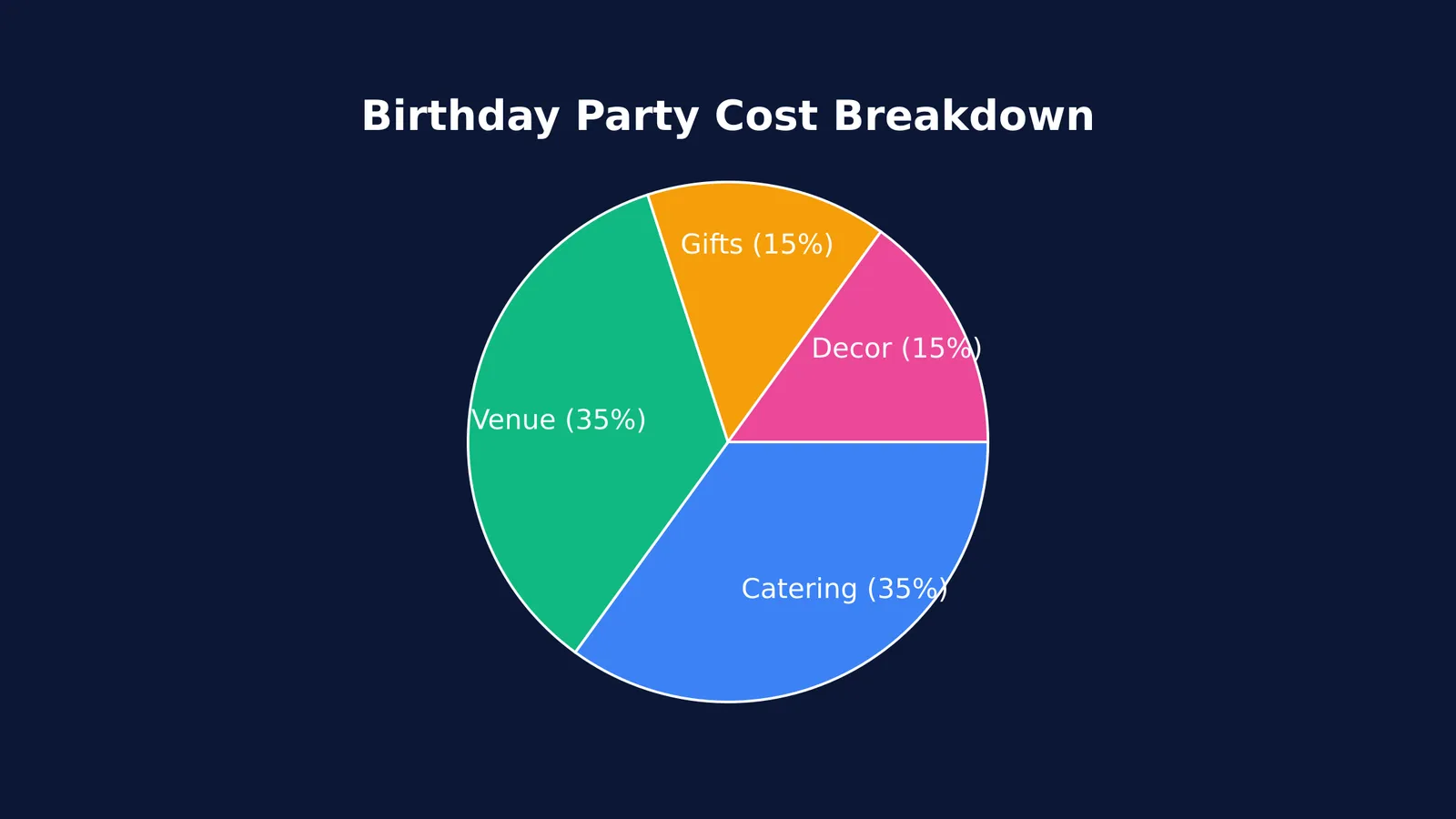
In urban India, event planners and family blogs estimate that a standard mid-range birthday celebration for 25 to 40 guests can easily cost between ₹15,000 and ₹50,000, factoring in catering, a venue, and return gifts (Charmbox). In metropolitan areas, costs can climb even higher. When your child attends these events, they see only the final, polished result. They do not see the budget spreadsheets, the deposits, or the compromises made behind the scenes. They want a big party simply because it looks fun, and they want their friends to have a good time.
How to talk to your child about the party budget?
Discussing money with children does not have to be a tense or secretive conversation. In fact, it is a crucial part of their education and development. The OECD's Programme for International Student Assessment (PISA) 2022 Results (Volume IV) on financial literacy found that parents are a primary driver of a child's financial habits. According to the OECD report, 76% of 15-year-old students discuss their own spending decisions with their parents at least once a month. The data clearly shows that these students score 12 points higher in financial literacy assessments than those who do not have these conversations at home.
If they need help breaking down a tough mathematics problem for school, the Fermi Problem Library explains the reasoning step by step rather than just giving the answer. You can apply the same step-by-step thinking to party planning: sit down together, list out all the potential costs—from the cake and the decorations to the return gifts—and add it all up.
When they see the total, they begin to understand trade-offs. If they want a more expensive cake, they might have to invite fewer friends or choose a free venue like a local park.
What is a good script for setting the budget?
If you are unsure how to start the conversation, try using a simple framework:
Acknowledge their feelings: "I know your friend had an amazing party at the play zone, and it looked like a lot of fun."
State the reality calmly: "Every family has a different budget for celebrations. This year, we have ₹X to spend on your party."
Offer control: "You get to help decide how we use this money. Do you want to spend more on food, or would you rather spend it on an activity?"
Are there creative, low-cost party ideas?
You can plan a fantastic celebration without a massive budget. By involving your child in the planning and letting them make the choices, they take ownership of the event and focus on the activities rather than the financial cost.
Host a park picnic: Bring a football, a frisbee, and some homemade sandwiches. The open space is completely free, and the children have plenty of room to run and play together.
Movie night at home: Put blankets and pillows on the floor, make a large batch of popcorn, and rent a new release. This keeps the guest list small and the costs very low, while still feeling like a special event.
DIY craft party: Buy blank canvases, cheap clay pots, or plain t-shirts, and let the children paint them. The creative activity becomes the main entertainment, and their finished creation serves as the return gift.
Baking party: Let the children decorate their own cupcakes or make mini pizzas with a variety of toppings. It is a bit messy, but it is highly engaging and takes care of the catering at the same time.
How can we make the party feel special without overspending?
Ultimately, you should focus on the experience and the memories being made. Children remember the games they played, the jokes they shared, and how much they laughed, not how much the balloon arch cost.
Setting aside dedicated time for a family study hour or a shared weekend activity builds much stronger bonds than an expensive outing. You can also try an AI tutor with your child to explore fun new topics, or use that dedicated time to plan the party together. Give them autonomy to make the final decisions within the budget you agreed upon. They will feel proud of the event they helped create, and they will learn a valuable lesson about money and responsibility along the way.