

On this page
When your child enters Class 6, the academic gears shift. The syllabus broadens, abstract concepts appear in science and mathematics, and the pressure to maintain grades can lead many families straight to the nearest coaching centre.
This instinct is common. The Annual Status of Education Report (ASER) 2024 reveals that 31.3% of children aged 6 to 14 in rural India take paid private tuition, rising from 30.5% in 2022 (ASER Centre). But before adding another scheduled class to an 11-year-old's day, it helps to look at how their brain is changing and what kind of learning actually works.
What changes in a Class 6 brain?
Around age 11 or 12, children transition into what developmental psychologist Jean Piaget termed the formal operational stage. For the first time, they begin to reason abstractly, form hypotheses, and think about their own thinking.
In primary school, learning was mostly concrete and guided heavily by the teacher. In middle school, a child is biologically ready to tackle problems that have no physical referent, like algebraic variables. This is the exact window when they need to start building independent study habits. Handing them over to a tutor who simply explains the concepts aloud bypasses this critical development phase, keeping them in a dependent mode of learning.
If you want to support this transition smoothly, read our guide on how parents can help children learn without adding pressure.
Is coaching needed in Class 6?
If a child is struggling significantly with foundational reading or arithmetic, targeted remedial help is useful. However, if the goal is to "stay ahead" or manage the standard syllabus, traditional passive tutoring often does more harm than good.
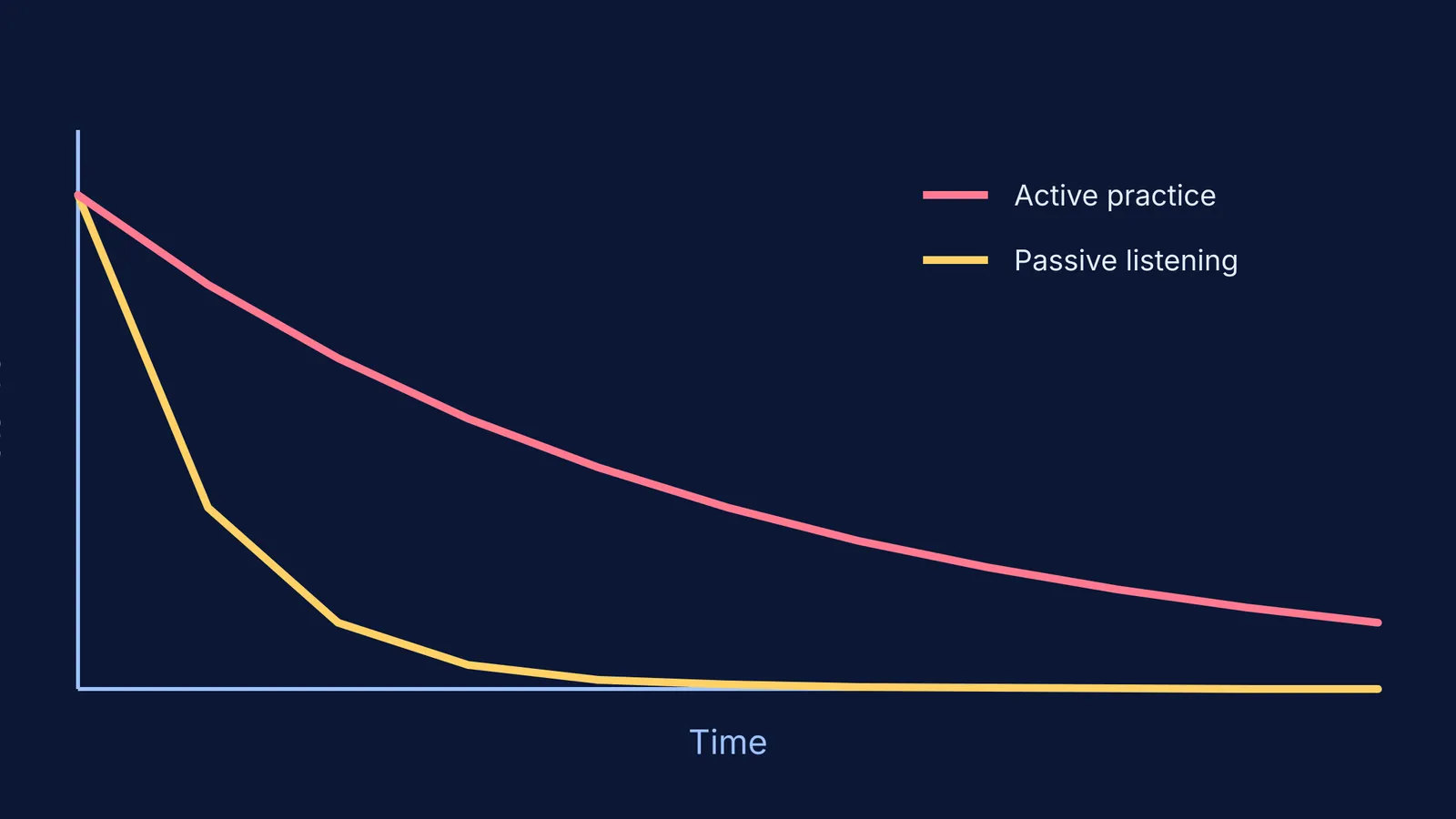
When a tutor acts as a "sage on the stage," simply repeating school lectures or dictating notes, the student experiences an illusion of knowledge. They feel they understand it because the tutor made it sound simple, but they lack the neural pathways to retrieve that information during an exam.
A landmark 2014 meta-analysis published in the Proceedings of the National Academy of Sciences found that students in passive learning environments are 1.55 times more likely to fail than those in active learning scenarios (Freeman et al., 2014). Active learning—where the student is forced to recall facts, explain concepts, and wrestle with problems—produces deep conceptual understanding that lasts.
How does Fermi's AI tutor build independence?
Active learning requires a guide who asks rather than tells. When a student brings a problem set or scanned assignment, Fermi's AI tutor works out what they already know and builds a plan for the session. It teaches through it, writing on a board or drawing the figure, and checking understanding as it goes.
Because it holds a line of reasoning across a whole session, it notices where a student is stuck and decides whether to explain, ask, or show. If they have a gap in foundational knowledge, the Concept Library offers every concept in physics, chemistry, biology, mathematics and computing, each with its own lesson and its place in the map. This approach treats the student as an active participant, a major difference when you compare can AI tutors teach better than chatbots that give answers?
What is the teach-back method?
Instead of relying on a tuition centre to enforce study hours, you can foster active learning at home using the "teach-back" framework. It costs nothing and directly builds on their new metacognitive skills.
When your child finishes studying a topic or gets stuck on homework, resist the urge to explain it or look up the answer. Instead, ask them:
"Teach it to me." Ask them to explain the concept (e.g., photosynthesis or prime numbers) as if you have never heard of it.
"Where exactly did it stop making sense?" If they are stuck on a math problem, have them trace their steps backward until they find the exact line where they felt confused.
"What happens if we change one thing?" Encourage hypothetico-deductive reasoning by asking "What if?" questions. For example, "What if the plant had no sunlight for a week?"
By Class 6, the goal is no longer just getting the right answer; it is learning how to learn. Giving them the space and tools to struggle productively will serve them far better than an extra hour of passive listening.


