

On this page
When your child comes home and says they are being teased, your reaction sets the tone for how they will handle it. Finding out that your child is being targeted can be heartbreaking, but knowing exactly what steps to take helps stop the situation from escalating.
According to a 2019 report by UNESCO, 32% of students globally are bullied by their peers at least once a month. It is a common issue, and schools have clear rules they must follow. Here is a step-by-step guide to supporting your child, gathering evidence, and working with the school.
How should you listen and what should you say first?
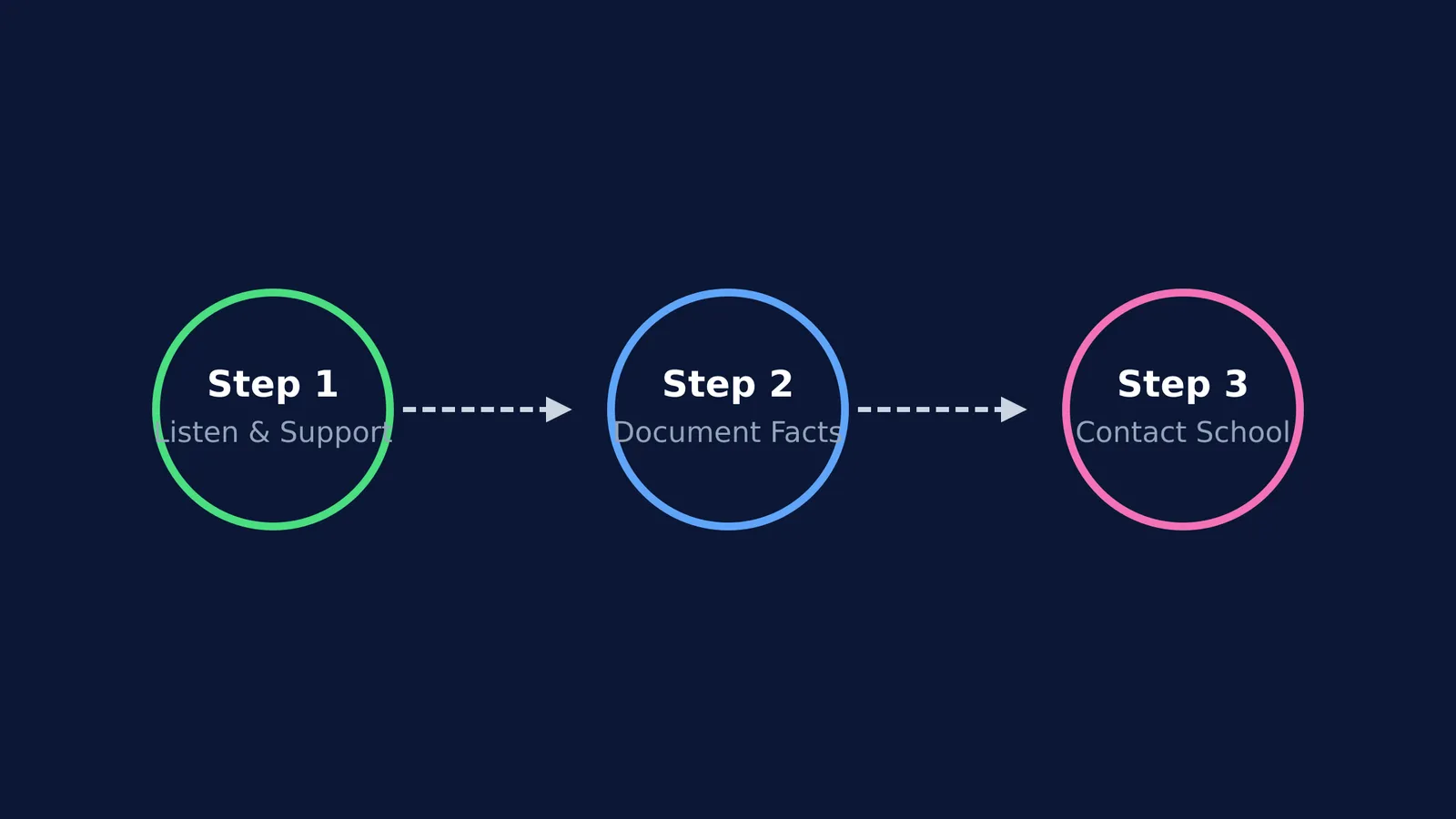
When your child opens up, your immediate reaction should be calm and supportive. If you overreact with anger or distress, they may regret telling you and stop sharing to protect your feelings. Let them tell the whole story.
KidsHealth advises parents to listen calmly and offer comfort. Reassure them that it took courage to speak up and that the teasing is not their fault. Above all, never tell them to fight back. Physical retaliation often escalates the situation, gets your child in trouble, and fails to address the root of the problem. Instead, they recommend walking away and ignoring the behavior, as bullies often stop when they do not get a reaction.
Teasing vs. bullying: How to tell the difference?
Not all unpleasant interactions are bullying. Understanding the severity helps you decide whether to intervene at home or at school.
Playful teasing happens between friends of equal social standing. It is meant to be funny, not hurtful, and it stops immediately if the other person gets upset.
Bullying involves an intent to hurt, embarrass, or exclude. There is usually a power imbalance, whether physical size or popularity, and the behavior continues or worsens when the target shows distress.
If the situation has spilled over into group chats, knowing what to do when the school says your child misbehaved online is crucial for navigating the digital side of the conflict.
What should parents record?
If the teasing crosses the line into bullying, do not contact the other child's parents directly, as this often makes the conflict worse. Instead, prepare to approach the school.
Before you set up a meeting with the teacher, gather the facts. Keep a written log that includes:
The exact date, time, and location of each incident.
The names of the children involved and any bystanders or witnesses.
Exactly what was said or done, using your child's own words.
Any physical evidence, such as torn clothes, or screenshots if the teasing happened online.
Having a factual timeline shifts the conversation with the school from an emotional complaint to a documented pattern that requires intervention. It also prevents the school from dismissing the behavior as a one-off playground argument.
How should you raise it with the school?
Since most bullying happens at school, KidsHealth notes that most schools have anti-bullying policies and programs in place to help.
Start by presenting your log to the classroom teacher or school counselor. Approach them collaboratively by saying you want to work together to ensure the school is a safe environment. Ask for a copy of the school's anti-bullying policy. If the issue is not resolved, escalate the matter to the principal.
How can you help your child respond and catch up?
Teach your child a few simple strategies to use in the moment, and role-play them at home. KidsHealth recommends keeping a calm face and avoiding an emotional reaction, as bullies often look for one. Another effective response is to give a short, boring answer and walk away. Also encourage the buddy system, as bullies rarely target groups.
If the stress has caused your child to miss school or fall behind, they might feel overwhelmed about their studies. If they are feeling anxious, you might wonder why your child cannot tell you what was taught today. A structured return to academics at home can rebuild their confidence. Fermi's AI tutor can work out what they already know and build a plan for the session, so they sit down to a clear next step instead of a blank page.


