

On this page
It is a familiar scenario: you give your teenager their weekly pocket money, and by Tuesday, it is entirely gone, converted into chips, sugary drinks and fast food. While it is frustrating to watch them waste their allowance, this behaviour is incredibly common and provides a clear opportunity to teach financial literacy.
Why do children spend all their pocket money on junk food?
For many children, pocket money represents their first real taste of independence. Away from the rules of the home kitchen, they are free to make their own choices. These choices are heavily swayed by their social environment.
The INPACT study, which examined the snacking habits of 11-year-olds in the Netherlands, found that children who were sensitive to peer influence were 3.27 times more likely to use their pocket money to buy snacks (DOI: 10.1093/eurpub/ckv098). Buying and sharing snacks is a social currency in the schoolyard. Similarly, a 2006 study of Greek adolescents found that the amount of pocket money a child had available significantly correlated with their total energy, fat and sugar intake (DOI: 10.1038/oby.2006.99).
How do you use the save-spend-share split?
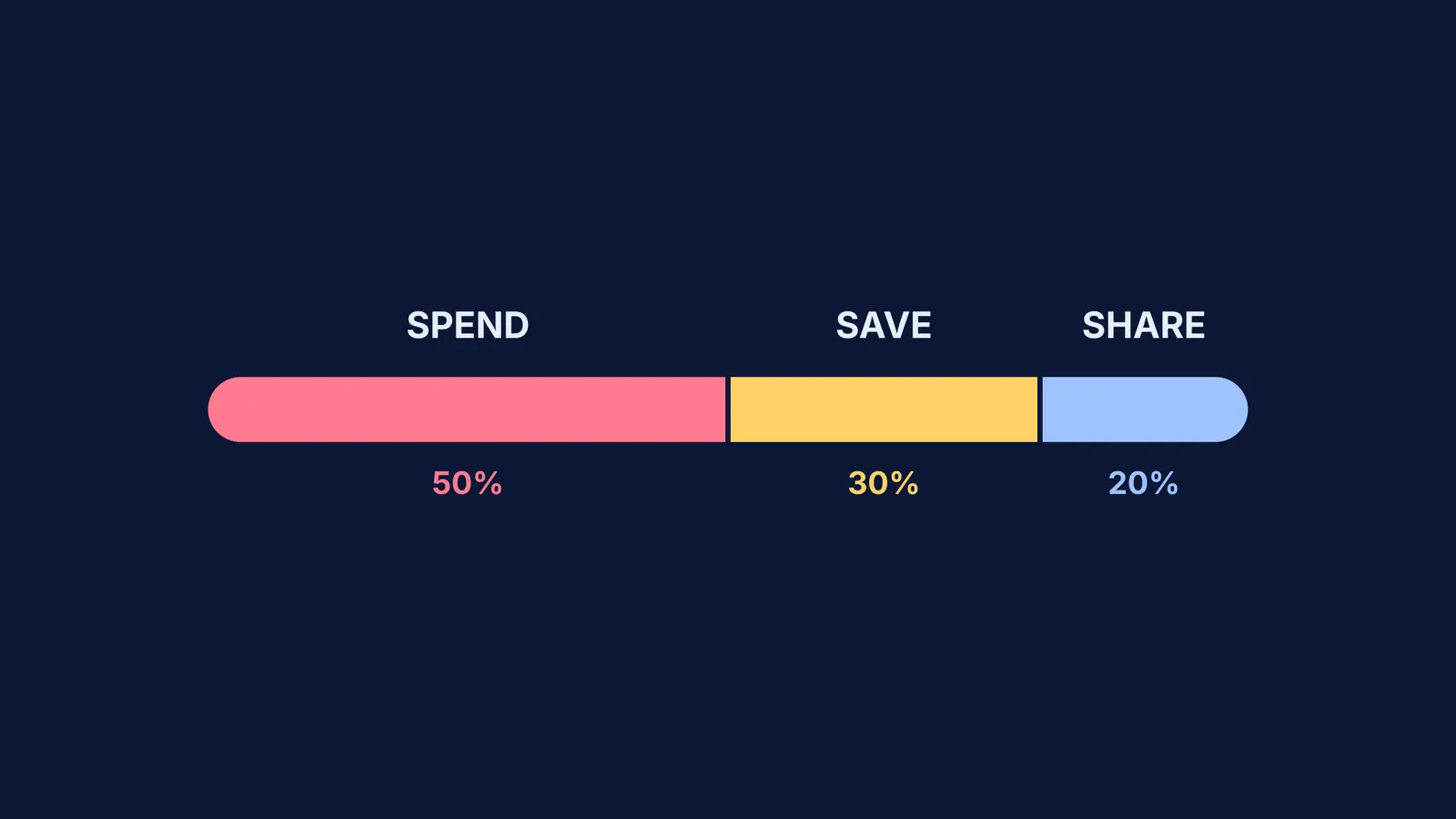
Instead of completely restricting what your child can buy—which often makes junk food more desirable—you can introduce a structure that forces them to budget. The save-spend-share split, based on the 50/30/20 budgeting rule, divides their allowance into three "buckets":
Spend (50%): Money for immediate, small purchases like snacks, stickers or a drink with friends. This satisfies their need for autonomy.
Save (30%): Money set aside for a long-term goal, like a video game or a new jacket. This teaches delayed gratification. If they struggle with calculating how long it will take to save up, you can review percentages, discounts and interest together to map out a timeline.
Share (20%): Money reserved for others, such as buying a birthday gift for a sibling or donating to a local cause. This builds empathy.
How can you talk about value, not just rules?
When your child inevitably spends all of their "Spend" bucket on day one and complains that they cannot buy anything later in the week, let them experience that frustration. Bailing them out prevents them from learning the consequence of their choice.
Ask them: "Was the snack worth being broke for the rest of the week?" The goal is to build their decision-making skills. Just as Fermi's AI tutor works out what the student knows and builds a plan for the session, you can help your child build a financial plan. Help them identify one clear savings goal so they sit down to a clear next step when deciding whether to buy a snack.
When they make a bad purchase, treat it as data rather than a failure. Developing a growth mindset means understanding that mistakes are how we learn to make better choices next time.
What is a good script for the pocket money conversation?
If you need to hit reset on their allowance, sit down and reframe the purpose of the money. You can use this simple script:
Acknowledge their freedom: "Your pocket money is yours to manage. If you want to buy snacks with it, you can."
Introduce the split: "However, we are going to start splitting the money into three parts: Spend, Save and Share. You get to decide what the 'Save' goal is."
Set the boundary: "Once your 'Spend' money is gone for the week, I will not be giving you extra cash. You will have to wait until next week, so think carefully about when you want to use it."
By giving them a framework rather than a lecture, you allow them to practice budgeting in a low-stakes environment, long before they have a real salary to manage.


