

On this page
Seeing a 65% on your child's report card can be frustrating, especially if they seem perfectly content with it. As a parent, your instinct is likely to push them to work harder, believing that accepting average marks will limit their future opportunities. But before you impose stricter rules or higher targets, it helps to understand what "average" actually means and how parental pressure affects a teenager's developing brain.
First, it is important to contextualize those marks. In the CBSE Class 10 results for 2024, out of more than 2.2 million students, only 9.49% scored 90% or above. This means that over 90% of students fall below this highly coveted bracket. Average marks are exactly that—normal for the vast majority of students. Understanding this baseline is the first step toward setting goals that actually help your child learn rather than inducing unnecessary panic.
Child happy with average marks: should I push?
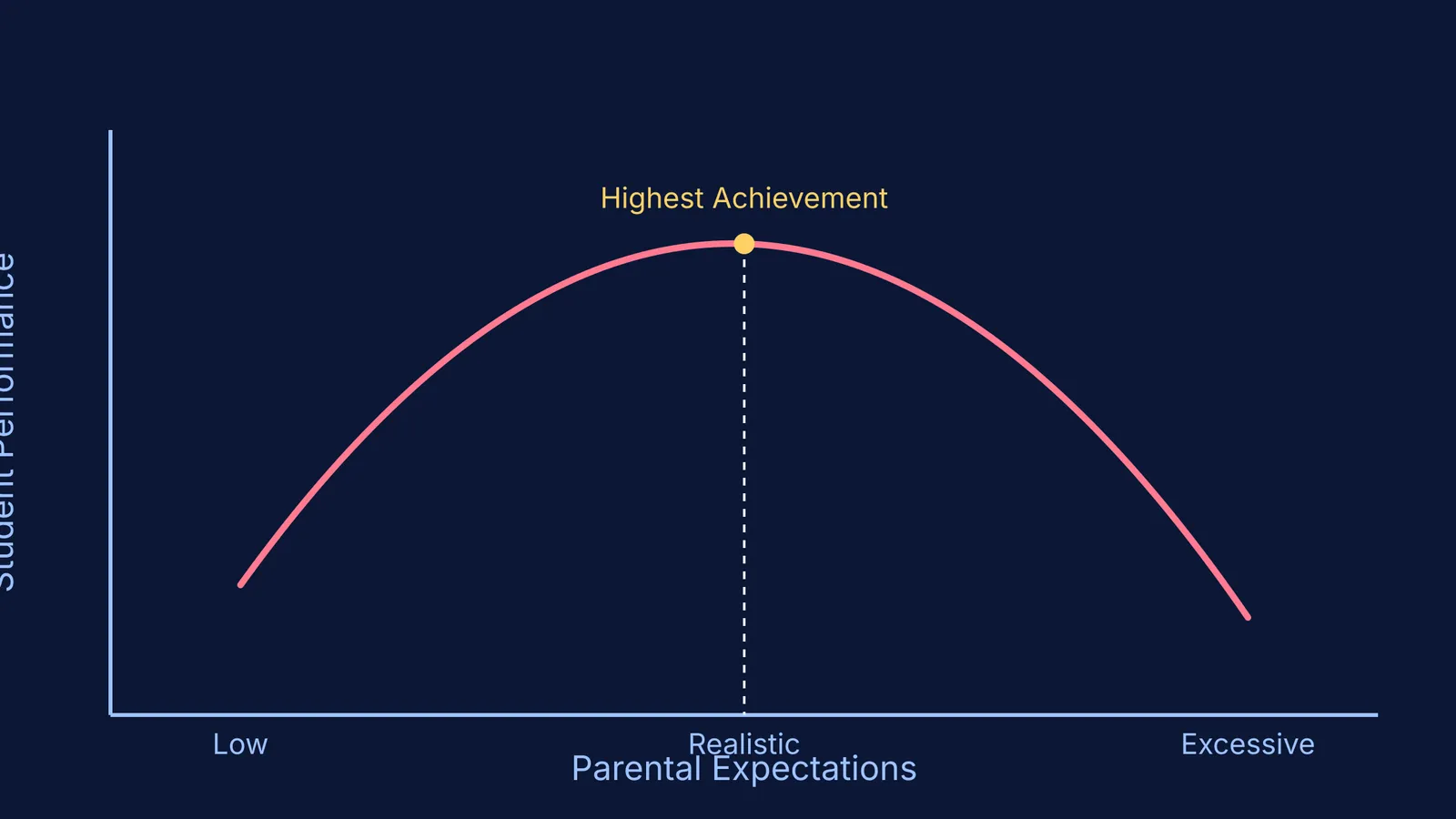
It is natural to want the best for your child, but pushing blindly can backfire. A major 2015 study published by the American Psychological Association tracked 3,530 German students and over 12,000 U.S. students to understand how parental goals affect learning (Murayama et al., 2015). The researchers made a crucial distinction between aspirations (what parents want their child to achieve) and expectations (what parents realistically believe their child can achieve based on their current academic history).
The findings were clear: high expectations improve academic performance only when they do not exceed realistic abilities. When parents' desires were unrealistically high—what the researchers termed "overaspiration"—the children's mathematics performance decreased proportionately over time. Pushing a child toward an impossible goal does not stretch their abilities; it often crushes their confidence and makes them withdraw from the subject entirely. You can read more about navigating this balance in our guide to High expectations vs pressure: what research separates.
Why do unrealistic expectations backfire?
When you demand a 90% from a student who is currently grasping 60% of the material, they do not suddenly learn faster. Instead, they experience a spike in cognitive load and performance anxiety. This stress triggers the release of cortisol, which impairs the prefrontal cortex—the part of the brain responsible for working memory, critical thinking, and problem-solving. This is similar to the effect seen in Parents' maths anxiety: what research found and what to do, where stress makes it significantly harder to process new information. A student in survival mode cannot absorb complex concepts like quadratic equations or organic chemistry.
Furthermore, overriding their contentment with your disappointment damages their intrinsic motivation. If they are satisfied because they genuinely tried their best, telling them it is not good enough dismisses their effort. It sends the message that only the final outcome matters, not the hard work they put in. Fostering Choice and autonomy: parenting that builds real motivation is far more effective than relying on external pressure and strict demands. A student who feels in control of their learning is far more likely to take on academic challenges willingly.
How can parents raise the bar gently?
Instead of focusing on the final percentage, shift the conversation to the learning process. If they are happy with 65%, sit down and ask them to explain which parts of the paper they found easy and which parts tripped them up. This helps them reflect on their own performance without feeling judged or defensive.
Help them identify small, actionable steps rather than demanding a massive leap in their overall grade. If they struggle with where to begin their revision, technology can help structure their time. Fermi's AI tutor can work out what you already know and build a plan for the session, so you sit down to a clear next step.
If they are losing marks on specific calculations because of simple mistakes, encourage them to practise the method rather than just checking the final answer. The Fermi Problem Library has worked problems with a step-by-step solver that explains the reasoning rather than printing an answer. This shifts the focus from getting the final mark to understanding how the concept actually works, which is the true foundation of long-term academic improvement.
Ultimately, raising the bar gently means setting a target just slightly above their current reach and giving them the tools to grasp it. Celebrate the 65% for the effort it represents, and then ask, "What is one small thing we can try differently next term?" By partnering with your child instead of pressuring them, you build the resilience and curiosity they need to succeed in the long run.


