

On this page
You wake up in the morning to find your teenager exhausted again. Despite going to their room at 10:00 PM, they are struggling to get out of bed, and their daytime focus is slipping. If you suspect they are staying up late on their phone, you are dealing with a common challenge of modern parenting. When a child plays mobile games late at night secretly, the impact goes beyond a little grogginess—it directly displaces the critical rest they need for academic and emotional resilience.
What are the signs a child plays mobile games late night secretly?
The signs of secret late-night screen use are often written in a child's daytime behaviour. The most obvious indicator is extreme difficulty waking up, followed by a sudden burst of energy in the evening (often called a "second wind") right around bedtime. You might also notice a sudden drop in their grades or hear from teachers that they are dozing off in class.
Another major sign is "social jetlag," where your teenager sleeps until the afternoon on weekends to pay off the sleep debt accumulated during the week. According to the Centers for Disease Control and Prevention (CDC), adolescents aged 13 to 17 require 8 to 10 hours of sleep per 24 hours to support academic performance and mental health. If they are in bed for 9 hours but still show signs of chronic fatigue, a hidden screen is often the culprit.
How does late-night screen time affect sleep?
Not all screen time affects the brain equally. Passive activities, like watching a video, are less disruptive than interactive activities, like playing a multiplayer mobile game or messaging friends.
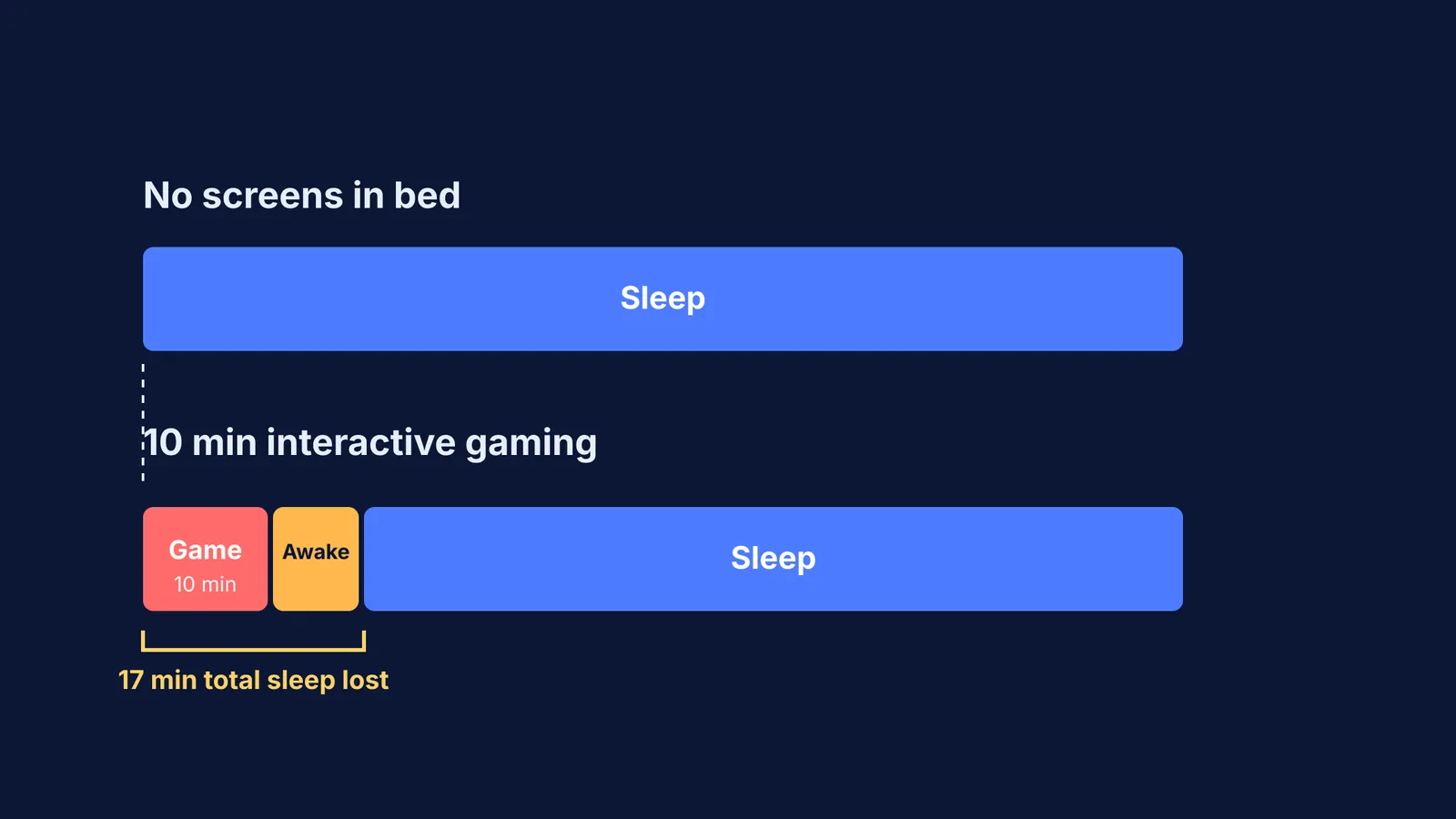
A 2024 study published in *JAMA Pediatrics* used wearable cameras and sleep-tracking devices to measure exactly what happens when adolescents use screens in bed. The researchers found that for every 10 minutes of interactive gaming once in bed, adolescents lost approximately 17 minutes of total sleep time (10.1001/jamapediatrics.2024.2914). The gaming does not just eat up the minutes spent playing; the cognitive arousal and blue light delay sleep onset significantly, creating a compounding loss of rest.
If a student finds studying during the day unengaging, they might procrastinate and try to reclaim their evening with gaming. Bringing active learning into their daily routine can help. For instance, the Fermi Simulation Lab offers interactive simulations for the ideas that are easier to see than to read. When learning feels less passive, students are less likely to seek out late-night digital stimulation to unwind.
How to block mobile games at night using a router?
Trying to physically confiscate a phone every night can lead to daily arguments. Instead, you can rely on automated structural boundaries.
The most effective method is configuring your home Wi-Fi router. Most modern routers and broadband provider apps have a "Parental Controls" or "Family Time" feature. You can select your child's specific devices (phone, tablet, laptop) and set a schedule that pauses internet access automatically at bedtime—for example, from 10:30 PM to 6:30 AM.
If your child uses mobile data (4G/5G), you can set similar limits using built-in device tools like Apple's Screen Time (via Family Sharing) or Google Family Link. These tools allow you to block access to specific gaming apps or the entire device during "Downtime." Setting these limits at the system level removes you from the role of the enforcer. If you need help structuring this, you can read our guide on phones and homework: family rules that research supports.
How to talk to your teenager about sleep and screens?
When you discover the late-night gaming, your first instinct might be to punish them or take the phone away permanently. However, a punitive approach often makes teenagers more secretive. Instead, frame the conversation around their health and their mornings.
Start by acknowledging how hard it is to put a game down. Mobile games are designed to be engaging, rewarding the brain for reaching the next level. Say something like, "I've noticed you are exhausted in the mornings, and I know it is really hard to turn off games at night. We need to figure out a routine so you aren't feeling this tired every day."
Focus the discussion on building a calmer exam season at home. Agree on a "media curfew" one hour before bed, where phones are left to charge in the living room rather than the bedroom. For more context on why these boundaries matter, explore how much sleep teenagers need, and how parents can help. When the boundary is about protecting their energy rather than punishing their gaming, teenagers are much more likely to cooperate.


