

On this page
When a child returns from school with a test paper, the result often becomes family news. Parents naturally want to share their pride in a high score or seek advice from an aunt when marks are low. However, what feels like normal conversation to a parent can feel like a profound betrayal of privacy to a teenager.
Why do children feel exposed when marks are shared?
To a child, their academic performance is their personal identity. When parents discuss this data publicly—whether on family WhatsApp groups or during dinner parties—children often experience it as an invasion of privacy. A 2024 study published on PubMed involving 570 adolescents found that 87% experienced high perceived parental pressure, which was directly linked to high academic stress (Source).
When academic struggles are broadcasted, children can develop a culture of secrecy, hiding their true results to avoid humiliation. Furthermore, only about a third of parents ask their teens for permission before sharing their information, and 25% of young adults report negative experiences when their parents post about them online (Source).
If a student knows that a poor test score will become the main topic of conversation at the next family gathering, they begin to associate learning with anxiety rather than curiosity. If they are already worried about early performance, it might help to read our guide on whether Class 11 marks matter for college applications.
Why is comparing marks a problem?
Many parents share marks with the intention of creating healthy competition. They believe that comparing their child to a more successful cousin will motivate them to work harder. However, psychological research consistently shows that this tactic backfires.
When children are compared to their peers by the people they trust the most, they internalize the belief that their worth is conditional. Instead of feeling motivated, they often feel inadequate. This "intrapsychic pressure" leads to what psychologists call disengagement coping—where the student simply gives up or starts hiding their academic reality to escape the constant scrutiny. Support, rather than pressure, is the strongest predictor of a student's ability to handle academic stress effectively.
What is the difference between support and gossip?
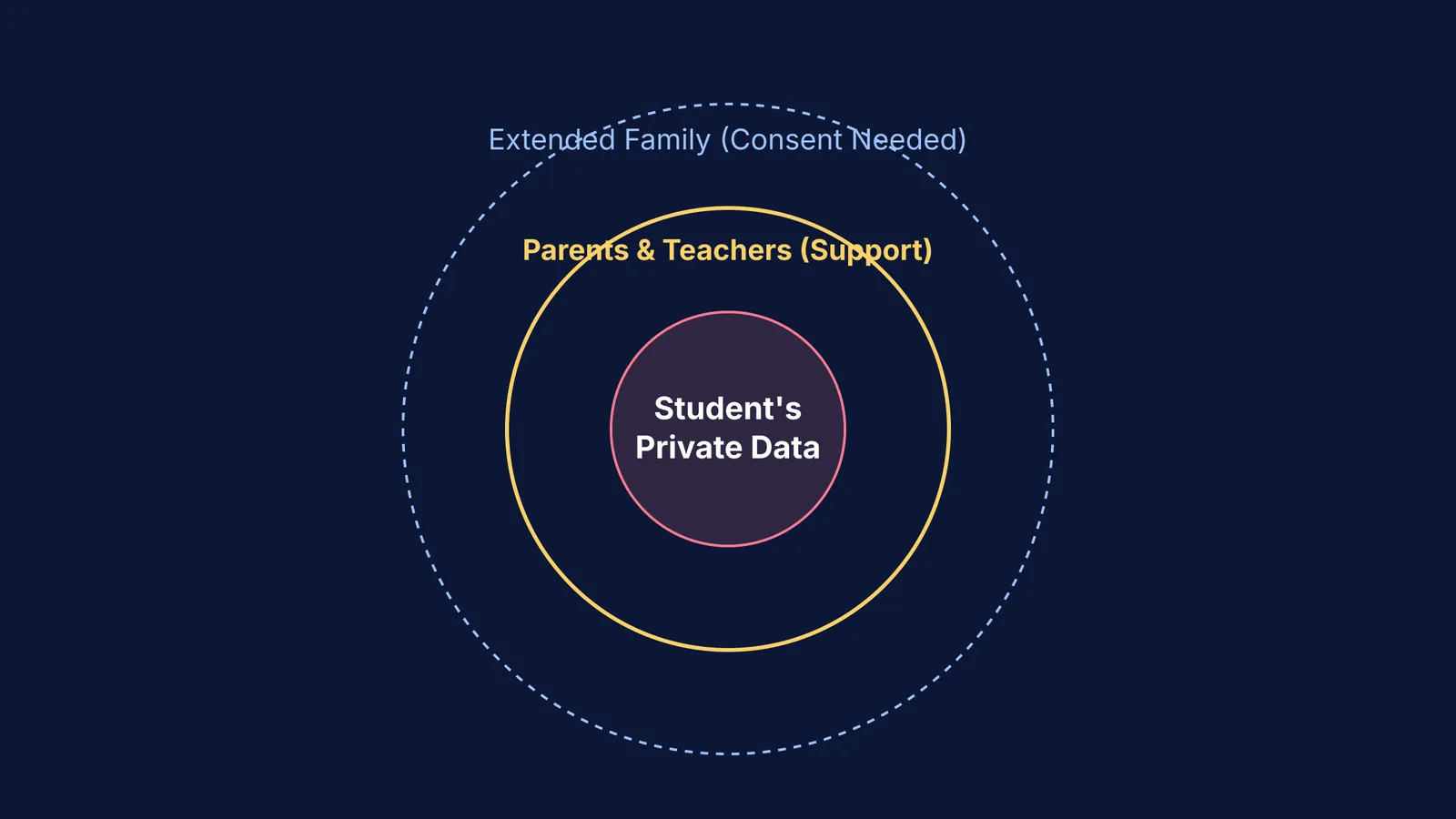
Parents often justify sharing by claiming they are seeking help. The boundary between seeking support and gossiping is defined by the child's consent and the audience.
Discussing a learning difficulty privately with a teacher or a dedicated tutor is support. For example, using Fermi's AI tutor can help when a student brings a problem set; it works out what they already know and builds a plan for the session, offering a private, constructive way to address poor marks. Sharing those same marks with a cousin to prompt a competitive comparison is gossip, and it rarely motivates the child.
True support involves finding solutions without compromising the child's dignity. When seeking advice from others, you can discuss the challenge in general terms—such as asking for recommendations for study strategies—without revealing the child's specific grades or personal struggles.
How can we agree on what is private?
To rebuild trust, sit down with your teenager and agree on what academic information stays within the house. If your child is pushing themselves too hard, this is also a good time to read about what to do when a child sets unrealistic targets.
The "No-Go" list: Agree that specific marks, class ranks, and teacher disciplinary comments are entirely private. These are data points for improvement, not public knowledge.
The "Ask First" list: Milestones like passing a major exam or securing a college admission can be shared, but only after getting the child's explicit permission. Give them the veto power over what goes on social media.
The safe space: Reassure them that the home is a safe space where mistakes are analysed, not judged or broadcasted.
When a child knows their failures won't be used against them in family gatherings, they are more likely to share their struggles early. They will come to you when they first start falling behind, rather than waiting until the final report card arrives.
How should you handle relatives' questions?
If you stop volunteering information, relatives will eventually ask. It is common in many families to compare notes on children's academic progress as a form of small talk. You need a script to deflect these questions gracefully without making the situation awkward or confrontational. Relatives can be intrusive, especially during crucial years; for more tips on managing boundaries, see our guide on how to manage relatives visiting during board exams.
The pivot: "She is working hard and we are proud of her effort. How is your son doing in college?" This acknowledges the question but shifts the focus away from specific numbers and onto the relative's own life.
The boundary: "We've decided as a family to keep grades private so he can focus on learning rather than comparing." This firmly establishes the rule and explains the positive reasoning behind it.
The vague positive: "He's doing well, thanks for asking! He's really enjoying his physics classes right now." This satisfies the polite inquiry without giving away any private data.
By protecting your child's academic privacy, you show them that your love and respect are not conditional on their test scores. This approach helps them build the internal confidence they need to succeed on their own terms, free from the weight of extended family expectations.


