On this page
Finding out that your child has been borrowing money from friends can be a source of worry for any parent. Whether it is for a forgotten lunch, a quick snack at the canteen, or to keep up with what peers are buying, informal loans are a normal part of school life. However, if left unchecked, they can lead to social friction and bad financial habits. It is crucial to address the behaviour early before it becomes a default response to wanting something they cannot immediately afford.
Why do children borrow money from friends?
At school, peer influence is incredibly strong. A child might borrow money because they feel pressured to join in on social activities, or simply because they have not yet learned how to delay gratification. The desire to fit in often outweighs their understanding of personal budgeting. A 2023 OECD survey found that the average financial literacy score across 39 countries is only 60 out of 100 (Source), highlighting how difficult it is for people to manage money without early education. When children are not explicitly taught how money works, they rely on immediate convenience.
This lack of repayment often damages friendships as children grow older. If children do not learn the cost of borrowing early, fronting money for group expenses can create tension and negatively affect their relationships. What starts as a small loan for a snack can escalate into a habit of relying on others to fund their lifestyle.
Sometimes, borrowing is a symptom of wider school stress. If a child is falling behind in class and feels overwhelmed by exam pressure, they might seek distractions or buy treats to cope with the anxiety of studying. Managing academic pressure effectively can often resolve these secondary behaviours. There are ways to help children learn without adding pressure. If they do not know where to start with their revision, Fermi's AI tutor can work out what they already know and build a plan for the session, so they sit down to a clear next step instead of a blank page.
How can you set a family rule on borrowing?
Setting boundaries early helps prevent borrowing from becoming a daily habit. Clear rules give children a framework to rely on when they face peer pressure to spend.
The "Ask First" Rule: Require your child to check with you before borrowing any money from a friend. This allows you to discuss whether the purchase is a need or a want, and gives you visibility into their daily spending.
Limit the amount: For younger children, set a strict cap (such as ₹50 or ₹100) for genuine emergencies, like a forgotten bus fare or a dropped lunch. This ensures they are not accumulating debt for non-essential items.
Borrow only what you can repay: Teach the fundamental rule of personal finance: never borrow more than you already have in savings or guaranteed allowance. They must know exactly how they will cover the cost before they accept the money.
Track the allowance: Use a notebook or an app to track their weekly or monthly allowance. When children can see their remaining balance, they are less likely to overspend and rely on friends to bridge the gap.
How can you help your child repay a friend?
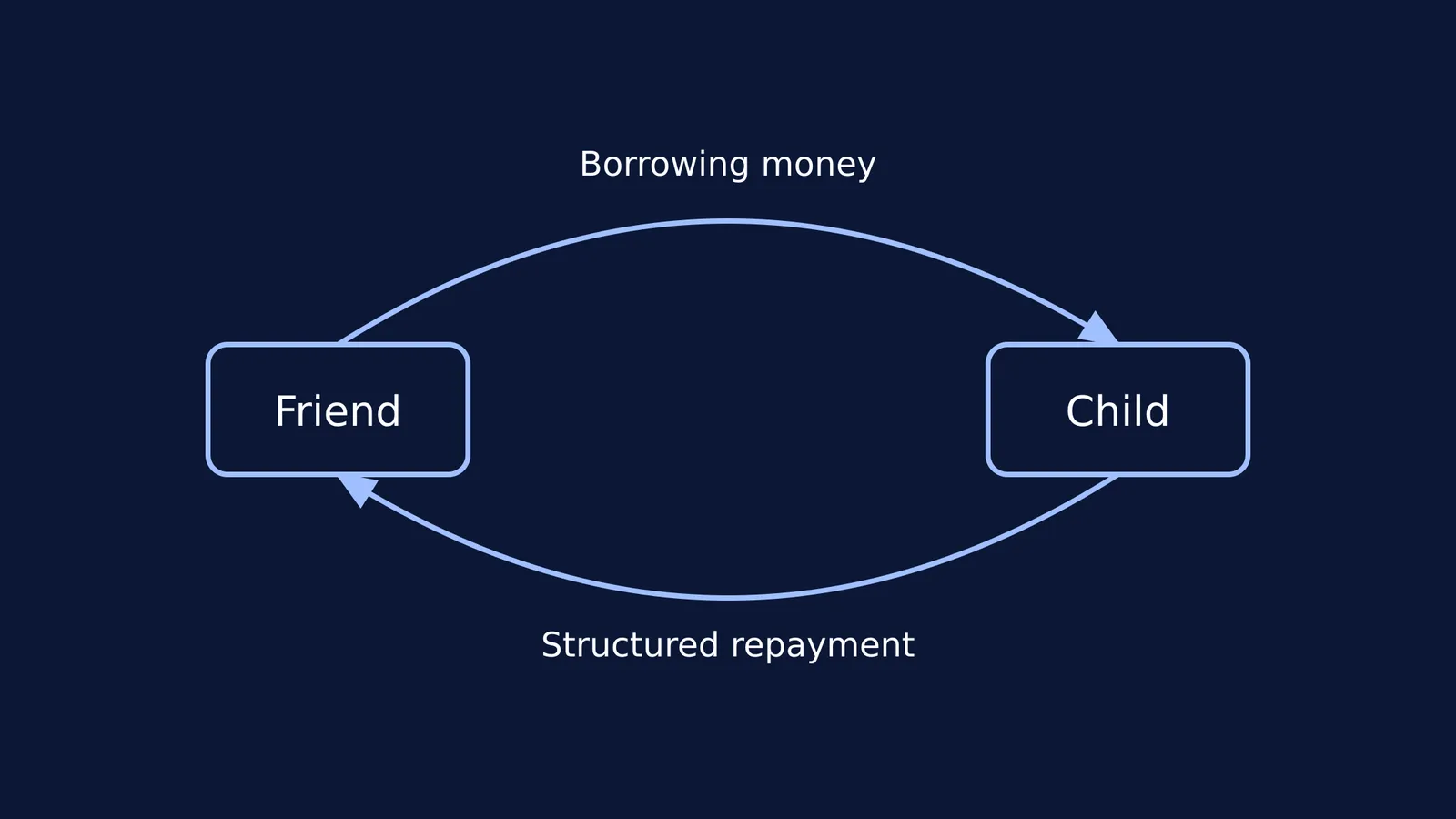
When a child does borrow money, the repayment should be prompt and structured to reinforce accountability. If they are showing signs of broader anxiety, it is also important to address exam stress in teenagers separately. Otherwise, focus purely on the mechanics of settling the debt.
Immediate action: Encourage repayment as soon as possible, ideally the very next school day. Delaying payment normalises being in debt.
The IOU method: For older children, have them write a simple note or "IOU" to their friend. This formalises the agreement and serves as a physical reminder of the debt, making it harder to conveniently forget.
Alternative repayment: If the child has spent their allowance, help them earn the repayment through extra chores at home. They should get the cash needed to pay back their friend by doing work outside their normal responsibilities.
Roleplay the conversation: Sometimes children delay paying friends back because they feel awkward bringing up the topic of money. Practise what they will say when they hand the cash over, so they feel confident closing the transaction.
If the borrowing becomes a habit or causes arguments with friends, it may be time to implement a strict "no borrowing" policy until they can manage their own budget responsibly. By guiding them through the repayment process, you are teaching them a practical lesson in financial responsibility that will last long after they leave school.