

On this page
When the CBSE Class 10 and 12 results arrive, the marksheet looks different from what many parents remember. Instead of a simple percentage, you see grades like A1, B2 and C1 next to each subject.
Understanding what these grades mean is crucial when guiding your child's academic choices, especially because an A1 does not always mean a near-perfect score.
How does the CBSE grading system work?
For board exams, CBSE uses a positional or relative grading system. This means your child's grade depends on how they performed compared to everyone else who took that paper, not just their raw score.
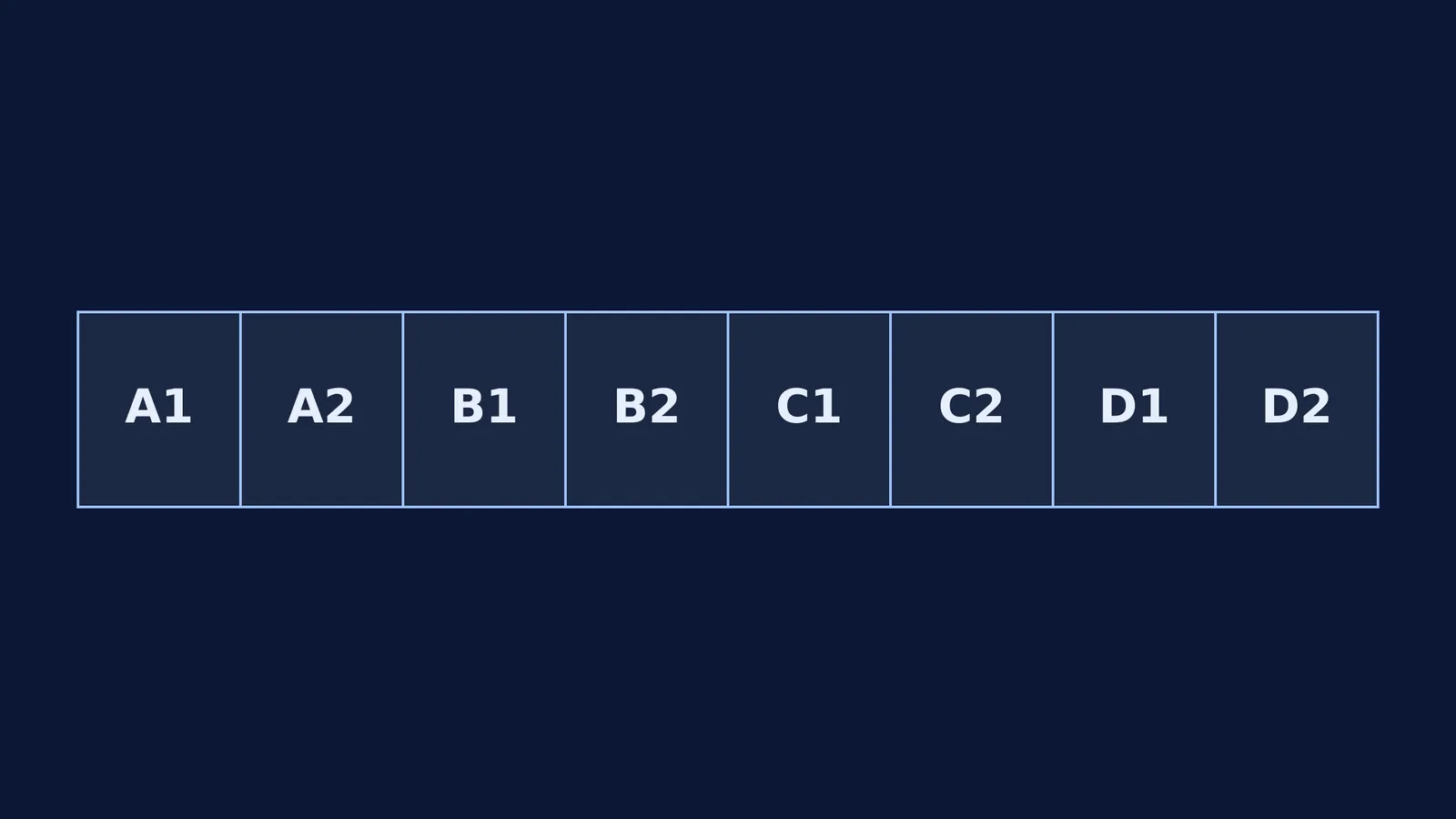
After the exams, the board puts all the passing students in rank order and divides them into eight equal groups. An A1 is awarded to the top 1/8th of the passed candidates in that subject (The Indian Express). An A2 goes to the next 1/8th, followed by B1, B2, C1, C2, D1, and D2 in 1/8th increments.
This relative system makes grading fair when question papers vary in difficulty. If the physics paper is exceptionally hard one year, the score needed to be in the top 1/8th drops. A student might earn an A1 with an 85. If the paper is easy, the cutoff might rise to a 96.
Why does CBSE not calculate a percentage?
Many parents look for an overall aggregate or percentage on the marksheet to compare their child's performance. However, you will not find one.
In November 2023, the board clarified that it "does not calculate, declare or inform percentage of marks" on the marksheet (The Indian Express). It also does not award any overall division or distinction.
This policy exists because different higher education paths require different skill sets. A student applying for an engineering degree needs strong marks in physics and mathematics, while a student pursuing a humanities course might rely on history and language scores. By leaving the marksheet as a list of individual subject scores, CBSE lets universities decide which subjects matter most for their specific admissions.
Why can comparing percentages across schools be misleading?
Because CBSE does not issue an official percentage, schools, colleges and parents often calculate their own "best of five" aggregate. This is where comparisons break down.
If a student takes six subjects, one school might calculate their percentage using the five highest-scoring subjects, even if that includes an easier vocational subject like Information Technology. Another school, or a strict university admissions office, might insist on calculating the percentage using only core academic subjects like Mathematics and Science.
This means a high aggregate at one school is not the same as the identical aggregate at another. When parents compare percentages, they are often comparing different calculations. The only true comparison is the subject-by-subject grades (A1, A2, etc.), which are standardised by the board across all students.
How to talk to your child about their grades?
Instead of focusing on arbitrary percentage targets, use the CBSE grading system to have a better conversation about learning. If your child is stuck at a B1, it means there are gaps in their understanding that prevent them from reaching the top quarter of students.
Try this script when discussing their results:
"The board uses relative grading, which means the paper might have been harder than expected. Let's look at which specific topics cost you marks."
"Are you losing marks on memory questions or numericals? If it is numericals, we need to change how you practice."
"Let's not worry about the percentage. Let's focus on mastering the concepts you missed before you start Class 11."
How can an AI tutor help your child move up a grade?
Moving from a B1 to an A1 requires more than just reading the textbook again. A relative grading system rewards students who can handle the difficult, unfamiliar questions that trip others up.
When an exam question tests an idea in a new way, rote learning breaks down. Fermi's AI tutor teaches rather than answers. It works out what a student already knows, builds a plan for the session, and teaches through it—writing on a board, drawing the figure, running the simulation, and checking understanding as it goes.
If your child has gaps in specific topics, the Fermi Concept Library contains a lesson for every concept in physics, chemistry, biology, mathematics and computing, each with its own lesson and its place in the map. If they struggle with hard numericals, they can use the Fermi Problem Library, which provides worked problems with a step-by-step solver that explains the reasoning rather than printing an answer.
By focusing on deep understanding rather than just percentage calculations, your child will be better prepared not just for their board exams, but for the competitive entrance tests that follow.
Read more:


