On this page
If your child in Class 8, 9 or 10 shrugs at career questions, they have company. Across OECD countries, 39% of 15-year-olds now sit in the "don't know" column for their expected job, the highest share ever, as Andreas Schleicher, the OECD's Director for Education and Skills, wrote in May 2025. The helpful response at this age is not to force a choice. It is to give your child more, and better, information about real work.
Is it normal for a Class 9 student to have no idea what career to choose?
Yes. What matters is what teenagers do about it. An OECD analysis of 12 datasets from 10 countries linked career experiences at ages 14 to 16 with employment 10 to 15 years later. Teenagers who took part in activities such as career conversations, workplace visits and job shadowing tended to have lower unemployment, higher wages and greater job satisfaction as young adults. The same OECD article reports that only 4 in 10 students across OECD countries had taken part in job shadowing or a workplace visit.
Our guide to choosing a stream after Class 10 covers that decision. Classes 8 and 9 are the low-stakes years to collect evidence first.
What career exploration activities work for Classes 8 to 10?
Four activities cost little or nothing, and each gives your child a different kind of evidence.
1. Conversations with working adults. Start with people you know: a pharmacist aunt, a neighbour who runs a repair shop. You make the introduction; your child asks the questions. Twenty minutes is enough. Five questions that get past "it's a good job":
What did you do yesterday, hour by hour?
Which part of your work do you enjoy, and which part do you put up with?
Which school subjects do you actually use?
How did you get here, and what would you do differently?
Who else should I talk to?
The last question turns one conversation into two.
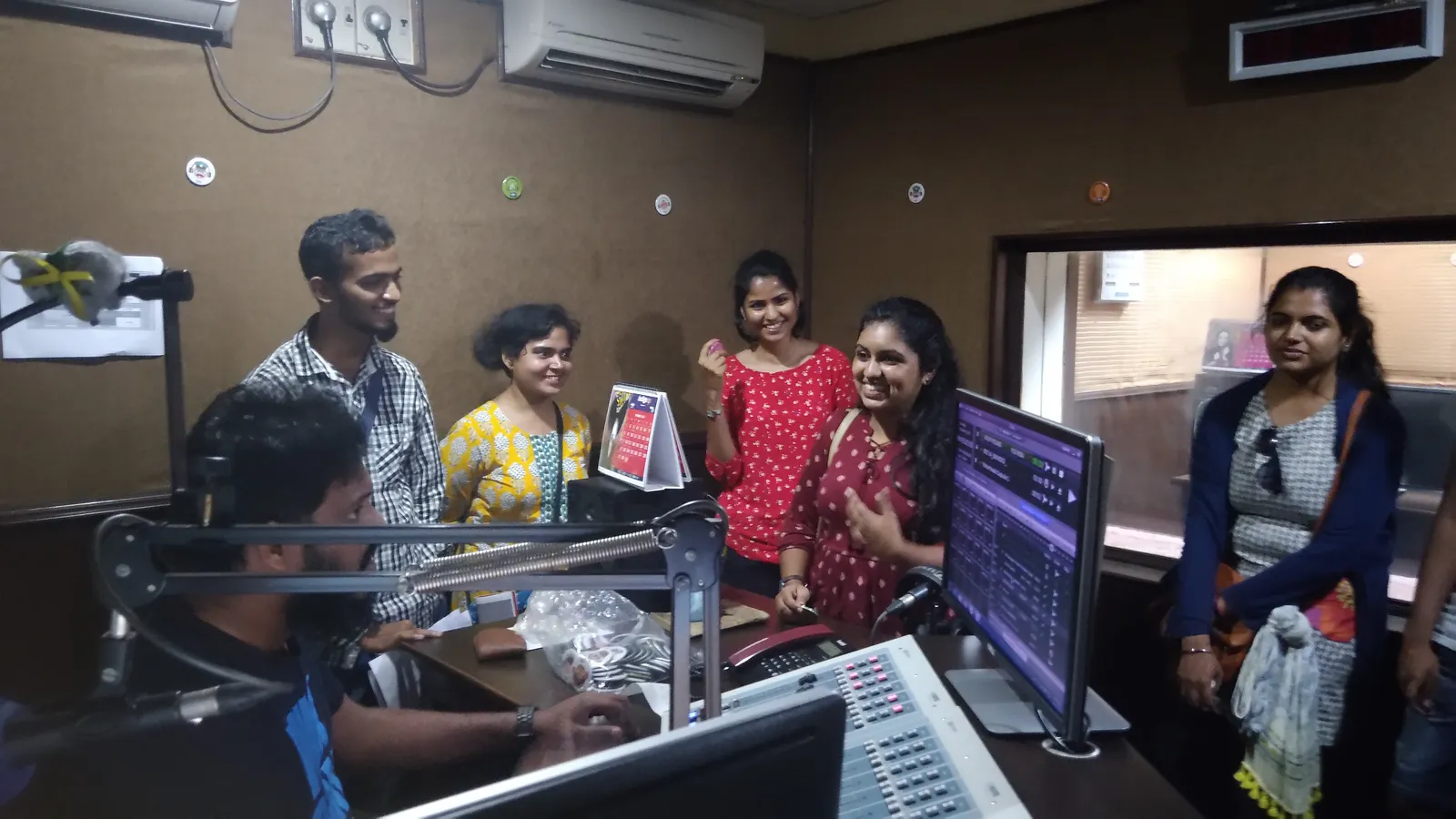
2. A job-day visit. Ask one person if your child can spend a morning watching them work: a clinic, a bakery, a site office, a lab, a newsroom. NCERT's July 2024 guidelines for 10 Bagless Days, written for Classes 6 to 8 in line with NEP 2020, encourage visits outside school and time with local artists, craftsmen and professionals. A family visit adds something a school trip cannot: a workplace your child chose.
3. A short course. A short course tests whether an interest survives real content. SWAYAM, the Government of India's online learning programme, hosts courses from Class 9 to post-graduation, free to take; only the proctored certificate exams carry a fee. If science keeps coming up, Fermi's courses are university-level courses taught by working scientists, with the AI tutor available on every lecture, so a curious student can see what a subject looks like beyond the syllabus.
4. An interests journal. After each conversation, visit or course module, your child writes four lines:
What I did
What I enjoyed, and why
What bored or annoyed me
One question I now have
Re-read it together every month. Words that keep repeating matter more than any single entry.
What does a 12-week exploration plan look like?
Here is a worked example for an imagined Class 9 student, Aarav, who likes drawing and maths but says he has no idea what he wants.
Weeks 1 to 2: set up the journal and list ten adults the family knows, with what each one does.
Weeks 3 to 6: one conversation a week, for example with an architect, a civil engineer, a graphic designer and an electrician.
Weeks 7 to 8: one job-day visit, chosen from whichever conversation sparked the most questions.
Weeks 9 to 11: one short online course in the area that survived, about an hour a week.
Week 12: read the journal together, then write down two fields to explore further and one to drop.
The cost is mostly bus fare. Keep it to an hour or two a week.
What should parents say when their child has no career idea?
Your tone decides whether this feels like exploration or another exam. Try:
"You don't have to decide this year. Let's find out what different jobs are really like."
"Who would you like to ask about their work?"
"What surprised you about that visit?"
Lines to avoid: "Your cousin already knows what she wants", "That's not a real career", and anything that turns the journal into homework you check.
If your child's interests head somewhere you did not expect, read when your child's career choice differs from yours. To widen the list beyond the usual two options, see talking about STEM careers beyond engineering and medicine.
If career talk leaves your child anxious, sleepless or withdrawn for weeks, speak to a school counsellor or a doctor. Tele MANAS, the free 24x7 national mental-health helpline launched by the Ministry of Health and Family Welfare, is on 14416.
Start this week with one name and five questions.