

On this page
Preparing for competitive exams like the Joint Entrance Examination (JEE) is a major financial milestone for any family. Moving to a hub like Kota or enrolling in a premium coaching institute in a metro city requires careful planning. What seems like a straightforward tuition fee often doubles once the reality of living away from home sets in. We break down the true cost and the hidden expenses that catch parents off guard.
How much does JEE coaching actually cost?
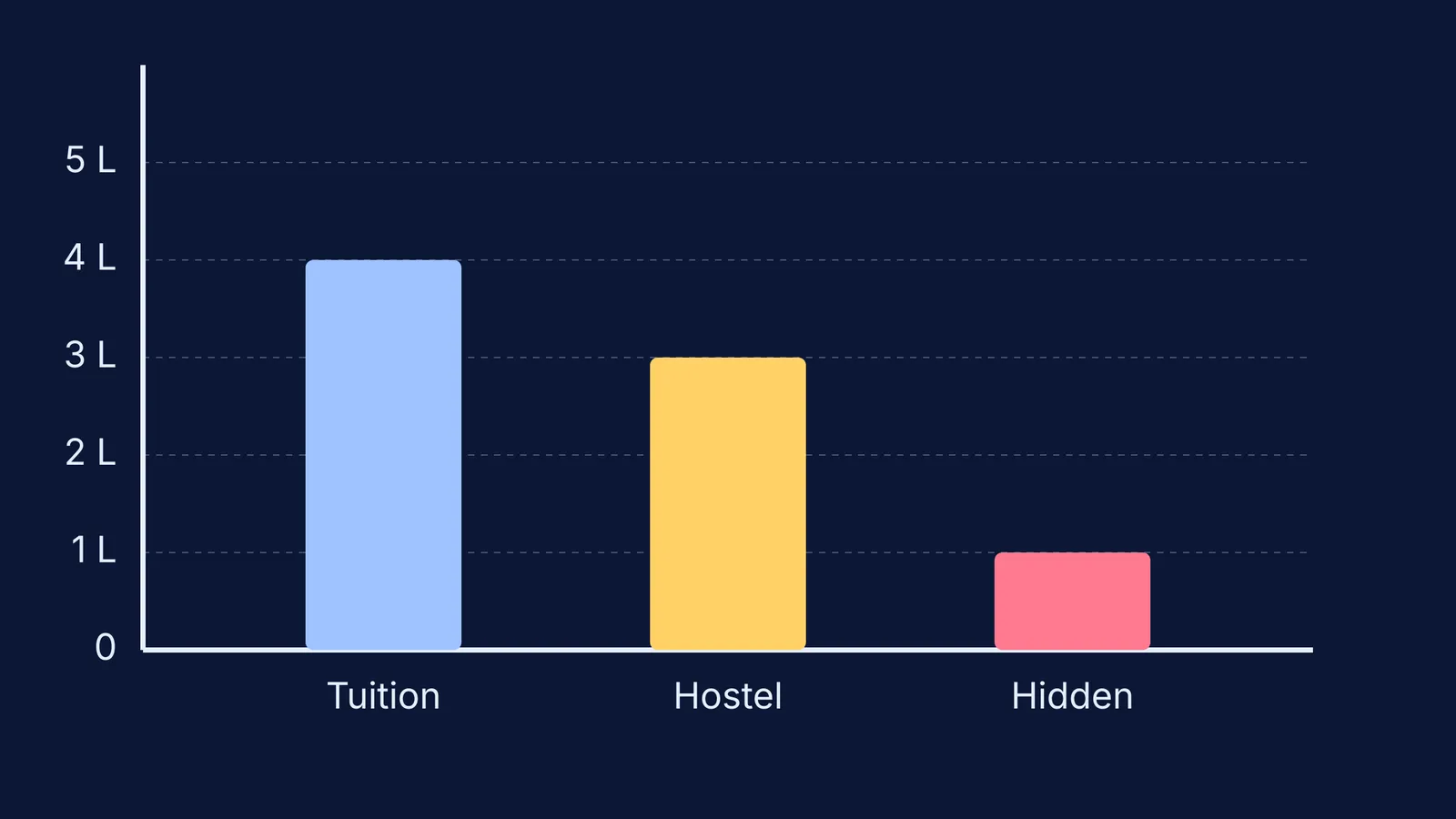
The most visible expense in your budget will be the tuition fee charged by the coaching institute. According to fee tracking from Collegedunia, a standard two-year regular classroom programme at a premium institute like FIITJEE costs between ₹4 lakh and ₹5 lakh. Other major names in the industry, such as Allen Career Institute, charge between ₹2.5 lakh and ₹3.5 lakh for a similar two-year period, as reported by Propelld.
Online alternatives are cheaper, but many families still prefer the structured environment of an offline classroom. For families choosing a hybrid approach to save money while maintaining quality, the Fermi Concept Library offers every concept in physics, chemistry, and mathematics with its own lesson, acting as a powerful and affordable supplement to offline classes. This can reduce the reliance on expensive premium classroom tiers while still ensuring strong conceptual clarity.
What are the hidden costs of preparation?
Tuition is just the base layer of the financial commitment. According to a financial breakdown by Propelld, the largest hidden cost is accommodation and food. A standard hostel room with mess facilities in a major coaching hub adds another ₹1.4 lakh to ₹3 lakh annually. Over a two-year preparation cycle, this effectively doubles the initial budget, and in some cases, the living expenses can exceed the cost of the coaching itself.
Beyond room and board, families must account for travel home, technology, and additional reference books. Independent test series and study materials also add significant recurring expenses to the bill. Students often need a laptop or tablet to access online test portals, which introduces hardware costs and potential repair fees into the family budget.
If a student is struggling to keep up with the fast pace of classroom lectures, private tutors add a further financial burden. Instead of paying for expensive private tutors to review wrong answers, a student can use Fermi's AI tutor. The AI works out what they already know and builds a plan for the session, teaching through the gap—writing on a board, drawing the figure, and checking understanding as it goes. This targeted teaching approach saves both time and money compared to traditional private tutoring.
Why is free coaching not always enough?
It is easy to assume that simply removing tuition fees solves the financial burden of exam preparation. However, a decade-long study on no-cost STEM coaching for first-generation learners in Delhi revealed a harsh reality (10.35542/osf.io/ygqbk_v1).
Despite receiving free tuition, materials, transport support, and meals, 90.5% of the enrolled students from low-income households left the programme before completion. The barriers were not just institutional fees, but external pressures like the need to earn, household duties, parental resistance, and an absence of a dedicated study space. The study concluded that academic coaching requires an ecosystem of material, emotional, and familial support, proving that the true cost of education goes far beyond the brochure price.
What happens to the budget in a drop year?
Many families initially plan for a two-year budget, completely overlooking the possibility of a drop year. If a student decides to take an additional year to improve their rank and secure a better seat, the financial clock resets.
A drop year means paying for another full year of coaching tuition, albeit often at a reduced rate for returning students. More significantly, it means another 12 months of hostel fees, mess charges, and incidental living expenses. When assessing your long-term finances, it is essential to consider whether your family could comfortably absorb the cost of a third year without compromising your long-term savings.
How should a family budget for two years?
When you start evaluating a coaching institute, you need a comprehensive financial plan that looks beyond the first instalment. Here is a framework to build a realistic family budget:
Base Tuition: Check the final brochure price for the complete two-year programme. Subtract any confirmed scholarship won through entrance tests.
Fixed Living Costs: Multiply the monthly PG or hostel rent, plus the mess fee, by 24 months. Remember to account for annual rent increases and separate electricity bills.
The Incidental Fund: Set aside a dedicated reserve for supplementary books, stationery, auto fares, medical expenses, and trips back home.
Whether you ultimately choose coaching or self-study, preparing your finances early ensures that money worries do not add to the academic pressure during your child's first year of JEE coaching. A realistic budget gives both the student and the family the peace of mind needed for a focused preparation journey.


