

On this page
When the board exam datesheet arrives, it is more than just a schedule for the student—it is a planning tool for the entire household. Rather than putting life on hold for two months, families can use the timetable to identify which weeks need absolute quiet and which days are safe for a more relaxed routine.
By matching your family calendar to the exam dates, you can protect the critical gaps between major papers and give your teenager the predictable environment they need to perform at their best.
Why do predictable routines matter during exams?
During high-stakes periods, a teenager's nervous system is already heavily taxed by academic demands. A 2024 review of 170 studies in the *Journal of Family Theory & Review* found that predictable daily routines support cognitive and social-emotional development, acting as a protective factor in challenging environments (Selman et al.).
When mealtimes, bedtimes and household noise levels follow a steady pattern, adolescents do not have to spend mental energy anticipating changes. This stability provides an "anchor," allowing them to direct all their cognitive resources toward revision and emotional regulation. Parents who maintain their own routines also act as powerful role models, showing their teenagers how to manage stress effectively without panicking.
How to handle the gaps between major papers?
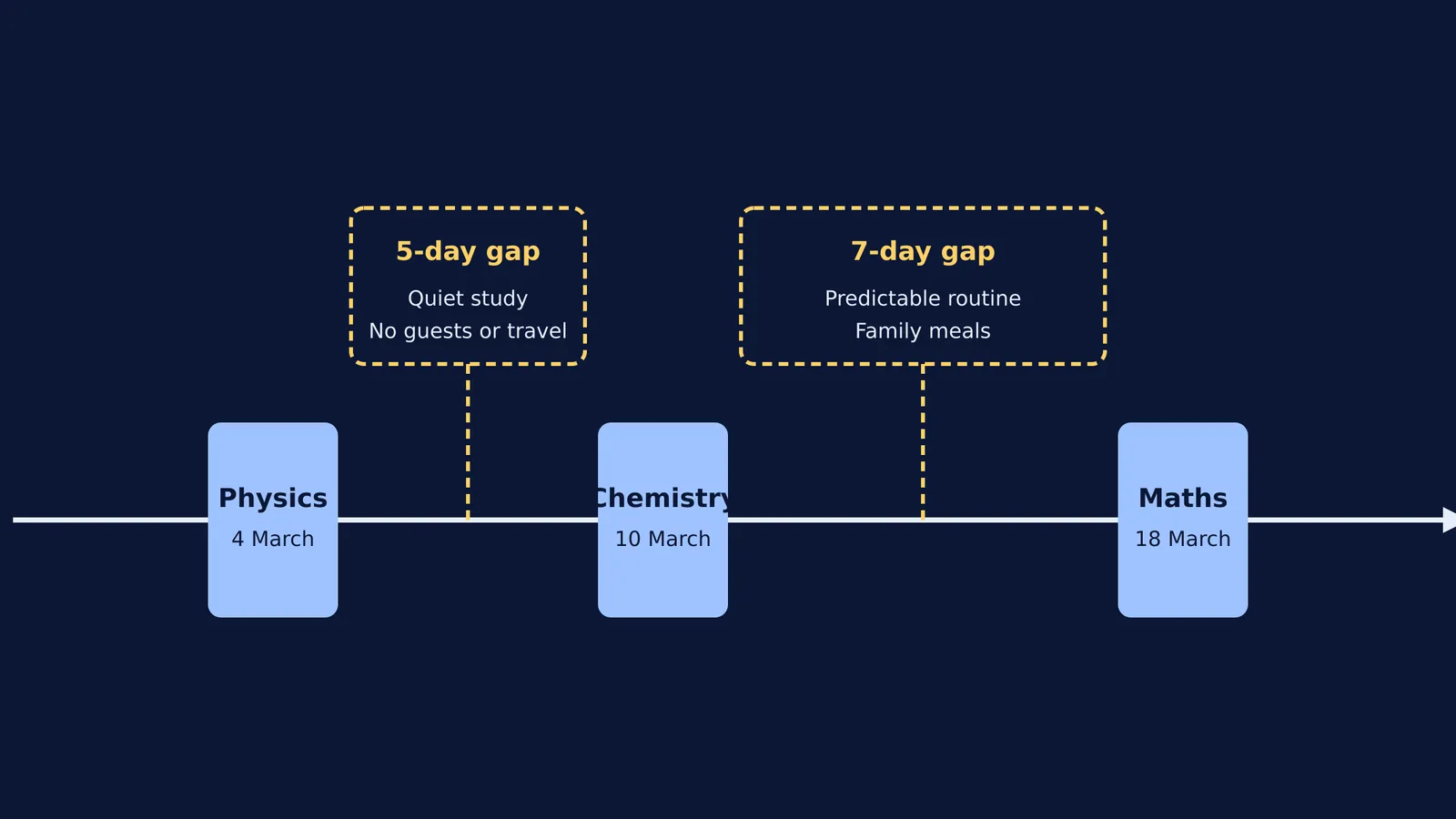
The CBSE Class 12 datesheet typically leaves a 4 to 8-day gap between major science papers like Physics, Chemistry and Mathematics (CBSE). For a student, these gap days are often the most intense periods of the month, dedicated to solving full-length mock papers and actively recalling volatile topics.
Because these gaps are so crucial for revision, the home environment needs to support deep work. Treat these days as "quiet zones" rather than holidays, ensuring your teenager has uninterrupted blocks of time.
If a student brings a problem set or a scanned assignment during these gaps and gets stuck, Fermi's AI tutor can help keep their momentum up. Fermi works out what they already know, builds a plan for the session, and teaches through it — writing on a board, drawing the figure, running the simulation, and checking understanding as it goes.
What to do about guests, travel and meals?
To manage the month without burning out the family, you can categorise the datesheet into three distinct zones and plan accordingly.
The Red Zones (The day before and the day of an exam):
These are the high-stress days. Keep meals simple, familiar and light. Avoid scheduling any social visits, loud household repairs or difficult family conversations. The goal is absolute quiet and emotional support.
The Yellow Zones (The 4 to 8-day gaps):
This is where predictable routines that help the whole family come in. The household can function normally, but you should still avoid hosting overnight guests or planning long family travel. Keep evening routines, like family dinners, intact to provide a sense of continuity.
The Green Zones (After the final major paper):
Use the end of the datesheet to plan your larger family gatherings or trips. If you have younger children, this is the time to resume their louder activities or playdates, which you may have paused to figure out how to manage board exams with younger siblings at home.
It is also a good time to pre-plan the household menu. Deciding what to cook every day can drain a parent's energy, which is better spent supporting the student. By planning meals for the Red and Yellow zones in advance, you can ensure your teenager receives nutritious, easily digestible food without the daily stress of last-minute grocery shopping.
How to talk to relatives about your exam schedule?
It is common for well-meaning relatives to plan visits during the spring months, completely unaware of the exam timetable. You do not need to isolate your family, but you do need to set boundaries. Here is a simple script you can use to protect the Red and Yellow zones:
"We would love to host you, but [Student's Name] has their core board exams between [Date] and [Date]. We are keeping the house completely quiet during those weeks so they can focus on their revision gaps. Can we plan your visit for the weekend of [Green Zone Date] instead? We will have much more time to spend with you then."
By communicating this plan clearly—both to outsiders and within the home—you remove the guesswork for everyone. Your teenager will know exactly when they can expect quiet study time, and the family can navigate the exam season with a shared sense of purpose.


