

On this page
When a student competes at the state level, their training and tournament schedule often clashes with regular school hours. Parents frequently ask how to manage studies when a child is away for days at a time, worrying that missed classes will lead to falling grades or a shortage of attendance before board exams.
The good news is that educational boards recognise this commitment. With the right paperwork and a focused study plan, young athletes can protect both their sports careers and their academic records. Do sports and hobbies hurt marks? Research suggests that structured extracurriculars can actually improve time management, provided the student has a system to catch up.
What are the CBSE attendance exemption rules for sports?
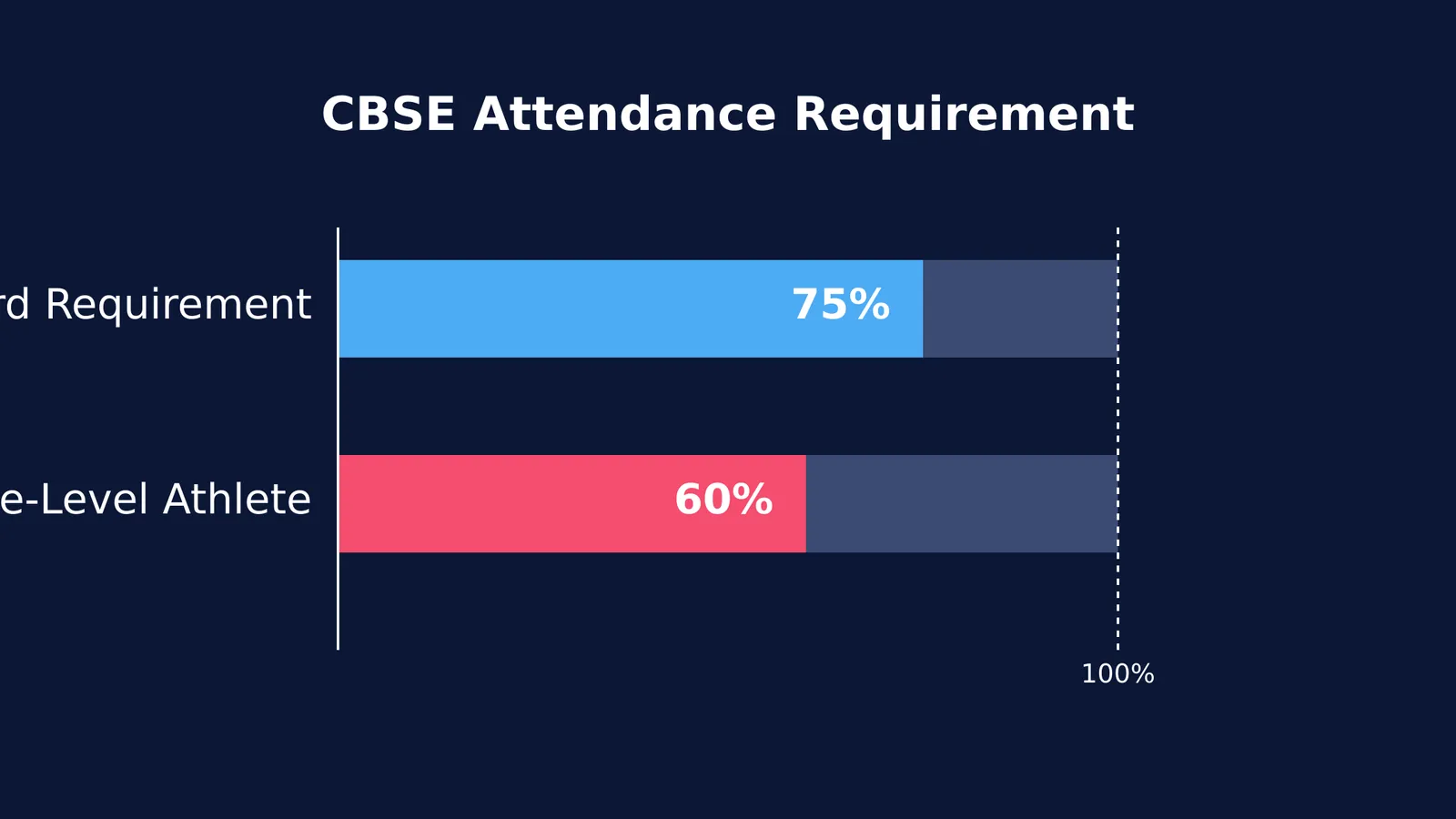
If your child is enrolled in a Central Board of Secondary Education (CBSE) school, they are protected by specific bylaws designed for student-athletes. According to the CBSE Examination Bye-Laws, the standard attendance requirement is 75%, but the board offers substantial flexibility for those representing their state or country.
Under Rule 13(d), students are granted "full attendance" for the days they are participating in sports events, provided the tournament is of not less than inter-school level (which includes state-level meets). This exemption covers both the actual days of the event and the days spent travelling to and from the venue.
For students whose attendance still falls short after these days are credited, the CBSE Chairman has the authority to condone a further shortage of up to 15%. This brings the absolute minimum attendance requirement down to 60%. This condonation is primarily aimed at students participating in National or International level sports organized by recognized federations, but schools can strongly recommend cases for dedicated state-level athletes under the clause for serious reasons.
How can you apply for a sports attendance exemption?
To ensure your child's tournament days are legally counted as present, you must submit the correct documentation to the school. The school then forwards this to the CBSE Regional Office.
A formal request letter from the parent or guardian asking for the attendance exemption.
An official participation certificate issued by the organizing authority, such as the State Sports Association or the School Games Federation of India (SGFI).
A recommendation from the School Principal in the prescribed proforma.
Always ensure the school marks your child's participation days as "Present" in the register immediately after the event. Keep original copies of all participation certificates and travel tickets as proof.
What are the best study plans for a travelling athlete?
When a state-level player returns from a week-long tournament, the worst approach is to try and read a textbook sequentially from where they left off. The sheer volume of missed work can cause severe anxiety.
Instead, teach planning skills so your child knows how to prioritise. Start by identifying the highest-weightage topics covered during their absence. A good strategy is to use a spaced revision schedule to review core concepts in short, focused bursts between training sessions, rather than attempting marathon study sessions that conflict with physical recovery. Splitting up a chapter into four manageable chunks ensures the child can learn steadily without giving up much-needed sleep.
If a student is struggling to understand a concept they missed in class, Fermi's AI tutor works out what they already know, builds a plan for the session, and teaches through it. It holds a line of reasoning, checking understanding as it goes, which means a student can sit down after practice and immediately get to work on closing their specific knowledge gaps without waiting for a teacher's office hours.
Managing a heavy sports schedule is ultimately an exercise in efficiency. By securing the official attendance exemptions and focusing on active, targeted learning, state-level players can excel in both the stadium and the exam hall.


