

On this page
Typing "make me a study timetable" into a chatbot takes ten seconds, and the answer looks tidy and confident. But a chatbot does not know your teen's bus timing, tuition days or how long a chapter of organic chemistry really takes them. Here is how to build the timetable together, check it, and rewrite it after week one.
Can AI make a study timetable for my child?
It can make a good first draft, and that is useful: a blank week is hard to plan, and a draft gives you both something to argue with. The hard part is keeping it close to real life.
Two guardrails first. UNESCO's guidance on generative AI in education suggests considering an age limit of 13 for classroom use and stresses data privacy. So sit together for the first session, and keep names, school names and phone numbers out of the chat. Let your teen type; you ask questions and catch what the chatbot cannot see.
What should you type into the chatbot?
Give it facts, not wishes. Here is a prompt you can copy and fill in:
"I am in Class 11 and preparing for school exams. Make a Monday to Sunday study timetable."
"School runs from 7:30 to 2:00. Tuition is Tuesday and Thursday, 5:00 to 7:00. I need to be asleep by 10:30."
"Subjects and topics this week: physics (laws of motion), maths (sequences and series), chemistry (mole concept), plus English homework."
"Keep each study block to 45 minutes with a 10-minute break. Leave Sunday afternoon free."
"For each block, say what I will do, such as solving problems, testing myself or revising, not just the subject name."
"Ask me questions if anything is unclear before you make the timetable."
That last line makes the chatbot ask what it needs instead of guessing.
What should you check before trusting it?
Read the draft together, one line at a time, using this checklist:
Sleep is protected. The American Academy of Sleep Medicine's consensus statement says teenagers aged 13 to 18 should sleep 8 to 10 hours per 24 hours. A plan with a 6 am start after an 11 pm finish is wrong, however neat it looks.
Times add up. No block should overlap school, travel, tuition or meals.
The methods work. In a major review of ten study techniques, practice testing and distributed (spaced) practice were rated high utility, while rereading and highlighting were rated low. A block that says "read chapter 4" should become "answer 10 questions from chapter 4".
Topics come back. Each topic should appear at least twice in the week, a few days apart, not in one long sitting.
There is slack. At least one empty block on a weekday and one at the weekend, for surprise homework.
Facts are checked. If the chatbot adds exam dates or syllabus details, check them against the school notice or official exam website.
For more depth, see our guides to building a spaced revision schedule and how parents can protect teen sleep.
How do you adjust the timetable after a week?
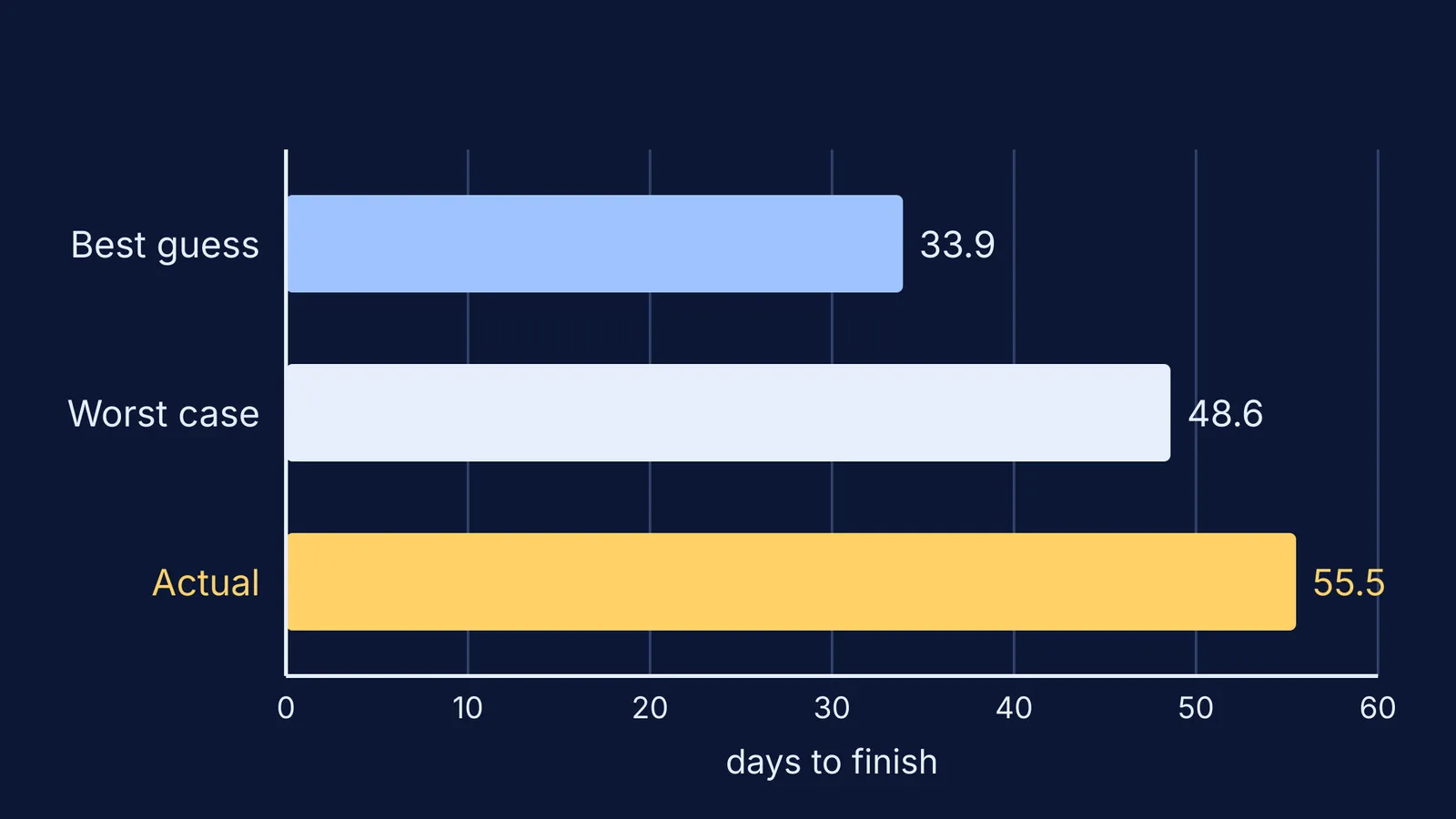
Expect the first week to run over. That is normal, not a failure. In a 1994 study by Roger Buehler, Dale Griffin and Michael Ross, psychology students predicted their honours theses would take 33.9 days on average; they took 55.5. Only 29.7% finished by their own best guess. In a later study in the same paper, the optimistic bias disappeared when people were asked to connect their prediction to relevant past experiences.
That is what the week-one review does. During the week, log each block: what was planned, what got done and how long it took. On Sunday, paste the log into the chatbot with this prompt: "Here is what I planned and what happened. Rebuild next week's timetable using my real times, not my planned ones."
A worked example. Suppose your teen planned six 45-minute physics problem blocks and finished four, because each set took about an hour. The fix is not "try harder". It is fewer, longer blocks, or fewer problems per block, with the missed sets moved to the slack slot. Ask three questions in the review:
Which blocks happened as planned?
Which ran over, and by how much?
Which never started, and why: tiredness, unclear task, or no time?
If a block keeps failing because your teen does not know where to begin a topic, the problem is understanding, not timing. Fermi's AI tutor works out what a student already knows and builds a plan for the session, so a vague "study electrostatics" block can start with a clear first step.
For more, read what AI study plans get right and wrong. If the timetable becomes a constant source of stress, or your teen seems low for weeks, talk to their school counsellor or a doctor, or call Tele MANAS on 14416.
Start this Sunday: one prompt, one checklist, one week of honest notes.


