On this page
Can a simulated titration or electrochemical cell teach as much as the real thing? For many students, school lab time is short, and a virtual lab is the only way to repeat an experiment. The research is more encouraging than you might expect, with one clear caveat: virtual and hands-on labs are good at different things.
What did studies comparing virtual and hands-on labs find?
In one study, 169 general chemistry students were randomly assigned to do an electrochemistry lab either hands-on or with a virtual lab animation (RSC Education summary). There were no significant differences on the pre-test, the post-test of conceptual and factual understanding, or a post-test where students set up a real electrochemical cell (Hawkins & Phelps 2013). Item-by-item analysis did show a difference in how students used the salt bridge. Virtual-lab students used a U-tube salt bridge 93% of the time against 50% for the hands-on group, who had used filter paper instead; the simulation only showed U-tubes.
A two-year study in first-year secondary school chemistry classes used a crossover design, so students did both physical and virtual inquiry labs. Performance was comparable between the two, students showed a preference for the virtual labs, and they rated virtual equipment easier to use (Pyatt & Sims 2012, ERIC abstract).
A review in Science by de Jong, Linn and Zacharia contrasted the value of physical and virtual investigations and offered recommendations for combining the two, rather than choosing one (de Jong et al. 2013).
Two cautions. These are a few studies, on particular topics and tools; a weak simulation will not match a good lab. And "no difference on a test" does not mean no difference in skills the test did not measure.
What virtual labs do well
Repetition. You can run the experiment ten times, which a school lab period rarely allows.
Seeing the invisible. A good simulation can show ions moving through a salt bridge, or how equilibrium shifts as you change concentration.
One variable at a time. You can change only the temperature, or only the concentration, and watch the result.
Safe mistakes. You can add the wrong reagent and see what happens without risk.
What only a real lab gives you
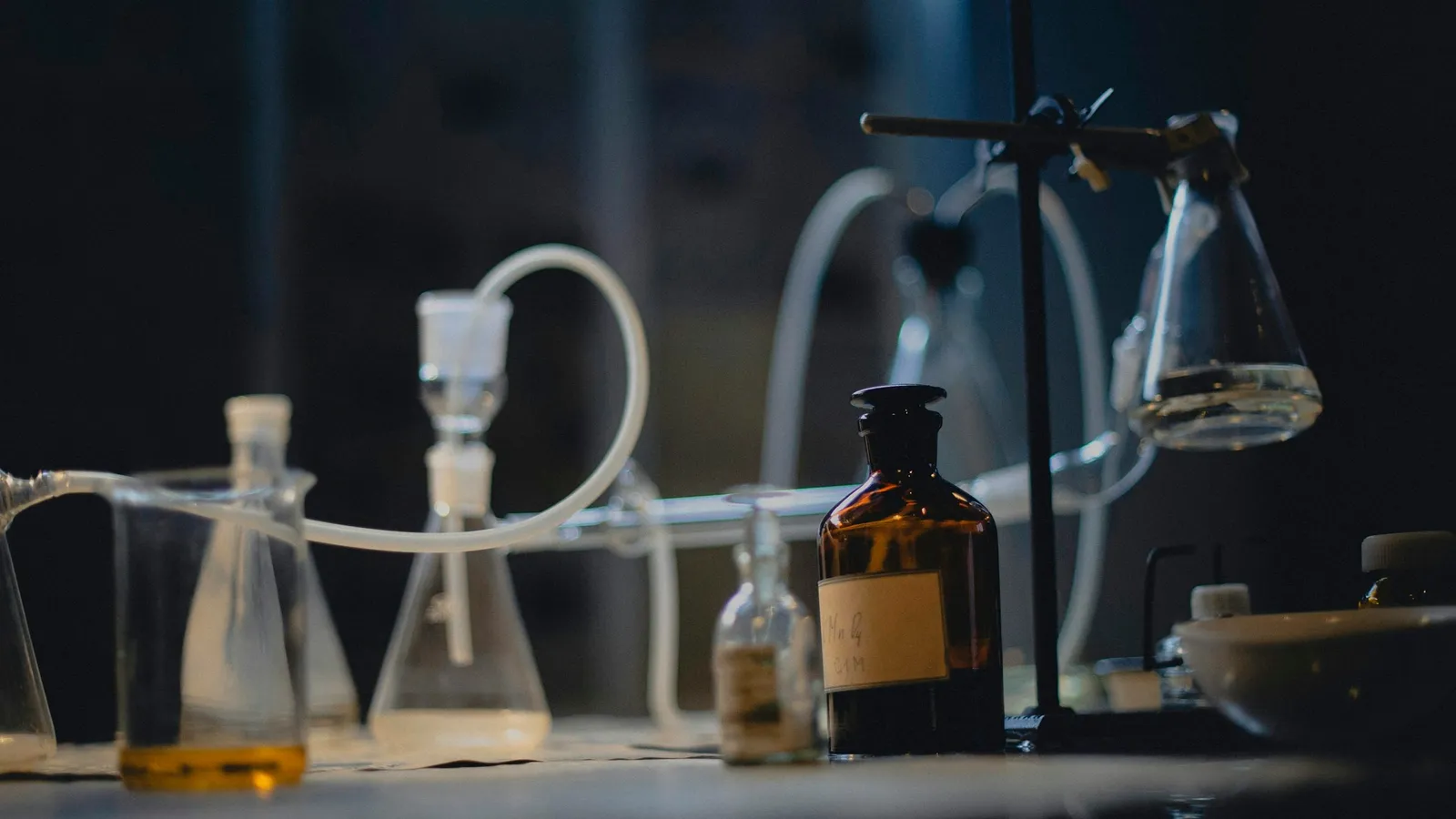
Handling glassware, reading a burette meniscus at eye level, judging the exact moment of a colour change, and dealing with the messiness of real data are skills you build with your hands. If your board's practical exam asks you to perform an experiment, that is what you are assessed on. Use lab periods mainly for technique, because the concept can be revised elsewhere.
A before-and-after routine for your next lab
Take an acid-base titration as the example:
Before the lab (15 minutes): run a virtual titration once. Write down the expected volume at the end point and what the indicator should do.
In the lab: concentrate on technique. Rinse the burette with the solution, read the meniscus at eye level, add dropwise near the end point.
After the lab (10 minutes): compare your real readings with the simulation. If they differ, list possible causes, such as an air bubble in the burette tip or overshooting the end point.
During revision: go back to the simulation and change one thing, such as the acid's concentration, and predict the new end point before you run it.
This turns one lab period into three rounds of learning. It also fits how we suggest using interactive simulations in general: predict, run, explain.
Where can students in India find virtual labs?
The Virtual Labs project is an initiative of the Ministry of Education under the National Mission on Education through ICT, with participating institutes including IIT Delhi, Bombay, Kanpur, Kharagpur and Roorkee, and it lists chemical sciences among its areas (Virtual Labs). It is aimed mainly at engineering colleges, so check which experiments match your syllabus.
For ideas that are easier to see than to read, the Fermi Simulation Lab has interactive simulations, and the Fermi Concept Library has a lesson for each chemistry concept, so you can revise the ideas behind an experiment. For when a picture is enough and when you need a simulation, see simulations or static diagrams.
Your next step: before your next practical, run the experiment virtually once and write your prediction down.