

On this page
AI can turn a vague science project idea into a day-by-day plan in minutes. The catch: it drafts confidently and checks nothing. The split that works: the AI drafts, you decide. Here is a prompt, a worked Class 9 plan and the checks to run first.
Does project-based science actually help students learn?
A project is more than an activity. The Gold Standard PBL model from PBLWorks lists seven essential design elements: a challenging problem or question, sustained inquiry, authenticity, student voice and choice, reflection, critique and revision, and a public product.
When projects are built that way, the evidence is encouraging. A cluster randomised trial of the Multiple Literacies in Project-Based Learning programme, led by Joseph Krajcik and published in the American Educational Research Journal, covered 2,371 third-graders in 46 Michigan schools. Students who had the project-based units scored 0.277 standard deviations higher on a standardised science test. They also reported more self-reflection and collaboration in science activities.
That programme came with designed units and teacher training, so one AI-drafted project will not copy those results. It shows what to aim for: a real question, sustained inquiry and an audience.
How can teachers use AI to plan a project-based science unit?
Give the AI your constraints, not just a topic.
Then push back. Ask for three alternative driving questions and keep the one your students would argue about. Ask which of the seven PBLWorks elements the plan handles worst, and what could go wrong each day.
What does a two-week science project plan look like?
Here is a worked example built from the CBSE Class IX Science curriculum for 2026-27. Under Tissues, one learning outcome reads: "Carry out an experiment to understand the growth in plant due to apical meristem."
Driving question: If we pinch off the tip of a plant, will it grow taller, bushier, or stop growing?
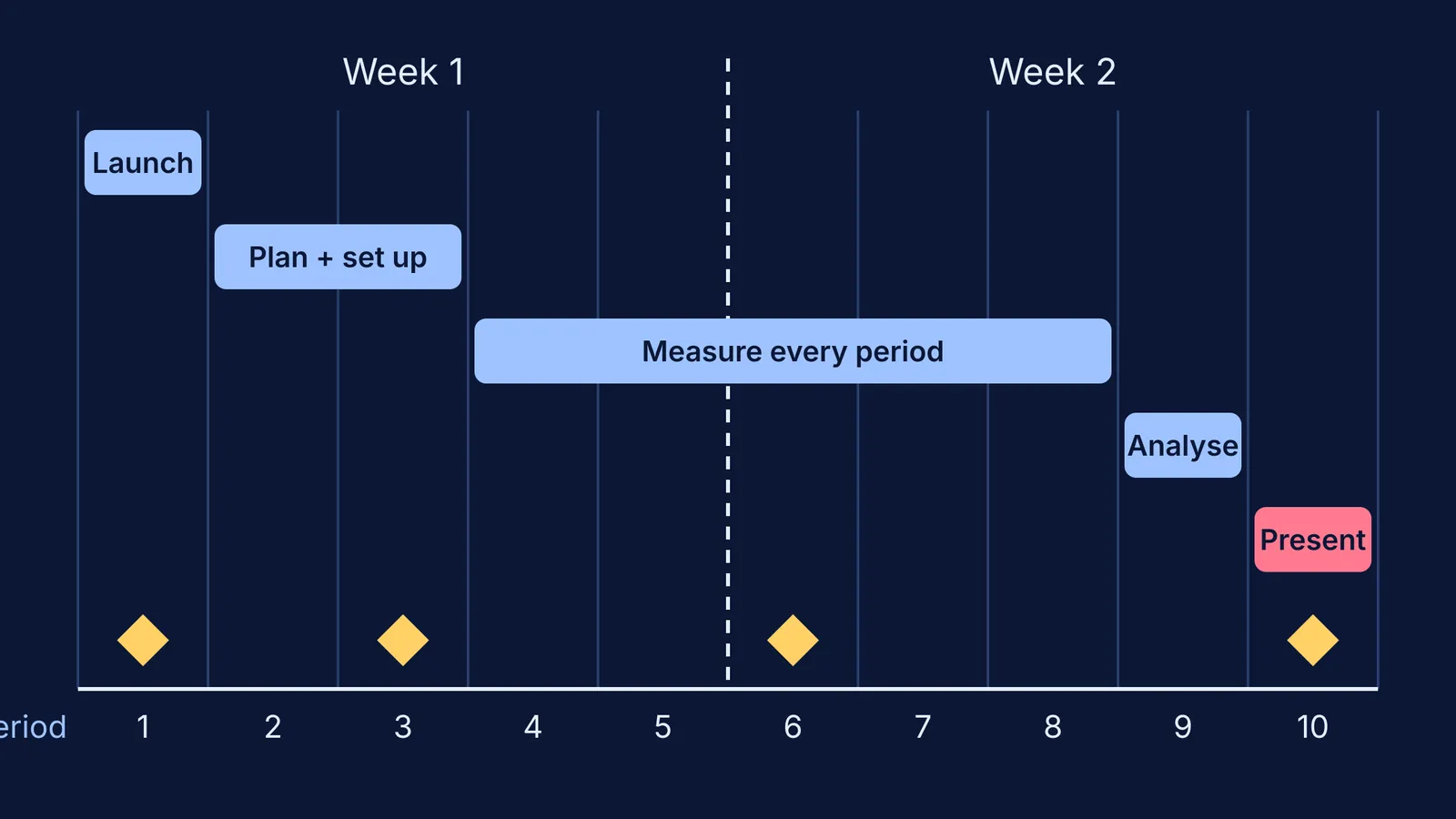
Period 1, launch: show the question, and each group writes a prediction. Milestone: a hypothesis card.
Periods 2-3, plan and set up: groups choose what to measure (height, side shoots), set controls and remove the tips from half their plants. Milestone: you sign off each method.
Periods 4-8, measure: ten minutes of recording each period, the rest on meristems in the Tissues chapter. In period 6, groups swap data sheets and critique each other's method.
Period 9, analyse: tables and graphs, then a claim backed by the data.
Period 10, present: a short talk to another section or to parents, then a written reflection.
Students who get stuck on what a meristem actually does can work through it with Fermi's AI tutor, which works out what they already know and builds a plan for the session. The Fermi Concept Library covers every concept in biology, each with its own lesson.
How do you check an AI project plan for feasibility and safety?
This is the part the AI cannot do for you. Go through the plan line by line:
Time: has anyone seen this result happen in two weeks with these plants? If not, run a pilot before the project starts, and sow seedlings before period 1.
Materials: check prices locally. AI cost estimates are guesses.
Safety: list every blade, chemical, heat source and plant, and check each against your school's lab rules. The CBSE curriculum lists handling common laboratory chemicals and apparatus safely as a learning outcome in its own right.
Data: the AI must never supply results. Students measure; the AI only helps them plan and explain.
Age: UNESCO's guidance on generative AI in education asks countries to consider an age limit of 13 for classroom use. With younger students, keep the AI on your side of the desk.
For more on testing AI-suggested ideas, see our guide to checking whether an AI science fair idea is feasible.
How do you link the project to the syllabus and assess it?
Tag each milestone with the outcome it serves. The CBSE Class IX Science curriculum describes competency C 8.2 as designing and implementing a plan for scientific inquiry, from hypotheses and variables to data, inferences and communicating findings. That one competency maps onto the ten periods above.
The same document sets internal assessment for Class IX at 20 marks, which includes a portfolio and subject enrichment practical work. Ask your exam in-charge whether a group's project log can count towards either.
Build the rubric around four criteria taken from C 8.2: question and hypothesis, fair-test method, data and graphs, and conclusion and communication. AI can draft the level descriptors quickly; our guide to using AI to write marking rubrics shows how to check them.
If students want to keep going after the project, our guide to planning a home experiment with AI is the next step.


