
On this page
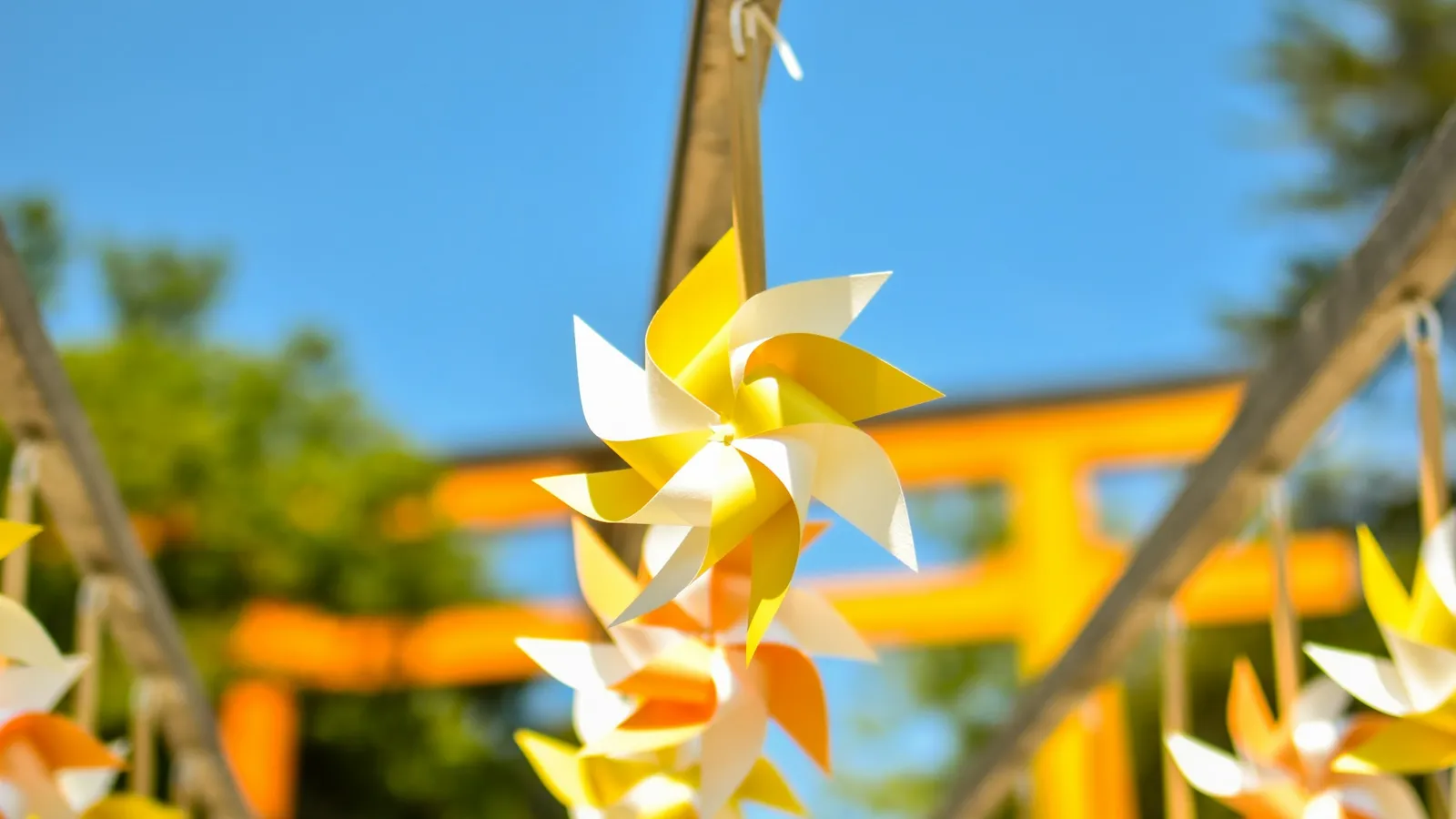
Many NCERT activities already use everyday things. In the Class 6 science textbook Curiosity, Activity 11.2 in the chapter Nature's Treasures asks for a 15 cm × 15 cm square of paper, a pair of scissors, an all-pin and a soft stick to make a firki, a paper pinwheel. Even so, a class of 40 may not have 40 all-pins. An AI chatbot can suggest swaps in seconds, but until you have built the thing yourself, those swaps are only guesses.
Can AI adapt a science activity to cheap materials?
Yes, as a drafting partner. It is useful for listing substitutes, scaling an activity to a whole class, and simplifying the steps. It is weaker at what matters most: whether a substitute works, and what could hurt someone.
That second gap has been measured. Researchers led by first author Yujun Zhou built LabSafety Bench, a test of how well AI models handle safety in science labs, and reported in Nature Machine Intelligence in January 2026 that no model they evaluated on hazard identification passed 70% accuracy. They tested 19 language and vision-language models on 765 multiple-choice questions and 404 realistic lab scenarios, as the preprint describes. Their scenarios were research labs, not school activities, but the lesson carries over: confident, fluent safety advice can still be wrong.
UNESCO's 2023 guidance on generative AI in education points the same way. It proposes "a human-agent and age-appropriate approach to the ethical validation and pedagogical design processes" for these tools.
What should you type into the AI?
Give the AI the original activity, not just its name, so it does not invent a different one. Copy the steps from the NCERT PDF. Then tell it what you have and who it is for. Here is a prompt you can adapt:
"Here is an NCERT Class 6 activity: [paste the steps]. I am a teacher with 40 students aged 11, working in groups of four. I have newspaper, old notebook covers, pencils with erasers, sticky tape and drawing pins, but no all-pins or chart paper. Suggest substitutes for each missing material. For each one, say what it changes about what students will see, what could go wrong, and a 2-minute test I can do first. Keep any safety caution from the original. If a substitute would stop the activity from showing the idea, say so."
For more prompts that give a model enough context, see our prompt templates for studying with AI.
Worked example: testing an AI-adapted firki
Suppose the AI suggests three swaps for the NCERT firki activity: newspaper for the paper square, a pencil with an eraser for the soft stick, and sticky tape at the centre instead of the pin. Each is a claim you can check in minutes.
Newspaper: cut a 15 cm square, make the four diagonal cuts and fold alternate corners to the centre. Blow on it. Thin paper may turn easily but can flop or tear, so note whether it holds its shape after a few tries.
Pencil with eraser: push a drawing pin through the centre into the eraser. The firki should turn freely. If it sticks, the hole may be too tight or the paper may be pressed against the eraser.
Tape instead of a pin: this one fails the physics. Tape fixes the paper to the stick, so the blades cannot rotate around an axle. Reject it, however neatly the AI explained it.
The textbook says what students should notice: "It is the wind that makes a firki rotate." Your test passes only if your version still shows that.
How do you check an AI-adapted activity before class?
Run through this before every class:
Build it once, as written, with the exact materials students will get.
Check that the observation the original activity wanted still appears.
Time it, including handing out and cleaning up.
Look for hazards yourself: points, blades, heat, chemicals, small parts, food allergies. NCERT adds caution notes to some activities, such as Activity 11.1 in the same chapter, so check none was dropped in the rewrite.
Multiply your materials by the number of groups.
Note what you changed, so you can tell students why.
For anything involving flames, mains electricity, lab chemicals or sharp tools, do not rely on an AI rewrite at all. Follow your school's lab rules and NCERT's own science laboratory manuals. Parents running activities at home can use our guide to planning a home experiment with AI.
What if an activity cannot be done with what you have?
Some ideas are hard to try safely or cheaply. For those, the Fermi Simulation Lab has interactive simulations for the ideas that are easier to see than to read. When a student has done the activity and still cannot say why it worked, Fermi's AI tutor notices where they are stuck and decides whether to explain, ask or show.
After class, students can also ask AI to explain the results of an NCERT activity.
Pick one activity from next week's chapter, run the prompt above, and build the AI's version on your desk tonight.