

On this page
What is the odd one out method in science?
It is a simple game with a deep cognitive purpose. You look at three or four items—such as images, materials, or chemical formulas—and decide which one does not belong. But the answer matters less than the reason.
In their 2013 book *Active Assessment for Science*, Stuart Naylor, Brenda Keogh and Anne Goldsworthy explain that this method requires learners to select an item and justify their reasoning. You must observe the items, find what the majority share (the logic of inclusion), and articulate why one breaks the rule (the logic of exclusion).
When you perform attribute analysis, you evaluate multiple features—such as state of matter, bonding type, or biological classification—simultaneously. This prevents blurred generalizations, where you might think two concepts are identical just because they appear in the same textbook chapter.
Why do odd one out questions help you learn?
Traditional multiple-choice questions have one correct answer and three distractors. A well-designed odd one out set, however, often has multiple valid answers. This prevents you from simply guessing the teacher's password.
The Explorify programme relies heavily on this principle. For example, if you are given a wooden stick, a plastic spoon, and a metal spoon, any of them could be the odd one out. The wooden stick is not a spoon. The plastic spoon is man-made. The metal spoon conducts heat quickly. The cognitive benefit comes from performing the attribute analysis to justify your choice.
Does the odd one out method work for competitive exams?
Yes. Exams like JEE and NEET increasingly test conceptual clarity through assertion-reason questions and statement-based problems. If you have only memorised facts, these questions can be a trap.
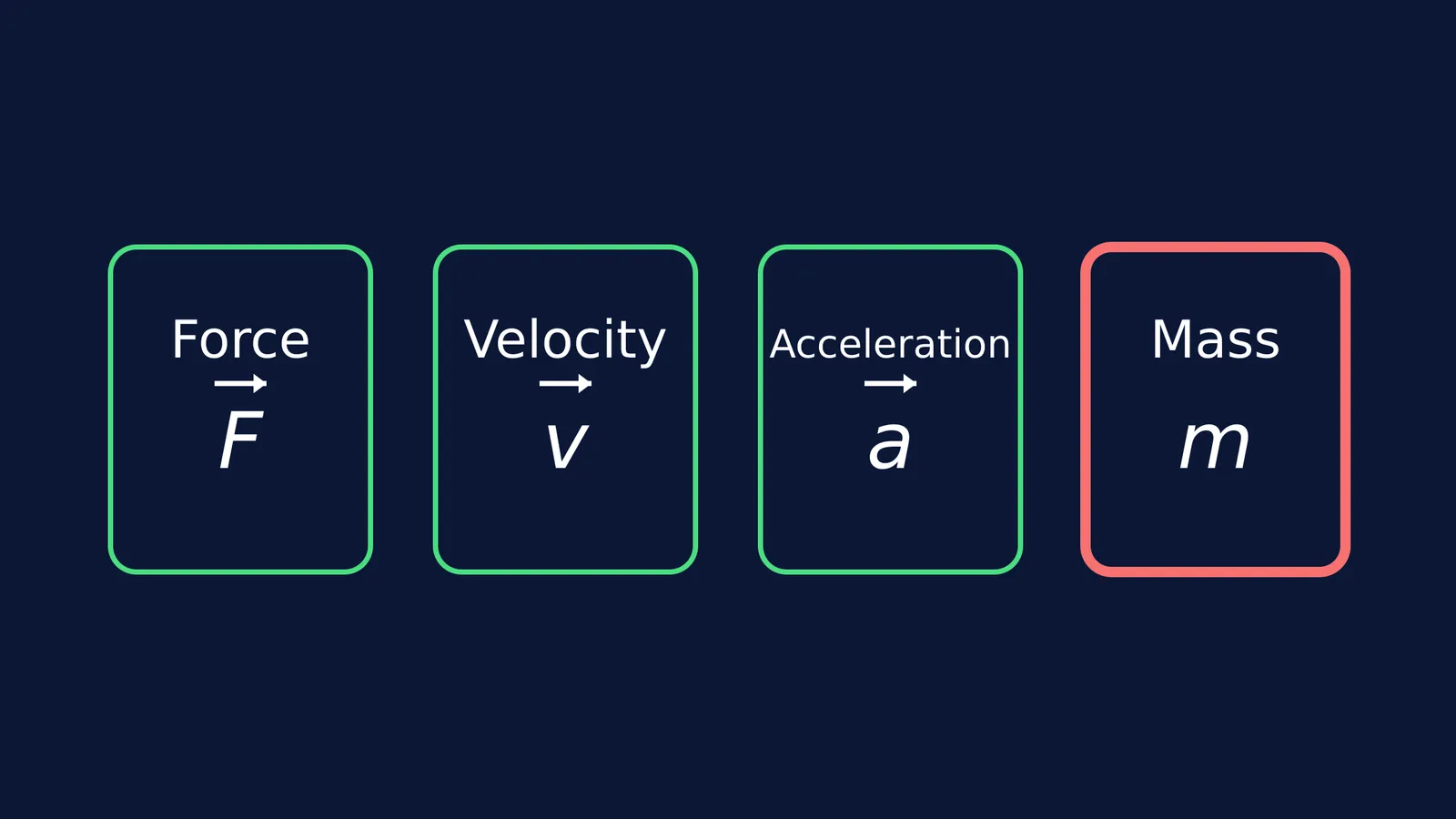
Practising odd one out tasks trains you to spot subtle differences between similar-looking concepts. For example, in biology, you might group diseases by their causative agents (viruses versus bacteria), their vectors, or the organs they affect. In physics, you might distinguish between scalar and vector quantities, or conservative and non-conservative forces. By forcing yourself to articulate the rule that connects three items and excludes the fourth, you build a mental map that is much harder to trick during a high-pressure exam.
How to ask AI for odd one out questions?
You can use an AI tutor to generate these sets for any chapter you are studying. The key is to tell the AI not to give you the answer, so you are forced to do the reasoning yourself.
A step-by-step example in biology
Let's say you are studying cell biology and you ask the AI for a set. The AI gives you:
Mitochondria
Chloroplasts
Ribosomes
Nucleus
At first glance, they are all cell organelles. But how do you find the odd one out?
You might choose ribosomes because they are not bound by a membrane, whereas the others have membranes.
You could choose chloroplasts because they are only found in plant cells, while the others are in both plant and animal cells.
You might pick the nucleus because it contains the main genomic DNA, while mitochondria and chloroplasts have their own circular DNA, and ribosomes have RNA.
When you present any of these arguments to an AI tutor, it evaluates your logic. If you say "Ribosomes, because they don't have DNA," the AI might correct you by pointing out that ribosomes do not have DNA, but they are made of rRNA and proteins, gently steering you to the stronger membrane argument. This dialogue is where the real learning happens.
Using Fermi for active assessment
If you are revising for exams and find yourself memorising facts without understanding them, try this method with Fermi's AI tutor. Fermi teaches rather than just answering questions, so it can hold a line of reasoning across a session.
You can read up on a topic in the Fermi Concept Library, and then ask the tutor to generate an odd one out set. When you defend your choice, the tutor will notice where you are stuck, decide whether to ask or explain, and help you refine your scientific vocabulary. It works just as well when you ask AI for intuition before the formula in physics or when you write your summary, then compare it with AI.


