

On this page
Large language models have rapidly improved at solving physics problems, but they are not infallible. If you are using an AI to understand modern physics concepts like the photoelectric effect, it helps to know where the machine is reliable and where it simply parrots textbook definitions.
How accurate are AI tutors for modern physics?
Recent evaluations show a sharp contrast between how AI handles standard exam questions and how it copes with deep physical reasoning. When tested on multiple-choice formats, AI answer engines can appear remarkably capable, often matching or exceeding the scores of human candidates on standard exams.
According to a 2024 study in the journal *JMIR Medical Education*, GPT-4 passed the NEET 2023 exam and achieved an impressive 73% accuracy in the physics section. A 2025 study from German researchers found that reasoning-optimized models like o1-preview even outperformed human participants on physics Olympiad problems, which demand complex, multi-step problem-solving skills.
But this does not mean AI understands the physical world. A 2025 benchmark called UGPhysics tested 31 leading models on 5,520 undergraduate-level problems and found the highest accuracy was only 49.8%. Large language models are excellent at mathematical execution, but they still struggle with the specific conceptual depth required to picture complex physical systems. They can manipulate the symbols, but they often lose track of what those symbols represent in reality.
Why does AI struggle with modern physics?
When you ask an AI to explain the photoelectric effect or nuclear binding energy, it will confidently recite Einstein's equations. But it often fails on the nuances that trip up human students as well:
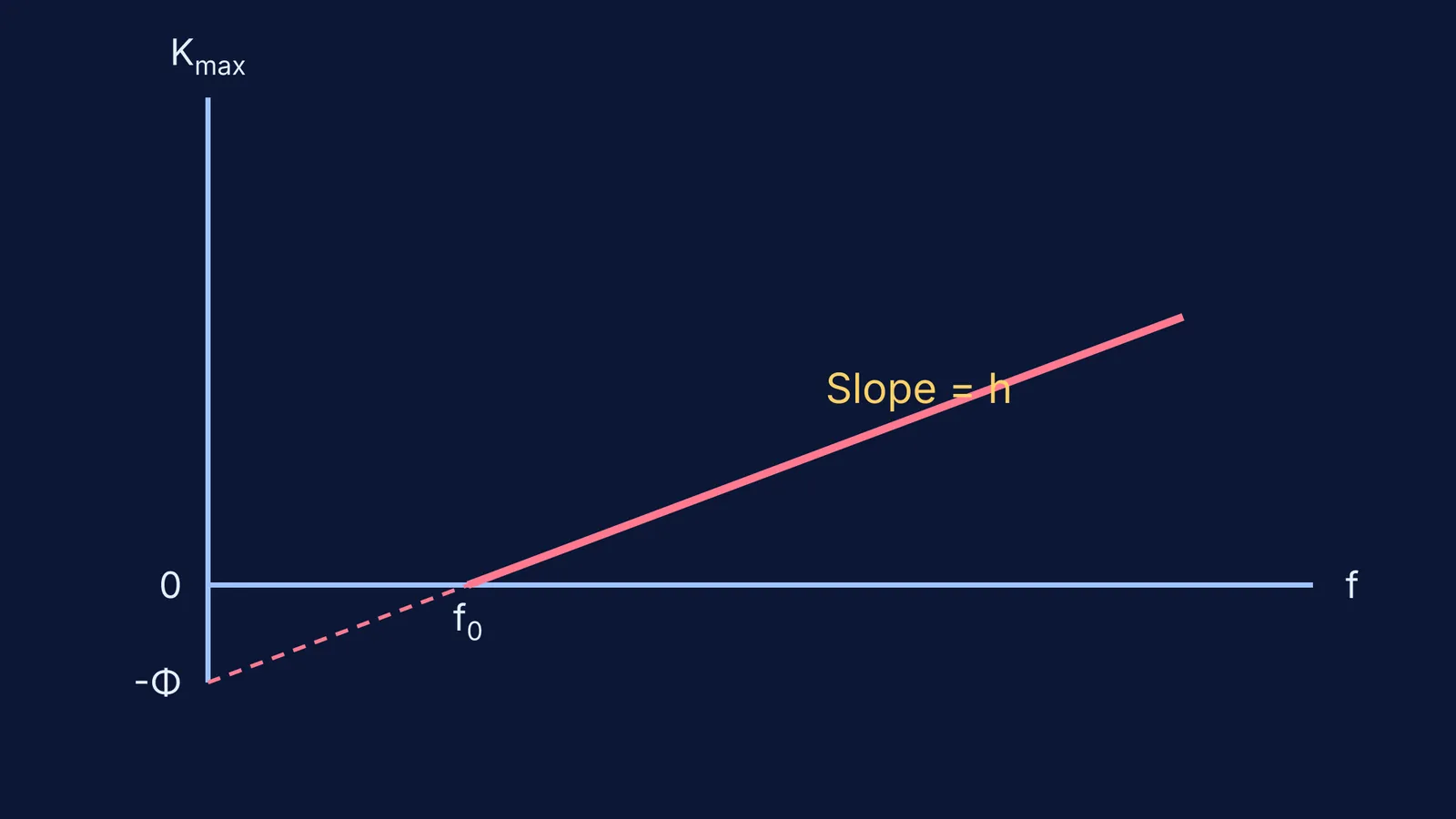
Misreading diagrams: AI models still struggle with visual data, such as reading an I-V characteristic curve or identifying the stopping potential from a graph. They might misinterpret an axis or fail to see where a curve intercepts zero.
Unit traps: In modern physics, you constantly convert between electron-volts (eV), Joules, and nanometres. AI models are prone to dropping powers of ten (like Planck's constant) in multi-step calculations, leading to answers that are mathematically precise but physically impossible.
Mirroring misconceptions: If you ask an ambiguous question about light intensity versus frequency, the AI might agree with your flawed premise instead of correcting it.
If you are stuck on photoelectric effect problems for JEE and NEET, an answer engine might just print a confused calculation. Instead, a true AI tutor holds a line of reasoning across a session. Fermi's AI tutor works out what you already know, builds a plan for the session, and teaches through it—drawing the figure and checking understanding as it goes.
How can I check AI physics answers for mistakes?
Because AI writes with high confidence, you cannot rely on it blindly. Here is a framework for how to evaluate an AI tutor when you are revising:
Did it state the assumptions? A good explanation should tell you if it assumes non-relativistic speeds for an electron. Modern physics is built on specific boundary conditions, and dropping them ruins the model.
Do the units match? Always do a quick dimensional analysis of the final formula before you plug in the numbers. This simple step catches most AI calculation errors.
Is the magnitude physically possible? If the AI tells you an electron is moving faster than light, it has made a conceptual mistake, no matter how elegant the maths looks.
While AI tutors vs answer chatbots is an ongoing debate, the best way to use these tools is for step-by-step guidance rather than final answers. If you need help with a specific calculation, the Fermi Problem Library has worked problems with a step-by-step solver that explains the reasoning rather than printing an answer.


