On this page
A shortlist for a university, scholarship or summer programme interview means the panel already likes your record on paper. The interview is where they hear you think. An AI chatbot can be a patient practice partner, if you use it to rehearse rather than to write your lines.
Why practise an interview with AI at all?
A 2018 meta-analysis by Powell, Stanley and Brown of job-interview studies found that self-reported interview anxiety and interview performance correlate at −.19: more anxious candidates tended to do somewhat worse. The authors call that a medium effect for this research area. Those were job interviews, but familiarity with the format is something you can control.
The evidence on AI practice specifically is early. In a small 2025 preprint on an AI mock technical interviewer with 20 participants, many found it realistic and helpful and reported more confidence, but noted problems with flow and timing. In a 2025 Turkish study, final-year nursing and midwifery students who used a ChatGPT-4o interview simulation reported feeling more employable, but their interview anxiety did not differ significantly from a group without it. Treat AI practice as a rehearsal space, not a proven fix for nerves.
How do you set up an AI mock interviewer?
Your first message sets up the session: a role, a context and rules.
Three details make the difference:
One question at a time. A list of ten questions becomes a reading exercise.
Real material. Paste in the programme's own description of what it looks for, from its official page. Ashoka University, for example, says its admissions interview seeks to "understand and get to know the candidate, their background and story".
Answers out loud. Use voice mode, or say each answer aloud before typing it.
The follow-up rule matters most, because a "why?" is what separates a prepared answer from a memorised one. For revision, you can also make an AI chatbot quiz you properly.
What feedback should you ask the AI for?
Ask for feedback on clarity, not a better answer. Hattie and Timperley's review, The Power of Feedback, calls feedback one of the most powerful influences on learning and achievement, and notes that its impact can be positive or negative, depending on the type of feedback and how it is given. For interviews, that means notes on what to fix in your own words; a polished replacement just hands you someone else's paragraph.
After an answer, ask the AI to check four things:
Did my first sentence answer the question?
Did I give one specific example from my own life?
Did I connect it to this programme?
Where did I ramble or repeat myself?
Ask it to quote the sentence where you lost focus, then answer again.
What does a good practice round look like?
A worked example for a summer science programme:
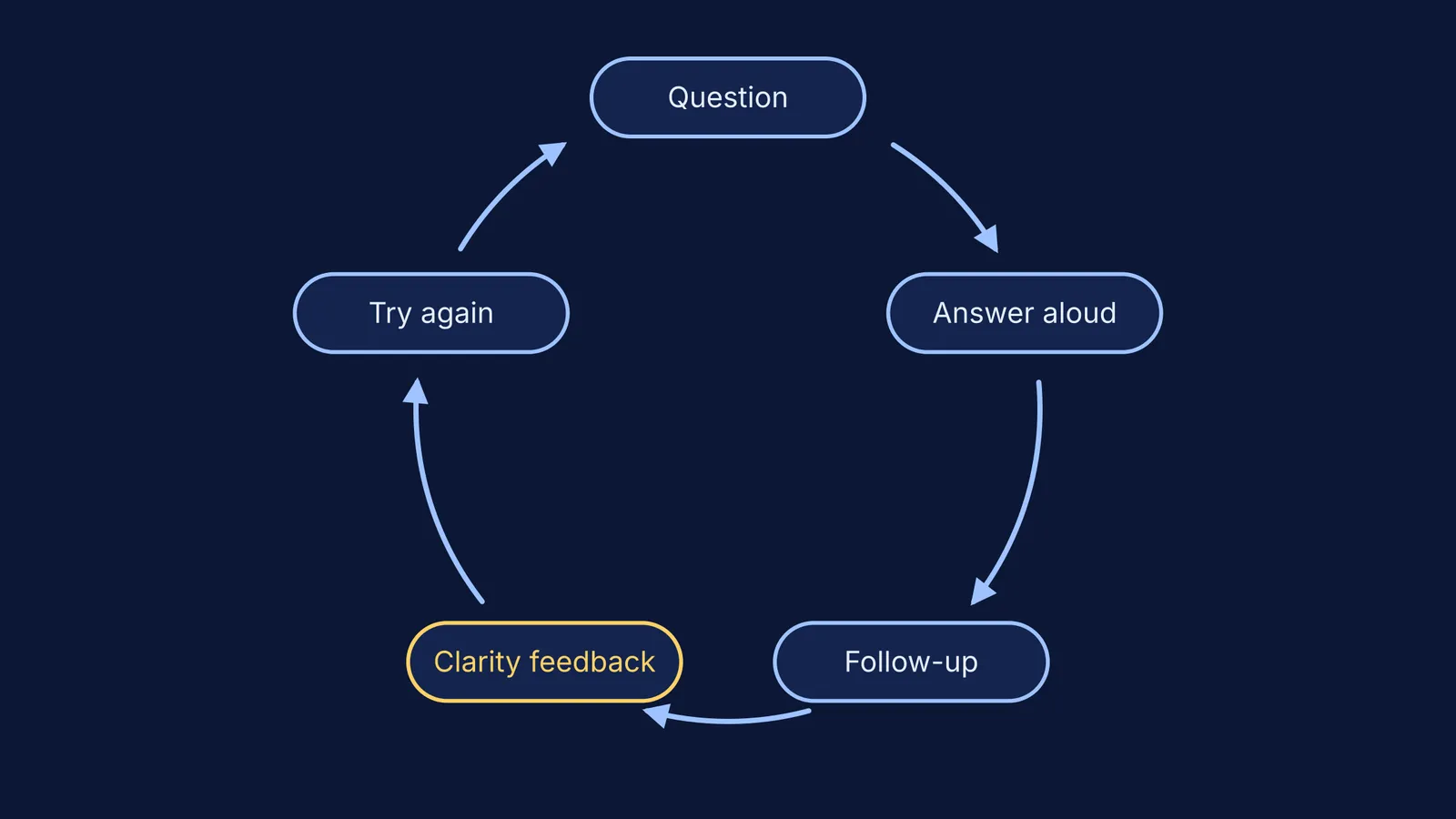
Question: Why do you want to join this programme?
First attempt: "I have always been passionate about science and I want to learn from great researchers and improve my skills."
Clarity feedback, using the four checks: the first sentence is general, there is no example, nothing ties it to this programme, and "passionate" is doing all the work.
Follow-up from the AI: What is something in science you tried to work out on your own?
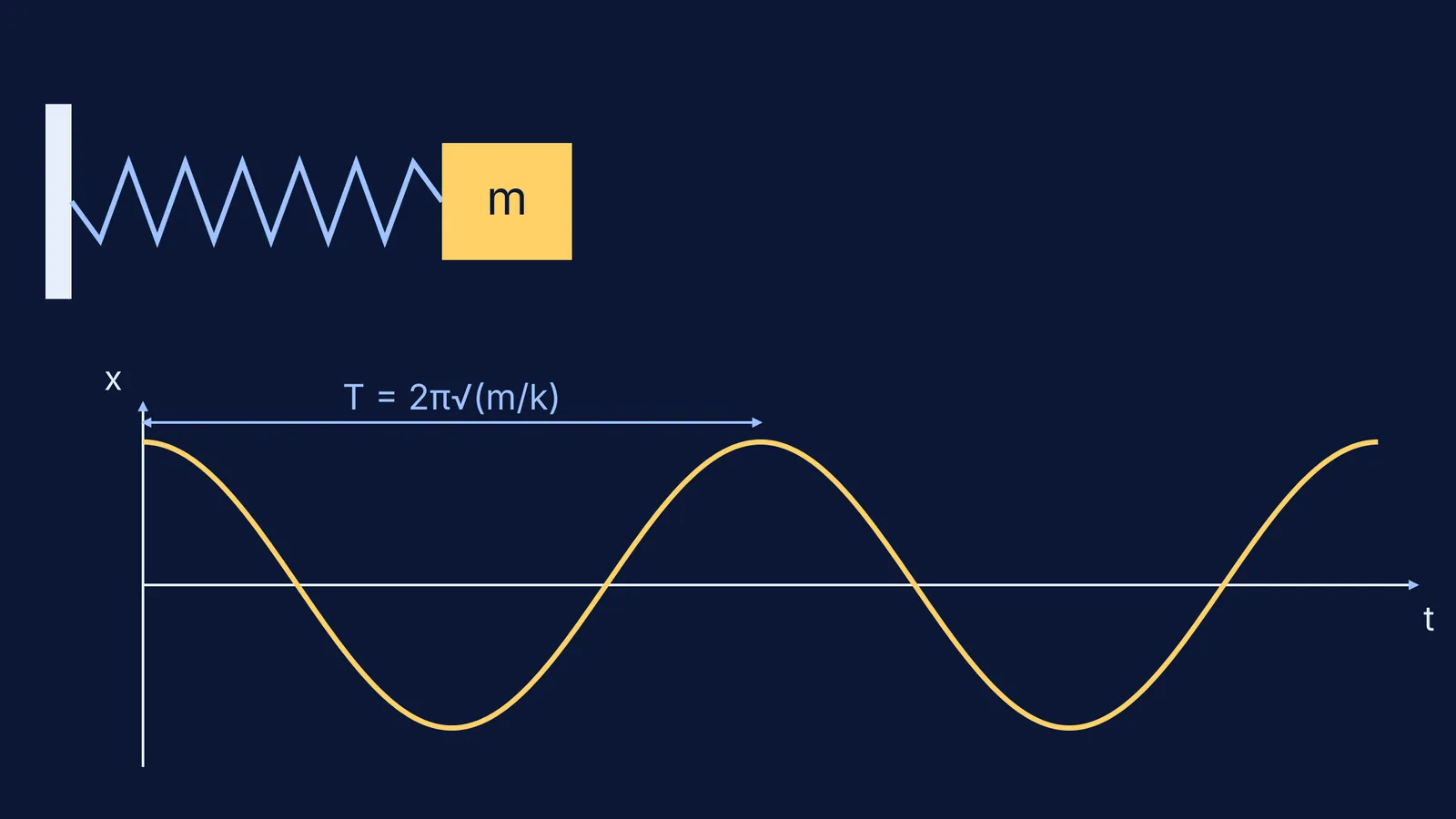
Second attempt, in your own words: "Last year I made a pendulum from a bolt and a string to see whether a heavier bob swings slower. It didn't, and I wanted to know why. The lab weeks in your programme would let me test questions like that properly."
The second answer is not grander, just clearer, and gives the panel something to ask about. If that follow-up exposes an idea you cannot explain, such as why a pendulum's period does not depend on the bob's mass, fix the science first. Fermi's AI tutor works out what you already know and builds a plan for the session, and the Fermi Concept Library has a lesson for every concept in physics, chemistry, biology, mathematics and computing.
What should you avoid?
Memorised scripts. They break at the first unexpected follow-up.
Trusting the AI on programme facts. Check dates, eligibility and format on the official page. Our guide to scholarships for science students in India lists where to look.
Pasting personal documents. Leave out ID numbers, mark sheets and your address. Parents can check our guide to privacy in learning apps.
Practising only with AI. Do at least one round with a teacher, parent or friend; a real face reacts.
Some worry is normal. Tele MANAS is a free, 24/7 national helpline that lets callers choose their language.
Tonight, try one round: one role, three questions, one retry on the weakest answer.