On this page
Before the 1840s, surgery meant pain, and surgeons worked fast because patients could not bear more. Your NCERT chemistry book mentions, in one margin note, that diethyl ether was once widely used as an inhalation anaesthetic. This post covers the day it was first used in public, what the original hospital record actually says, and the chemistry that made ether work. It ends with what a student can take from the story.
Who was William Morton?
William Thomas Green Morton (9 August 1819 to 15 July 1868) was a Boston dentist, as the American National Biography entry heading records. According to a 2022 review of the original records in Annals of Surgery Open, Morton had first used ether in his dental practice on the advice of the Harvard chemist Charles Thomas Jackson. He poured it on a handkerchief held over the patient's mouth and nose. That gave a light, short effect, enough to pull a tooth but not enough for surgery.
What happened on 16 October 1846?
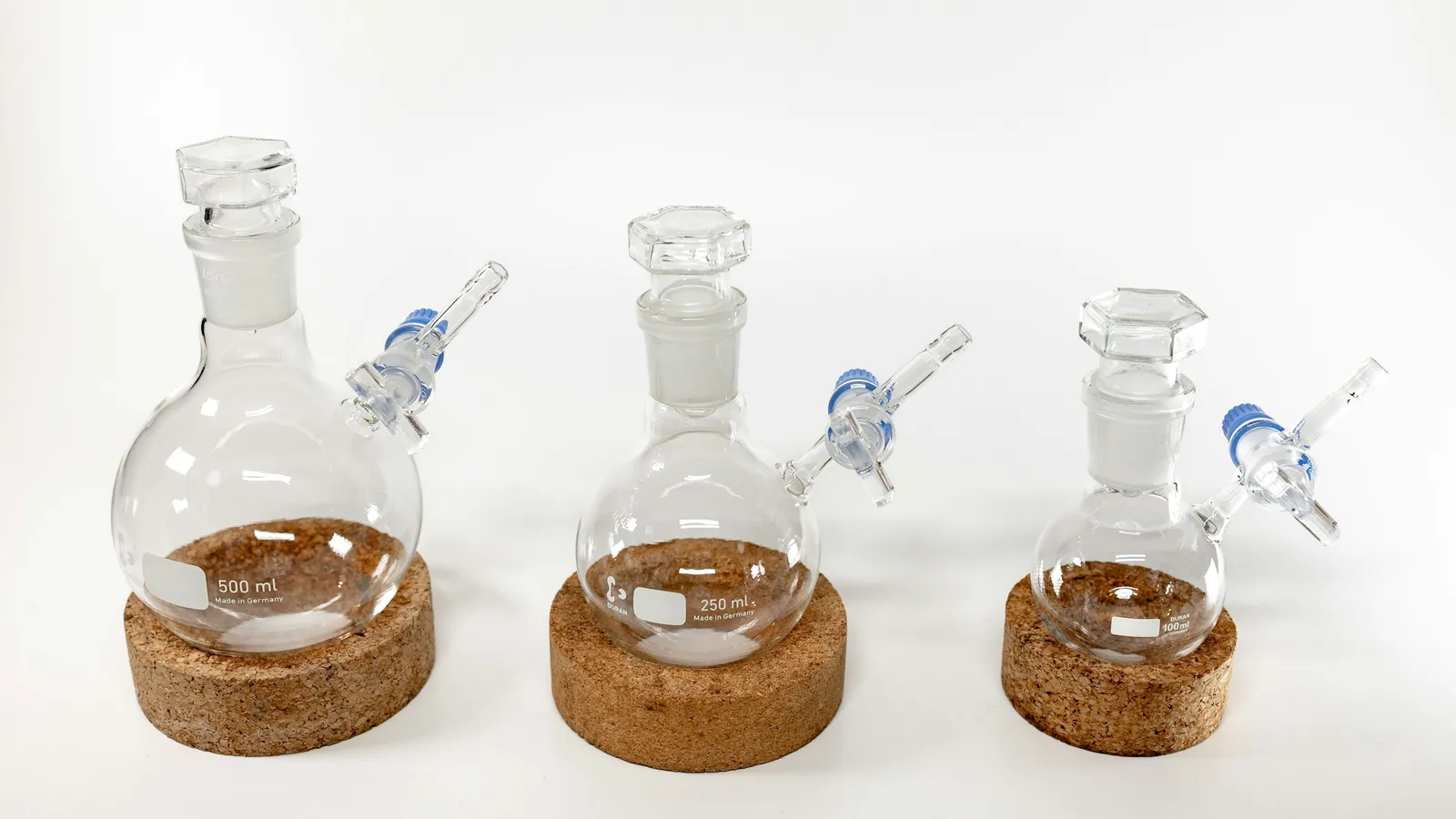
The same review describes the day. On 14 October, Warren's surgical intern wrote to Morton inviting him to demonstrate his method at Massachusetts General Hospital on Friday the 16th. For a longer operation Morton needed a deeper dose, so he ordered a glass inhaler from a local glassmaker. It was not ready on time, and the operation started late while everyone waited.
The patient was Edward Gilbert Abbott, aged 21, with a soft swelling under the left side of his jaw that he had had since birth. The surgeon was John Collins Warren. The record shows the operation was an attempt to tie off the blood vessels feeding the swelling, not a full removal. A note pasted into the hospital's 1846 surgical records says that after four or five minutes Abbott "appeared to be asleep". He did not flinch at first, but later in the operation he moved his limbs and cried out. Afterwards he said he had felt no pain, "only a sensation like that of scraping the part with a blunt instrument".
Was it really a clear success?
Not at first. The surgeon Henry Jacob Bigelow, who published the first report of the operations on 18 November 1846 in the Boston Medical and Surgical Journal, wrote that Abbott muttered as if half-conscious and said the pain was "considerable, though mitigated". Warren himself later wrote that he was not satisfied until he had asked Abbott several times whether he had suffered.
The famous line "Gentlemen! this is no humbug", the review points out, comes from Morton's authorised biography of 1859, which was written to support his campaign to be recognised as the sole discoverer. Treat it as part of a later argument, not a record of the day.
The clearer evidence came next. On 17 October surgeon George Hayward removed a fatty lump from a woman's arm under ether, and she said she had known nothing of the operation. On 7 November Hayward amputated a leg above the knee under ether. Bigelow's report of these cases spread the method quickly.
Why does ether work as an inhaled anaesthetic?
Diethyl ether is (C₂H₅)₂O, two ethyl groups joined by an oxygen atom. PubChem gives its boiling point as 34.6 °C at normal pressure, below body temperature. It evaporates readily from a cloth or a sponge, so a patient can breathe in its vapour. The 2022 review explains that inhaled anaesthetics act in a dose-dependent way: lower doses remove memory and awareness, and higher doses stop movement in response to pain. That matches what the observers saw: Abbott seemed unaware of pain but still moved.
The NCERT Class 12 chapter Alcohols, Phenols and Ethers adds that ether was later replaced as an anaesthetic because of its slow effect and unpleasant recovery period. PubChem also classes it as an extremely flammable liquid and vapour, a serious risk in an operating room.
Worked example: how heavy is ether vapour compared with air?
At the same temperature and pressure, the density of a gas is proportional to its molar mass.
Molar mass of C₄H₁₀O = (4 × 12) + (10 × 1) + 16 = 74 g/mol.
The average molar mass of air is about 29 g/mol.
Ratio = 74 ÷ 29 ≈ 2.6.
So ether vapour is about 2.6 times as dense as air, and it tends to sink and collect near the floor. Combined with its flammability, that is why open flames near ether were so dangerous.
Common mistakes:
Writing the formula as C₂H₅OH. That is ethanol. An ether has the oxygen between two carbon groups: C₂H₅–O–C₂H₅.
Using 32 for air. 32 g/mol is oxygen. Air is mostly nitrogen, so its average is about 29.
Confusing boiling point with "boiling in the body". A low boiling point means fast evaporation, which makes ether easy to give as vapour.
Our post on alcohols, phenols and ethers covers how ethers are made and how they react.
Who deserves the credit?
The 2022 review notes that the significance and priority of this demonstration have long been debated, and Morton's own biography pushed his claim hard. Pain relief also left another danger in place: infection after surgery. That second problem is the story of Joseph Lister and antiseptic surgery.
What can a student take from this story?
Go back to the primary record. The handwritten hospital notes tell a more careful story than the famous quote.
Separate the trial from the proof. One partly successful case started the work. Repeated cases settled it.
Know the chemistry behind the medicine. Boiling point, vapour density and flammability decided how ether could be used and why it was replaced.
If you mix up ethers and alcohols, the Fermi Concept Library covers every concept in physics, chemistry, biology, mathematics and computing, so you can review functional groups one at a time.
Next step: draw the structures of ethanol and diethyl ether side by side, and work out the molar mass of each.