On this page
Before the late 1860s, a broken bone that pierced the skin was often a death sentence. The bone could be set, but the wound frequently turned septic, and infections like pyaemia and hospital gangrene swept through surgical wards. Joseph Lister changed this by taking an idea from chemistry and microbiology and applying it at the bedside. This post explains his reasoning, what carbolic acid did, and how to read his results with a fair eye.
Who was Joseph Lister?
The Oxford Dictionary of National Biography entry is titled "Lister, Joseph, Baron Lister (1827-1912), surgeon and founder of a system of antiseptic surgery". When he published his key paper in 1867, its byline describes him as Professor of Surgery in the University of Glasgow, and his surgical wards were in the Glasgow Royal Infirmary. By the end of 1869 he had moved to the University of Edinburgh as Regius Professor of Clinical Surgery, as the title page of his 1870 pamphlet shows.
How did Pasteur's work change his thinking?
Lister's paper On the antiseptic principle in the practice of surgery (The Lancet, 21 September 1867)51827-4) sets out the argument in its first paragraphs.
He had concluded that the essential cause of suppuration (pus formation) in wounds was decomposition of blood or damaged tissue in the wound. Preventing it had seemed hopeless, because people believed oxygen in the air caused putrefaction, and you cannot keep air out of a wound.
Then, he wrote, "it had been shown by the researches of Pasteur that the septic property of the atmosphere depended, not on the oxygen or any gaseous constituent, but on minute organisms suspended in it." That changed the problem. If living organisms caused the decay, a wound did not need to be sealed from air. It needed a dressing that would destroy those organisms.
Our post on Louis Pasteur and germ theory covers the experiments Lister was reading.
What did he actually do with carbolic acid?
The material he chose was carbolic acid, also called phenic acid; today we call it phenol. In the 1867 paper he describes it as a volatile organic compound that has a strong destructive effect on "low forms of life" and calls it the most powerful antiseptic then known to him.
He tried it first on compound fractures, where a broken bone breaks the skin. These cases suited a test well: any organisms would have entered at the moment of the accident, and in his experience the effects of decomposition in such wounds were "especially striking and pernicious." He treated the wound and dressings with carbolic acid to destroy any organisms that had entered at the moment of the accident.
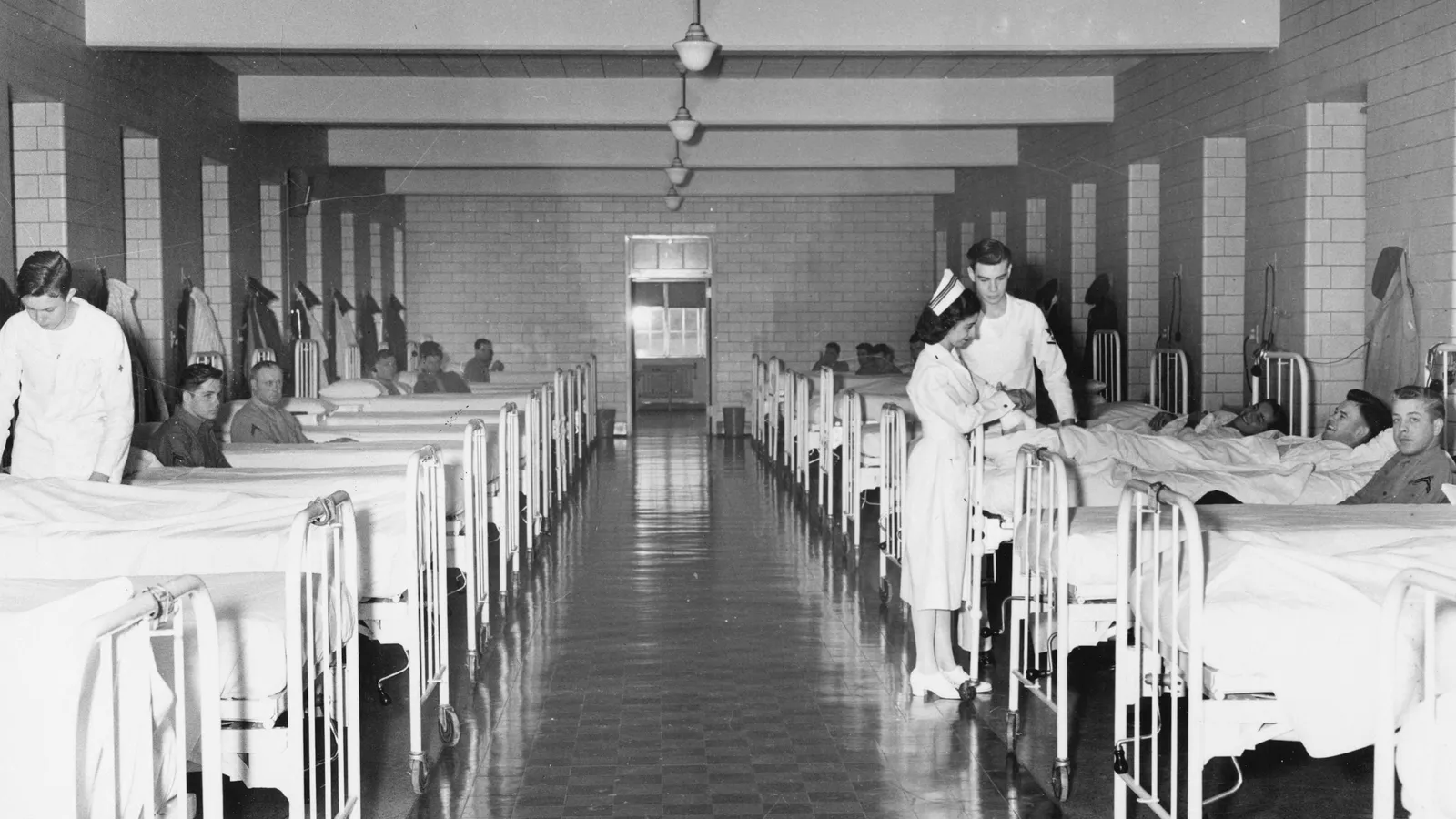
He also described the effect on his wards. Before the method, his two main wards were among the unhealthiest in the surgical division of the infirmary, and he wrote that he had felt ashamed to record so many cases of hospital gangrene and pyaemia. Once the antiseptic treatment was in full use, he reported, the wards had "completely changed their character", with no case of pyaemia, hospital gangrene or erysipelas occurring in them over the period he described.
Worked example: reading Lister's amputation numbers
In 1870 Lister published On the effects of the antiseptic system of treatment upon the salubrity of a surgical hospital, comparing deaths after major amputations in his Glasgow wards before and during the antiseptic period. His aggregate figures:
Before: 16 deaths in 35 cases.
During: 6 deaths in 40 cases.
Turn each into a percentage.
Before: 16 ÷ 35 = 0.457, so about 45.7%. That is roughly 1 death for every 2.2 cases.
During: 6 ÷ 40 = 0.15, so 15%. That is 1 death for every 6.7 cases.
The death rate fell by about 45.7 − 15 = 30.7 percentage points, and the later rate is about a third of the earlier one (15 ÷ 45.7 ≈ 0.33).
Now read it like a scientist. Lister himself wrote that "these numbers are, no doubt, too small for a satisfactory statistical comparison." He then pointed to the upper limb, where the operation itself rarely causes heavy blood loss, so a death usually means the wound went bad. There were 12 upper-limb amputations in each period, and before the antiseptic period 6 of the 12 died, 4 of them from pyaemia and 1 from hospital gangrene.
Common mistakes:
Calling Lister's method aseptic. Antiseptic means killing microbes already present; aseptic means keeping them out in the first place.
Saying Lister discovered germs. He applied Pasteur's findings to surgery.
Treating a fall from 45.7% to 15% as proof on its own. Small samples and other changes in a hospital can affect results, which is why Lister looked at a subgroup where the cause of death was clearer.
How does this connect to your syllabus?
The NCERT Class 12 chapter on human health and disease describes the body's barriers against pathogens, including skin and the phagocytic cells that destroy microbes. A surgical wound breaks the first barrier; Lister's dressing tried to stand in for it. For the cellular side of that defence, read our post on Elie Metchnikoff and phagocytes.
What can a student take from Lister's way of working?
Read outside your field. A surgeon solved a surgical problem by reading a chemist's research on decay.
Test where the effect is clearest. Compound fractures gave him a known moment of contamination and a known risk.
Be honest about your data. He reported his improvement and, in the same breath, the limits of his sample.
If you find percentage-change questions slip away under exam pressure, the Fermi Problem Library has worked problems with a step-by-step solver that explains the reasoning rather than printing an answer.
Next step: redo the amputation calculation for the upper-limb cases alone, before the antiseptic period, and say what fraction of deaths were from pyaemia.