

On this page
Every NEET biology student writes "genotype" and "phenotype" many times while solving Punnett squares. Few know that these words are just over a century old, or that they came from a Danish plant physiologist who spent two summers weighing beans. This post covers who Wilhelm Johannsen was, what his beans showed, why he invented new words, and how to use those words without losing marks.
Who was Wilhelm Johannsen?
A 2014 commentary by Raphael Falk in the International Journal of Epidemiology gives the outline. Johannsen (1857 to 1927) was a pharmacologist by training and, without a formal university degree, worked as an assistant in the chemical department of the Carlsberg Laboratory in Copenhagen. In 1892 he became a lecturer, and later professor, of plant physiology at the Royal Veterinary and Agricultural College in Copenhagen. In 1905 he became professor of plant physiology at the University of Copenhagen, and in 1917 its rector.
What did his bean experiment show?
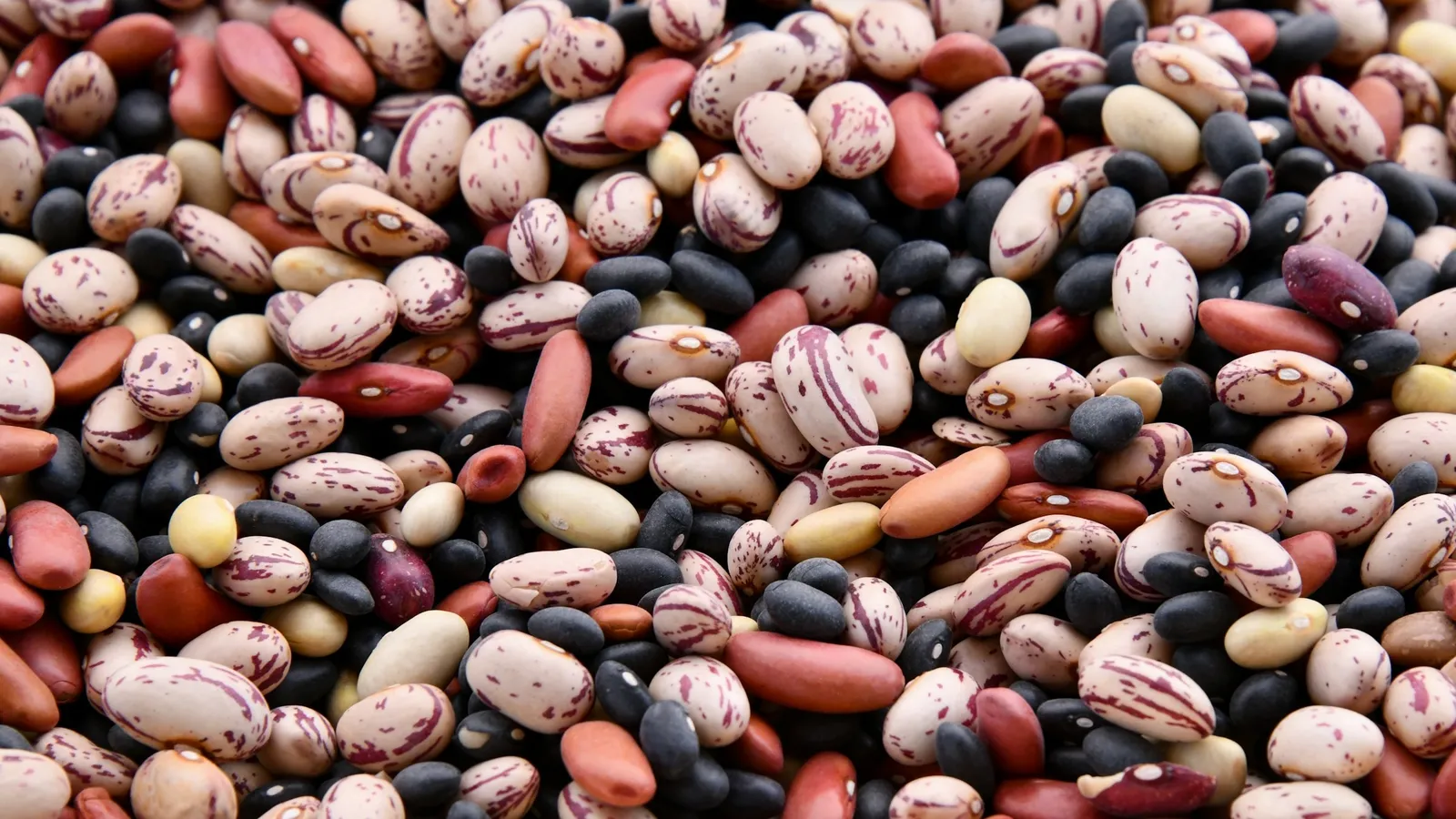
The historian Nils Roll-Hansen describes the experiment. In 1901 Johannsen sowed beans from a batch he had bought at a market. Beans fertilise themselves, so each seed's offspring formed what he called a pure line: all the descendants of one individual. He kept every line separate, weighed and measured every seed, and repeated the process in 1902.
The result surprised him. Within a pure line, choosing the heaviest or the lightest seeds made no difference to the next generation. In a mixed population, choosing heavy seeds did shift the offspring, because it picked out the lines that were heavy by heredity. He published this in 1903. In his own words, from The Genotype Conception of Heredity (1911): "while selection within a pure line will have no hereditary influence, it is evident that any selection in the population must shift or move the 'type' of the progeny in the direction of selection."
Here is the idea with sample numbers, made up for illustration. Suppose line A gives seeds averaging 40 centigrams and line B seeds averaging 60. Pick the biggest seeds from line A alone and their offspring still average about 40, because the extra weight came from growing conditions, not heredity. Pick the biggest seeds from a sack mixing A and B and you mostly pick B seeds, so the next crop gets heavier.
Why did he invent new words?
Falk's commentary notes that Johannsen's textbook *Elemente der exakten Erblichkeitslehre* (1909) introduced the terms. In the 1911 paper he explained that older terms carried "splinters of inadequate ideas", so he proposed "gene" and "genotype", plus "phenotype". He wrote that "the 'gene' is nothing but a very applicable little word, easily combined with others", and that "a 'genotype' is the sum total of all the 'genes' in a gamete or in a zygote." Phenotypes were the types of organisms "distinguishable by direct inspection or only by finer methods of measuring or description".
His larger point was that parents do not pass on their own visible qualities. The same paper says the genotype "is not a function of the personal character of any ancestor." A tall parent passes on genes, not tallness. It also notes that pure lines of beans could swap places in size from one year to the next, so the environment shapes the phenotype too.
A worked example: phenotype and genotype in a monohybrid cross
NCERT's Class 12 chapter on inheritance explains that in Mendel's cross of tall (TT) and dwarf (tt) pea plants, the F2 has 1/4 TT, 1/2 Tt and 1/4 tt. That gives a phenotypic ratio of 3:1 but a genotypic ratio of 1:2:1.
Question: an F2 generation has 400 plants. How many are tall, how many carry the genotype Tt, and what is the chance that a tall plant picked at random is Tt?
Phenotypes: tall = 3/4 × 400 = 300; dwarf = 1/4 × 400 = 100.
Genotypes: TT = 1/4 × 400 = 100; Tt = 1/2 × 400 = 200; tt = 100. Check: 100 + 200 + 100 = 400.
Tall plants are the TT and Tt plants: 100 + 200 = 300.
Chance a tall plant is Tt = 200/300 = 2/3.
Common mistakes:
Calling 3:1 a genotypic ratio. 3:1 counts what you see; 1:2:1 counts genotypes.
Dividing by 400 in step 4. You already know the plant is tall, so divide by the 300 tall plants, not all 400.
Assuming tall means TT. Two-thirds of tall F2 plants are Tt. NCERT's test cross, crossing with a tt plant, is how you tell them apart.
For more practice, our guide to Mendelian genetics problems for NEET works through dihybrid and test-cross questions.
What can a student take from his way of working?
Separate what you see from what causes it. Johannsen's whole advance was refusing to treat a seed's weight as a direct readout of its heredity. In any genetics problem, write the genotypes first and derive the phenotypes from them.
Keep your comparisons clean. He kept each bean's offspring apart. When you test yourself, change one thing at a time so you know what caused a result.
Use precise words. He invented terms because the old ones misled people. Learn the exact NCERT definitions, because many NEET options differ by one word.
If the line between genotype and phenotype still feels blurry, the Fermi Concept Library covers every concept in biology, from alleles to test crosses, so you can fill the gap before tackling problems. For the man whose crosses Johannsen built on, read our post on Gregor Mendel's pea experiments.
Try it now: take five Punnett-square questions and write the genotype of every plant before you write a single phenotype.


