

On this page
Before 1867, measuring a patient's body temperature was a tedious and impractical task. While the concept of a normal body temperature was beginning to take hold in medicine, the instruments available to doctors were largely confined to laboratories rather than hospital wards. A physician wanting to check for a fever had to rely on a device that was cumbersome to carry, delicate to handle, and frustratingly slow to react.
Why were early clinical thermometers difficult to use?
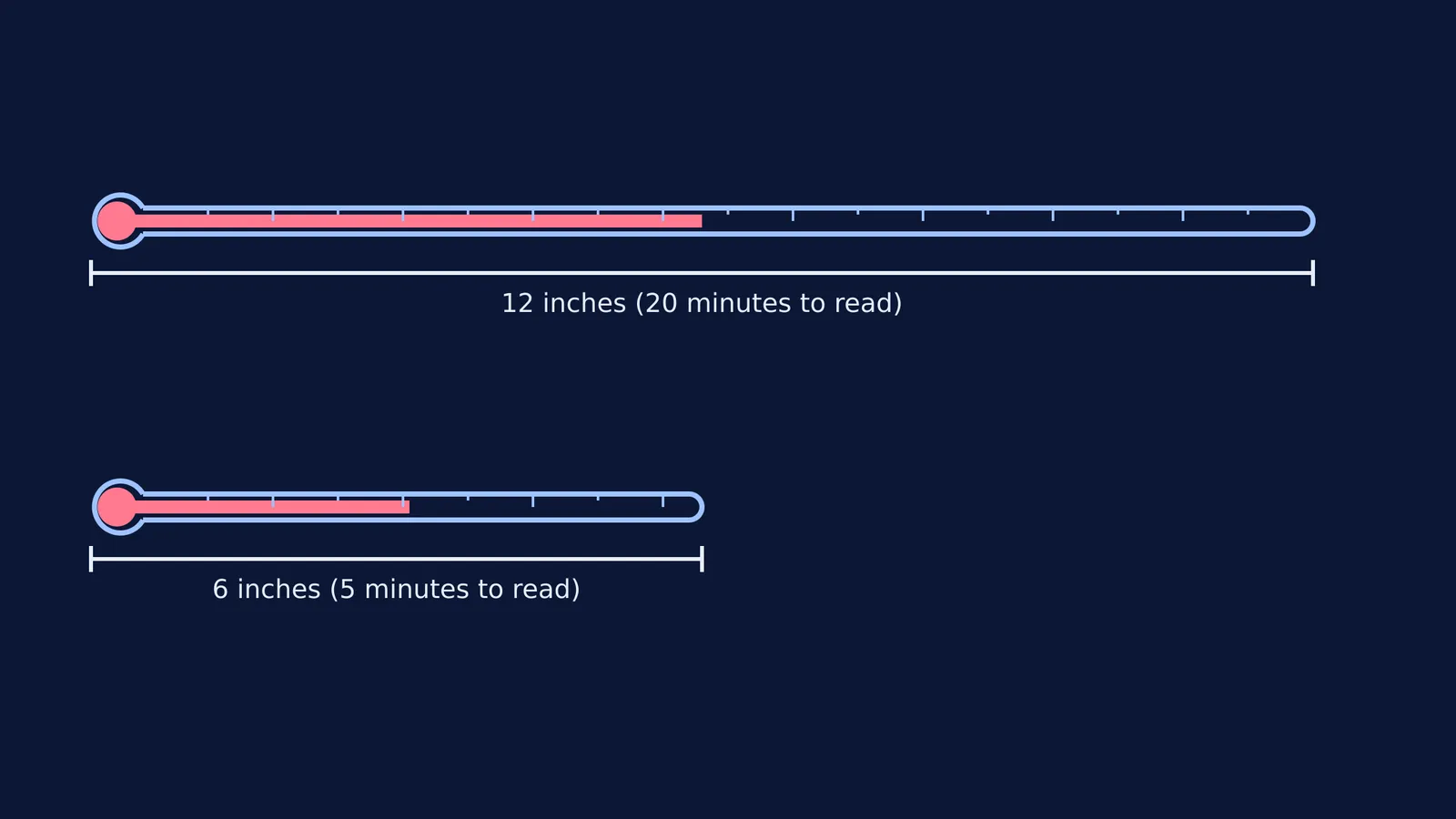
In the mid-19th century, standard medical thermometers were approximately 12 inches (30 cm) long. Because of their substantial length, they could not be easily carried in a pocket and were highly fragile to transport around a busy, crowded hospital.
More importantly, these early models were frustratingly slow. A patient was required to hold the bulky glass tube in place for about 20 minutes to obtain an accurate temperature reading. This long waiting period made routine temperature checks highly impractical, especially for restless, shivering, or severely ill patients. As a result, temperature was rarely measured outside of specialised research settings, leaving doctors to rely on subjective touch rather than precise measurements.
Who invented the clinical thermometer?
The English physician Sir Thomas Clifford Allbutt (1836–1925) solved this practical problem by redesigning the instrument. In 1867, he introduced a compact, modern clinical thermometer that was only 6 inches (15 cm) long.
By carefully reducing the size of the mercury bulb and narrowing the glass stem, Allbutt created a "pocket" thermometer that a doctor could comfortably and safely carry on their rounds. This practical redesign transformed temperature-taking from a rare, time-consuming experiment into a routine, standard part of everyday bedside diagnosis. If you are learning how devices like thermometers rely on thermal expansion, the Fermi Problem Library has worked problems with a step-by-step solver that explains the reasoning rather than printing an answer.
Why did a five-minute reading change medicine?
Allbutt's redesign did much more than make the thermometer portable; it drastically cut the time required for the mercury to reach thermal equilibrium with the patient's body. His new thermometer registered an accurate temperature in just 5 minutes, compared to the 20 minutes needed by the older models.
This considerable time saving allowed doctors to efficiently monitor the progress of fevers and diseases like typhus and tuberculosis across entire hospital wards in a fraction of the time. Understanding the physics of heat transfer and thermal expansion is central to designing such medical instruments. To build intuition for physics concepts that are hard to picture, the Fermi Simulation Lab offers interactive simulations for the ideas that are easier to see than to read. You can explore related physics applications in our article on a pendulum clock losing time in summer: thermal expansion of the rod.
How do you solve thermal expansion problems?
The clinical thermometer relies on the volume thermal expansion of liquid mercury. When studying this principle for physics exams, use this simple checklist to set up your solution:
Identify the material state: Is it linear expansion (like a solid metal rod) or volume expansion (like the liquid mercury in a thermometer bulb)?
Note the initial values: Record the original length (L₀) or volume (V₀) and the initial temperature provided in the problem.
Determine the temperature change (ΔT): Subtract the initial temperature from the final temperature.
Find the expansion coefficient: Use the coefficient of linear expansion (α) for solids, or the coefficient of volume expansion (γ) for liquids. Remember that for isotropic solids, γ ≈ 3α.
Apply the expansion formula: Calculate the change using ΔL = L₀ × α × ΔT or ΔV = V₀ × γ × ΔT, and add it to the original value to find the final dimension.
How did Allbutt bring science to the bedside?
Allbutt's relentless focus on practical medical tools reflected a broader, important shift in 19th-century medicine. He firmly believed that physicians should rely on objective, measurable data rather than just passively observing symptoms. His work laid the foundation for modern clinical diagnostics, much like how Nikolai Korotkov and the sounds of blood pressure later transformed cardiovascular monitoring for all patients.
Allbutt went on to have a distinguished academic career, serving as the Regius Professor of Physic at the University of Cambridge from 1892 until his death in 1925. In 1870, he officially published his findings in a paper titled *Medical Thermometry*, which detailed the history of the instrument and the exact advantages of his 6-inch design. The thermometer was manufactured by the firm Harvey & Reynolds, founded by the chemist Thomas Harvey, and its reliability meant it was quickly adopted by doctors everywhere. His clever yet simple redesign of the clinical thermometer remains a prime example of how reducing the friction in a measurement process can change an entire scientific field.


