On this page
In 1960 several large laboratories were racing to build a laser. The winner was a single physicist at Hughes Aircraft with a small budget and a material others had written off. This post covers Theodore Maiman's life, how his ruby laser worked, a worked example on the light it produced, and what a student can take from his approach. For the theory that came before him, read our post on Charles Townes and the maser.
Who was Theodore Maiman?
The American Physical Society's history of the first laser says Maiman was born in Los Angeles in 1927 and grew up in Denver. His father was an electrical engineer and inventor. Maiman worked as a radio and appliance repairman when young, took degrees in engineering physics at the University of Colorado, and completed a PhD in physics at Stanford in 1955 under Willis Lamb. He then joined Hughes Aircraft Company.
What was the race to build a laser?
In December 1958 Arthur Schawlow and Charles Townes published a proposal for "optical masers" in Physical Review, without a working device. Bell Labs, RCA, IBM, Westinghouse and others set out to build one. APS records that Maiman's supervisors were not keen, because he had been hired for government aerospace work. He insisted and was given $50,000 over nine months.
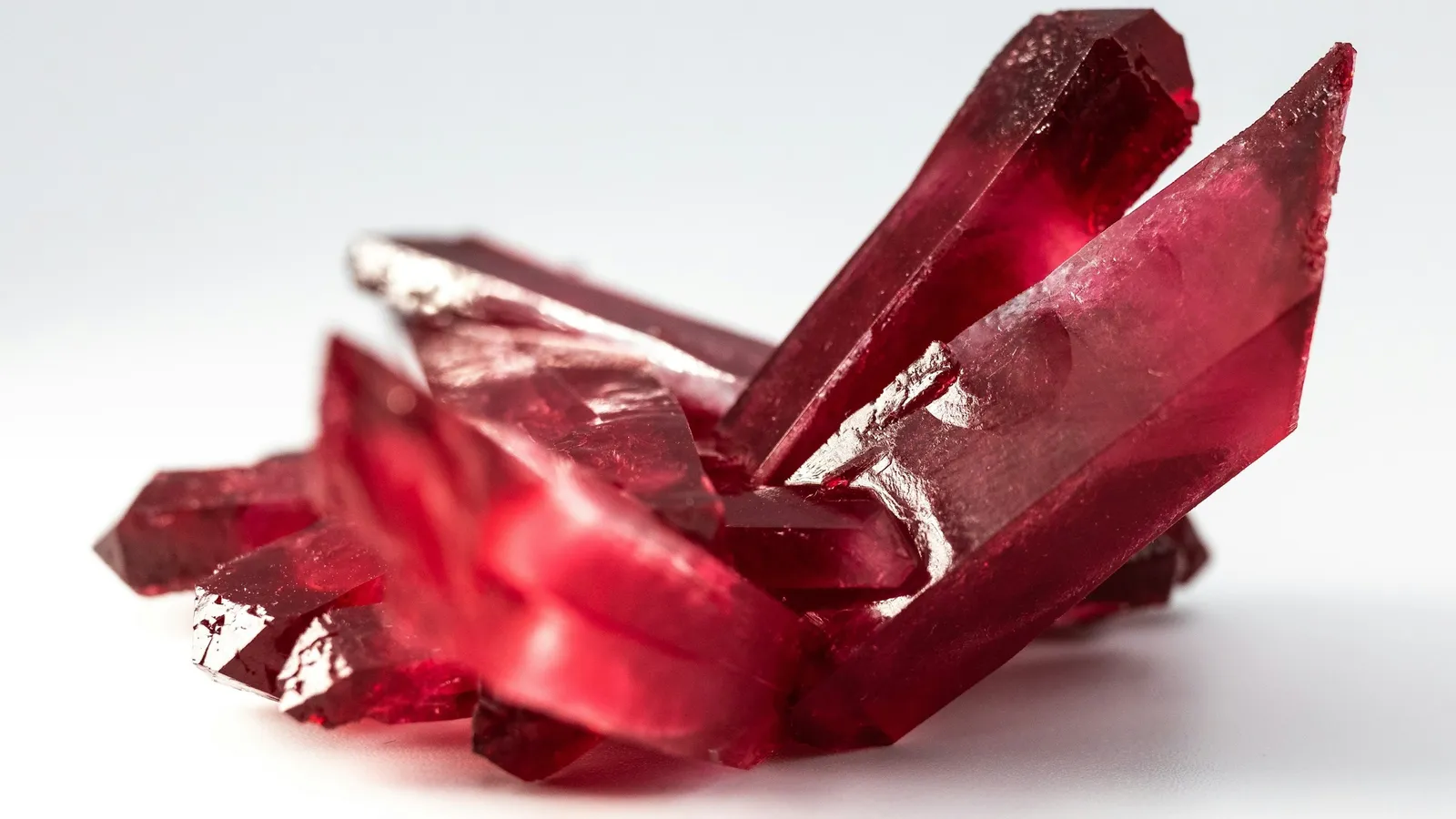
Other scientists had dismissed ruby, and many were working with gases. Maiman found errors in those calculations and showed that synthetic ruby worked well. With input from his assistant, Charles Asawa, he excited the ruby with pulses of light instead of the projector lamp used in earlier experiments. On 16 May 1960 the device produced a short burst of coherent light.
What did his Nature paper report?
His letter, Stimulated Optical Radiation in Ruby, was published in Nature on 6 August 1960 from Hughes Research Laboratories in Malibu. It begins by noting that Schawlow and Townes had proposed generating very monochromatic radiation in the infrared and optical region. It then reports that an optical pumping technique had been applied to a fluorescent solid, "resulting in the attainment of negative temperatures and stimulated optical emission at a wave-length of 6943 Å", and that the material was ruby, chromium in corundum.
"Negative temperature" is another name for population inversion: more chromium ions in the upper energy level than the lower one, so that stimulated emission outweighs absorption. The flash of pumping light pushes the ions up; the red photons come out as they drop back down.
Worked example: how much energy does each red photon carry?
Use h = 6.626 × 10^−34 J s and c = 3.00 × 10^8 m/s, and the relation E = hc/λ from the NCERT Class 12 chapter on dual nature of radiation.
Convert the wavelength: 6943 Å = 6943 × 10^−10 m = 6.943 × 10^−7 m, or 694.3 nm.
Energy per photon: E = (6.626 × 10^−34 × 3.00 × 10^8) ÷ 6.943 × 10^−7 = 2.86 × 10^−19 J.
In electron-volts: 2.86 × 10^−19 ÷ 1.602 × 10^−19 = 1.79 eV.
Now take a sample laser pulse carrying 1.0 J of light. Number of photons = 1.0 ÷ 2.86 × 10^−19 = 3.5 × 10^18.
Every one of those photons has the same wavelength and moves in step with the others. That is what makes a laser different from a bright red lamp.
Common mistakes:
Getting the ångström wrong. 1 Å = 10^−10 m, so 6943 Å is 694.3 nm, not 6.943 nm.
Forgetting to convert to eV. Divide joules by 1.602 × 10^−19 to get electron-volts.
Thinking brightness means more energy per photon. A brighter beam has more photons; each one still has 1.79 eV at this wavelength.
For more practice with E = hc/λ, see our photoelectric effect problems, and to check each step of a problem like this, the Fermi Problem Library has a step-by-step solver that explains the reasoning rather than printing an answer.
What happened after 1960?
APS records that Maiman left Hughes and founded his own laser company, Korad, in 1961, and later Maiman Associates. He held patents on lasers, masers, laser displays and optical scanning. He was inducted into the National Inventors Hall of Fame, elected to the National Academies of Sciences and Engineering, and won the APS Oliver E. Buckley Prize in 1966. He died on 5 May 2007.
What can a student take from his way of working?
Recheck the calculation everyone trusts. Ruby had been written off; Maiman found the error in the reasoning.
Keep the design simple. APS describes his device as very easy to build; much of the work was in the physics and the thinking behind it.
Use the people around you. The pulsed pumping idea came with input from his assistant.
Try it now: work out the photon energy for a 532 nm green laser pointer and compare it with ruby's 1.79 eV.