On this page
CSIR's Shanti Swarup Bhatnagar Prize for Science and Technology is named after him, but few students know what he actually did. He was a working chemist who built a clever instrument and wrote a well-reviewed textbook, then spent his last fifteen years building the research system that many Indian scientists still work in. This post sets out his career from sources including the Royal Society's memoir and his own papers, and ends with what a student can take from his way of working.
Who was Shanti Swarup Bhatnagar?
The Royal Society's biographical memoir, written by T.R. Seshadri, gives his dates as 1894 to 1955 and describes him as eminent as a scientist and also as "an administrator and organizer", with a talent for Urdu poetry. A 2014 lecture by S. Sivaram, a former director of the National Chemical Laboratory, sets out his timeline:
Born on 21 February 1894. His father died when he was eight months old.
BSc in physics (1916) and MSc in chemistry (1919) in Lahore.
DSc from the University of London in 1921, working with Professor Donnan on the solubility of fatty acid salts in oils and surface tension.
Professor of chemistry at Banaras Hindu University from 1921, where he wrote the university song.
Director of the University Chemical Laboratories in Lahore from 1924.
What is magnetochemistry, and what did he build?
Magnetochemistry uses the way substances respond to a magnetic field to learn about their structure. Most materials are diamagnetic: they are very weakly pushed out of a magnetic field. Some, with unpaired electrons, are paramagnetic and are pulled in. The forces are tiny, so measuring them is the hard part.
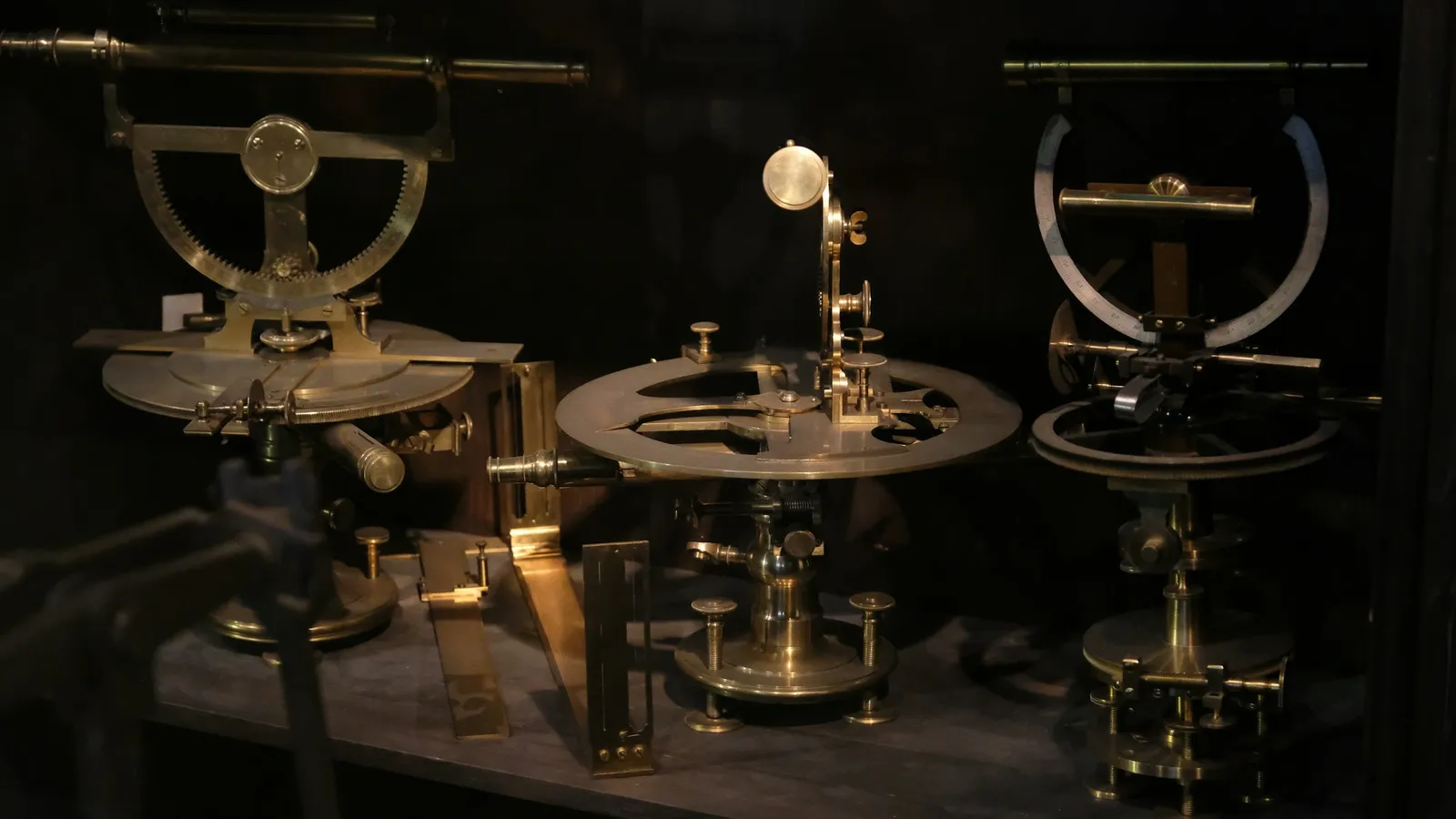
With his student K.N. Mathur, Bhatnagar designed a magnetic balance that used the interference of light to detect these very small movements. They described it in the Philosophical Magazine in 1929, in a paper titled Investigations on the effect of crystalline structure on magnetic susceptibilities by a new magnetic balance based on the principle of interference of light. Sivaram's lecture notes that the instrument was patented and made commercially by Adam Hilger of London.
The two also wrote Physical Principles and Applications of Magnetochemistry, published by Macmillan in 1935. Sivaram quotes a letter from Prafulla Chandra Ray praising the book, a link between two generations of Indian chemists. Bhatnagar also worked on emulsions and colloids.
How did he build India's national laboratories?
According to Sivaram's timeline, Bhatnagar became Director of Scientific and Industrial Research in 1940 and Director of the newly autonomous Council of Scientific and Industrial Research (CSIR) in 1942. He was knighted in 1941 and elected a Fellow of the Royal Society in 1943.
In 1946-47 the foundations were laid for the first national laboratories, including the National Physical Laboratory in Delhi, the National Chemical Laboratory in Pune, the National Metallurgical Laboratory in Jamshedpur, the Central Glass and Ceramic Research Institute in Kolkata and the Central Fuel Research Station in Dhanbad. He also held senior posts in the Ministry of Education and the Atomic Energy Commission, and was the first chairman of the University Grants Commission in 1952. He died on 1 January 1955.
His work on research organisation connects to that of Homi Bhabha, who chaired the Atomic Research Committee that Bhatnagar helped set up in 1946.
How this connects to your syllabus
Diamagnetism and paramagnetism appear in Class 12 physics, and the magnetic behaviour of transition metal ions in Class 12 chemistry. Our post on magnetic materials and hysteresis covers the physics, and the story of Prafulla Chandra Ray gives the earlier chapter of Indian chemistry.
If you find it hard to picture how interference fringes shift, the Fermi Simulation Lab has interactive simulations for ideas easier to see than read.
What can a student take from his way of working?
Make the measurement possible. A tiny force needed a new instrument, so he built one.
Write it down well. His textbook carried his ideas further than his lab could.
Use more than one subject. His balance joined optics and chemistry, and his DSc joined chemistry and surface physics.
Build for others. His later career went into institutions that would outlast him.
This week, look up the magnetic susceptibility of water and of copper sulphate in your physics or chemistry book, and note which is diamagnetic and which is paramagnetic.