On this page
How accurately can one person measure the sky with no telescope, a water clock for timing, and instruments made of wood and bamboo? In nineteenth-century Odisha, Samanta Chandrasekhar answered that question with a lifetime of observations and a Sanskrit treatise, the Siddhanta Darpana. This post covers who he was, what he measured, how close his numbers came to modern values, and what a student can take from his way of working.
Who was Samanta Chandrasekhar?
The fullest modern account is a 1998 paper by P. C. Naik and L. Satpathy, Samanta Chandra Sekhar: The great naked eye astronomer, in the Bulletin of the Astronomical Society of India. It gives his dates as 1835 to 1904 and says he was born into the royal family of Khandapara, a small princely state in Odisha. His parents nicknamed him Pathani, and he is still widely known as Pathani Samanta.
His father taught him to recognise stars as a child. His formal schooling ended early, and he taught himself mathematics and astronomy from the family library. At about fifteen, the paper says, he learned to calculate planetary positions and found that the stars and planets did not rise where the old texts predicted. The texts rarely described instruments, so he made his own. In 1893 the British government gave him the title Mahamahopadhyaya.
What is the Siddhanta Darpana?
A siddhanta is a full astronomical treatise: time, planetary motion, eclipses and the mathematics needed for them. Naik and Satpathy describe his as 24 chapters and 2,500 verses, 2,284 of them his own, in five sections running from the mean motions of planets to ways of reckoning time. He wrote it on palm leaves in Odia script, and the full text was ready by 1869.
It reached print three decades later, in Devanagari, edited with an English introduction by Joges Chandra Ray of Cuttack College. A scan of the printed treatise is on the Internet Archive. In March 1899 the journal Nature reviewed it under the title "A modern Tycho". The reviewer pictured "the author laboriously recording his observations on a palm-leaf", and noted that the system he arrived at resembled Tycho Brahe's: the planets go around the Sun, while the Earth stays still. Our profile of Tycho Brahe explains that model.
What instruments did he use?
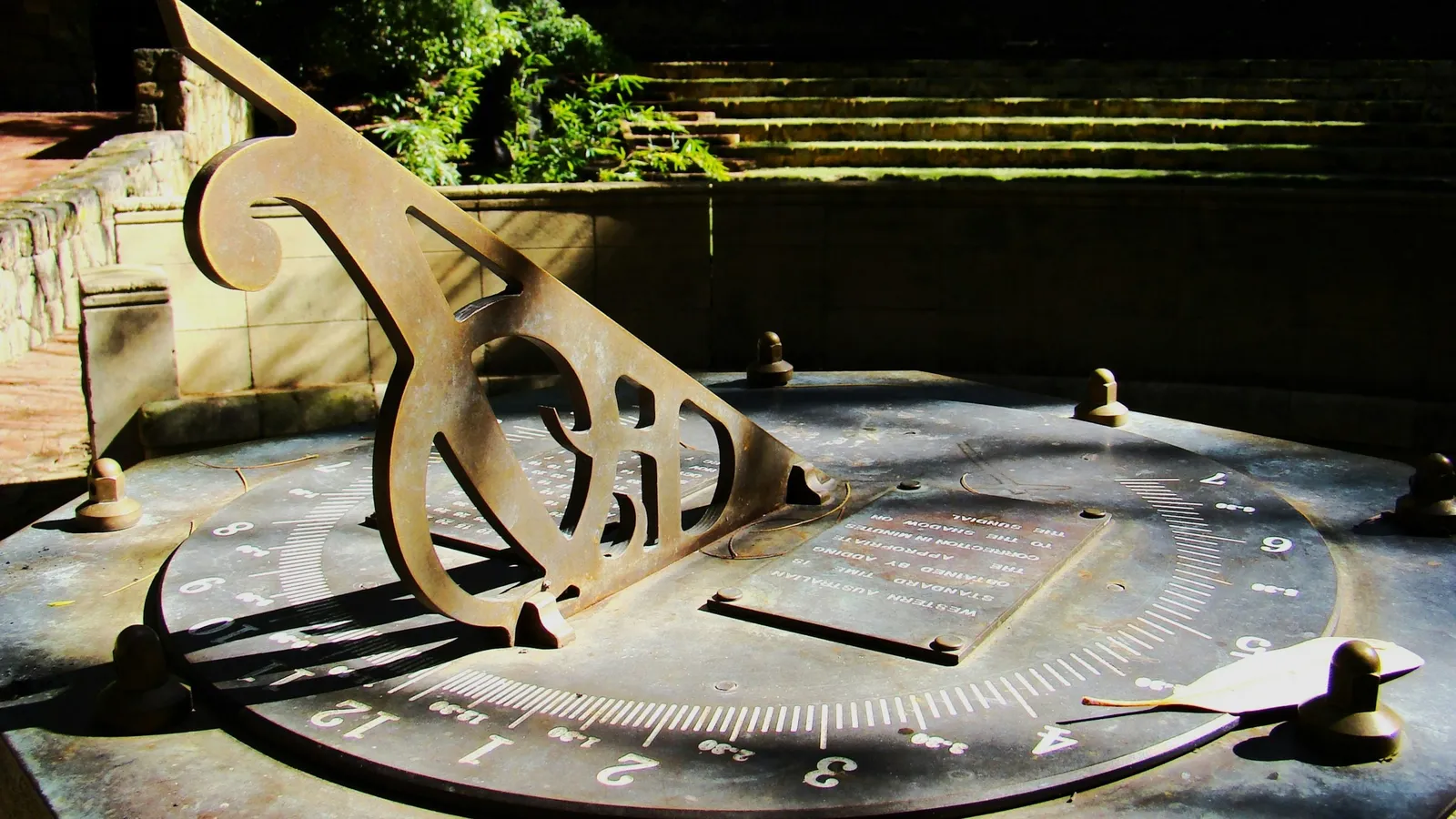
Naik and Satpathy list about ten instruments for measuring time, including sundials and a water clock, an armillary sphere he described building from wood and bamboo, and two all-purpose tools: a gnomon and the Mana Yantra. The Mana Yantra was a T-shaped arrangement of graduated wooden rods. With it he could find local time, latitude, the altitude of a star, the angle between two objects and even the height of a distant hill. Our post on the Jantar Mantar instruments of Jai Singh II shows the opposite approach.
How accurate were his results?
The 1998 paper compares his values with older Indian texts and with modern figures. A few examples:
Sidereal year of the Sun: Siddhanta Darpana 365.25875 days; modern 365.25636 days.
Sidereal period of Mercury: 87.9701 days against a modern 87.969256.
Inclination of the Moon's orbit: 5 degrees 9 minutes against a modern 5 degrees 8 minutes 33 seconds.
Nature's reviewer put the error in his solar year at 206 seconds. He also measured three irregularities in the Moon's motion, known in English as evection, variation and the annual equation. Naik and Satpathy call him the only astronomer of the traditional Indian school to have observed and measured all three.
One of his results moved a long way from tradition. Older siddhantas put the Sun no more than about 14 times as far away as the Moon. His figures make it about 156 times. The modern ratio is about 390, so he was still short, but his figure was more than ten times the old one.
Worked example: how good is 365.25875 days?
Difference from the modern value: 365.25875 - 365.25636 = 0.00239 days.
In seconds: 0.00239 x 86,400 = about 206 seconds, which matches the reviewer's figure.
As a fraction of a year: 0.00239 / 365.25636 = about 6.5 x 10^-6, roughly one part in 153,000.
Now Mercury: 87.9701 - 87.969256 = 0.000844 days, or about 73 seconds per orbit. A common slip is to compare two periods without converting units, or to drop the small difference by rounding too early. Keep every decimal until the subtraction.
Worked example: a hill's height with a cross-staff
This uses sample numbers to show the geometry, not Samanta's own readings. Suppose the crossbar of a T-shaped staff sits 1.0 m from your eye, and the hill, seen from 5 km away, just fills 0.08 m of the crossbar. By similar triangles, height / 5,000 m = 0.08 m / 1.0 m, so the height is about 400 m. Our guide to heights and distances covers the same idea with trigonometry.
Why does his work still matter in Odisha?
Naik and Satpathy wrote in 1998 that the most widely accepted almanac in Odisha was still prepared by the Siddhanta Darpana's rules, a century after it was printed. A 2014 paper by R. C. Kapoor of the Indian Institute of Astrophysics, in the Journal of Astronomical History and Heritage, discusses a verse in which he describes Venus seen against the Sun in the year that matches the 1874 transit of Venus. Following Naik and Satpathy, Kapoor says he predicted the event and observed it with the naked eye.
What can a student learn from Samanta's way of working?
Check the textbook against the world. He noticed the predicted positions were wrong because he went outside and looked.
Build what you need. Bamboo, wood and careful graduations took him further than people expected.
Write down everything. A palm-leaf record kept over decades is what let others check him a century later.
To see how angle and distance work together before you try an observation, use the Fermi Simulation Lab, which has interactive simulations for ideas that are easier to see than read.
Try it tonight: pick a bright star, note the time it passes behind a fixed rooftop edge, and repeat a week later to see how much earlier it arrives.