On this page
Open the Class 12 NCERT Biology book at Unit 1 and the first person you meet is Panchanan Maheshwari. Most students skim the box and move on to the embryo sac diagram. That is a pity, because the diagram itself owes a lot to the kind of work he did. This post explains who he was, what he found, and what his way of working can teach a NEET or board student today.
Who was Panchanan Maheshwari?
He was born in Jaipur on 9 November 1904, according to the Royal Society's biographical memoir written after his death. He was first meant to study medicine, but, the memoir says, "it is said because of weak eyesight" he turned to science instead. At Ewing Christian College in Allahabad he came under the influence of an American missionary teacher, Winfield Dudgeon, a skilled microtechnician. Maheshwari took his Doctor of Science degree in 1931.
A 2004 account in Current Science by Nirmala Maheshwari, who knew him as a student and a family member, traces the rest of his career: lecturer at Agra College from 1930, Reader and Head of a new department at Dacca University from 1939, and Professor and Head of Botany at the University of Delhi from 1949 until his death on 18 May 1966.
What is plant embryology, and why did it need careful hands?
Plant embryology studies what happens inside the flower before and after fertilisation: how the pollen grain and the embryo sac form, how fertilisation happens, and how the embryo and endosperm develop. In the NCERT chapter on sexual reproduction in flowering plants you learn that a typical angiosperm embryo sac is 8-nucleate but 7-celled. Facts like that come from cutting ovules into extremely thin slices, staining them and studying them under a microscope, one plant family after another.
That was Maheshwari's craft. The Current Science account says that between him and his pupils "more than one hundred families of angiosperms were investigated from the point of view of comparative embryology alone". Comparing so many families exposed errors. One example from that account: Exocarpus, a flowering plant of the family Santalaceae, had earlier been misclassified as a gymnosperm. NCERT credits him with popularising "the use of embryological characters in taxonomy", meaning that how a plant's embryo develops became evidence for where the plant belongs in classification.
What was his famous book?
In 1950 McGraw-Hill published his An Introduction to the Embryology of Angiosperms. The Current Science account says the writing began in Dacca, continued during a stay at Harvard University from 1945 to 1947, and was finished in Delhi. It also notes that the last section of the book dealt with experimental embryology, which pointed to where his department would go next.
How did test-tube fertilisation work?
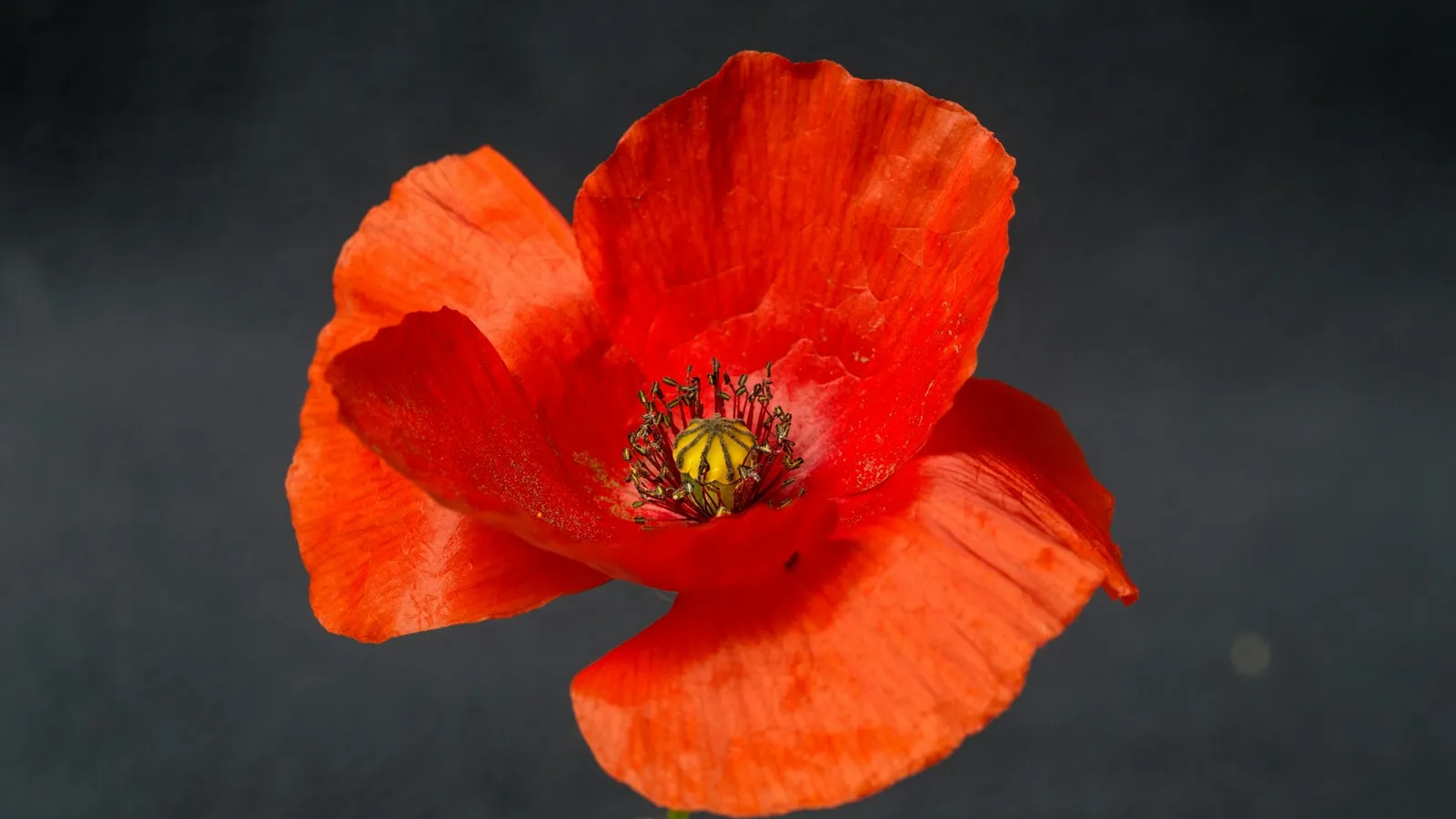
Describing plants was not enough for him. He pushed his department to grow plant parts in sterile culture and to make reproduction happen under controlled conditions. In 1960 Kusum Kanta reported intra-ovarian pollination in the poppy Papaver rhoeas in Nature, placing pollen inside the ovary itself. Two years later Kanta, N. S. Rangaswamy and Maheshwari published Test-tube fertilization in a flowering plant, also in Nature.
The idea was simple to state and hard to do: grow ovules in culture, apply pollen directly to them, and see whether fertilisation and seed formation still happen. The Current Science account calls in vitro fertilisation "an important advance, crucial for overcoming barriers to crossability in plants": a way to attempt crosses that do not succeed when the flowers are left to themselves. NCERT's profile says his "work on test tube fertilisation and intra-ovarian pollination won worldwide acclaim".
The same department soon produced another result now found in plant biotechnology courses. Sipra Guha and S. C. Maheshwari reported embryos grown from anthers of Datura in Nature in 1964, a route to haploid plants. If you have studied tissue culture, our guide to plant tissue culture shows where these methods sit in the syllabus.
Was he only a researcher?
No. In 1951 he founded the International Society of Plant Morphologists and its journal Phytomorphology, and he started a student magazine, The Botanica, through the Delhi University Botanical Society. At NCERT's request he led a team of 40 professors and readers from across India in writing a biology textbook for higher secondary schools, and NCERT's own profile says he led the "very first textbooks of Biology for Higher Secondary Schools published by NCERT in 1964". He was elected a Fellow of the Royal Society in 1965 and signed its Charter Book on 14 April 1966, a month before he died, as the Royal Society memoir records.
What can a student take from the way he worked?
Compare, do not just collect. His results came from setting one family's embryo next to another's. When you revise, put two similar structures side by side, such as the embryo sac and the pollen grain, and list what is the same and what differs.
Trust technique. He was known for insisting on careful slide preparation. In your own practicals, a clean, labelled diagram drawn from what you actually see is worth more than a copied textbook figure.
Move from describing to testing. He went from describing ovules to asking whether fertilisation could happen in a flask. For any fact you learn, ask what experiment would show it.
If the embryo sac stages still blur together, the Fermi Concept Library covers every concept in biology alongside physics, chemistry, mathematics and computing, so you can revisit megasporogenesis and double fertilisation one idea at a time. Then test yourself with our guide to reproduction in flowering plants.
Tonight, read the Maheshwari box in your NCERT book, then draw the 7-celled embryo sac from memory and check it against the figure.