

On this page
In 1795, the French army faced a massive supply problem. Its soldiers were fighting across Europe, but their food was spoiling before it could reach them. The traditional methods of salting, drying and smoking were not enough to prevent scurvy and malnutrition in the ranks.
To solve this, the French government offered a 12,000-franc prize to anyone who could invent a reliable way to preserve food. The winner was Nicolas Appert, a chef and confectioner who spent 14 years experimenting in his workshop to establish a process we now call canning.
How did Nicolas Appert invent canning food preservation?
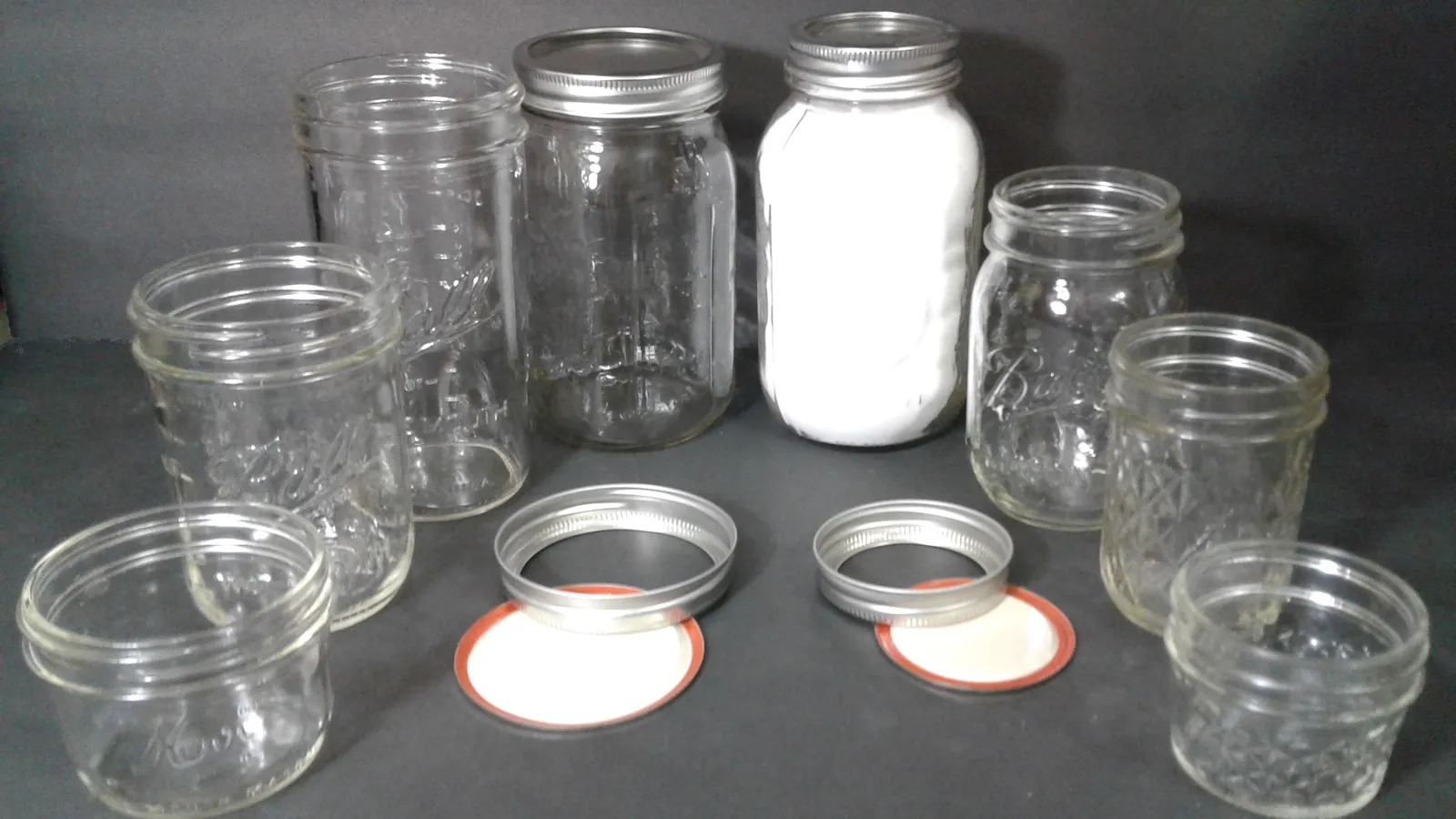
Appert approached the problem with active, trial-and-error experimentation. He placed soups, vegetables, juices and dairy into thick, wide-mouthed glass jars. He then sealed the jars hermetically using cork, wire and wax to ensure no air could enter or leave.
Once sealed, he wrapped the jars in canvas for protection and submerged them in boiling water. He varied the boiling time depending on the food inside. The French government awarded Nicolas Appert a 12,000-franc prize in 1810 for his successful food preservation method. As a condition of the prize, he published his methods that same year in a book titled *The Art of Preserving All Kinds of Animal and Vegetable Substances*.
This hands-on, practical approach is a great example of learning through doing. When you are stuck on a difficult problem in chemistry or physics, guessing and testing in a safe environment is often the fastest way to understand it. In the Fermi Simulation Lab, you can adjust variables like temperature and pressure to see what happens, much like Appert tested different boiling times to see what worked.
Why did Nicolas Appert's method work against microbes?
The most remarkable part of Appert's invention is that he had no idea why it actually worked. At the time, the scientific consensus was that exposure to air caused food to rot. Appert believed his process succeeded simply because the boiling removed the air and the cork kept it out.
He was missing the biological mechanism. Louis Pasteur published his landmark paper proving that microscopic organisms cause lactic acid fermentation in 1857. Pasteur showed that heat kills these microbes, finally explaining the biology behind Appert's chemistry.
For the theory you do need to master, exploring related ideas can help you see the bigger picture. You might read about how other organisms function, like Viruses, viroids and lichens, or see how scientists like Agnes Pockels used everyday items to measure complex chemical properties.
What can we learn from Appert's trial and error?
Appert did not wait for a complete theoretical understanding before building his solution. He observed what happened, recorded his results, and improved his process step by step.
If you are studying for your exams, you can apply this same mindset. You do not need to understand every layer of theory before you start solving problems. If you dive in and start testing your knowledge, the gaps will reveal themselves. When you hit a wall, Fermi's AI tutor works out what you already know and builds a plan for the session, holding a line of reasoning with you until the concept clicks.
A checklist for active experimentation
If you want to apply Appert's practical approach to your own studies:
Define the problem: What exactly are you trying to solve or prove?
Make a guess: Predict what will happen if you use a specific formula or method.
Test it: Try the problem. If it is a practical experiment, run it safely.
Change one variable: If you get it wrong, change one thing (like a sign in your equation or an assumption about the physics) and try again.
Record the result: Note why the first attempt failed and why the second worked. You can use the Fermi Problem Library to see step-by-step reasoning when your own tests lead to a dead end.
Appert died in 1841 before anyone knew about the microbes he had defeated, but his willingness to test, fail, and try again changed how the world eats.


