

On this page
Every NEET biology student learns that human males are XY and females XX, and that the father's sperm decides the child's sex. That idea had to be discovered. One of the people who found it was Nettie Stevens, working with a microscope and a common beetle larva. This post sets out what she saw, what she concluded, and how carefully she said it.
Who was Nettie Stevens?
The Nature Education article Nettie Stevens: A Discoverer of Sex Chromosomes says she was born on 7 July 1861 in Cavendish, Vermont, in the United States. Higher education for women was uncommon. She taught school and saved money to study, a pattern she repeated more than once. She enrolled at Stanford at 35 and began graduate school at Bryn Mawr College four years later. She started work as a research scientist at about 39, and the article calls the next 11 years the most productive of her life. She died of breast cancer on 4 May 1912.
What question was she asking?
At the time, as the same article notes, many scientists thought sex was set by the mother or by the environment. A few cell biologists suspected chromosomes. In 1902 the American biologist McClung had suggested that an extra "accessory chromosome" might decide sex, and Stevens opens her 1905 report by citing McClung and Walter Sutton, who had supported the idea.
What did she find in the mealworm?
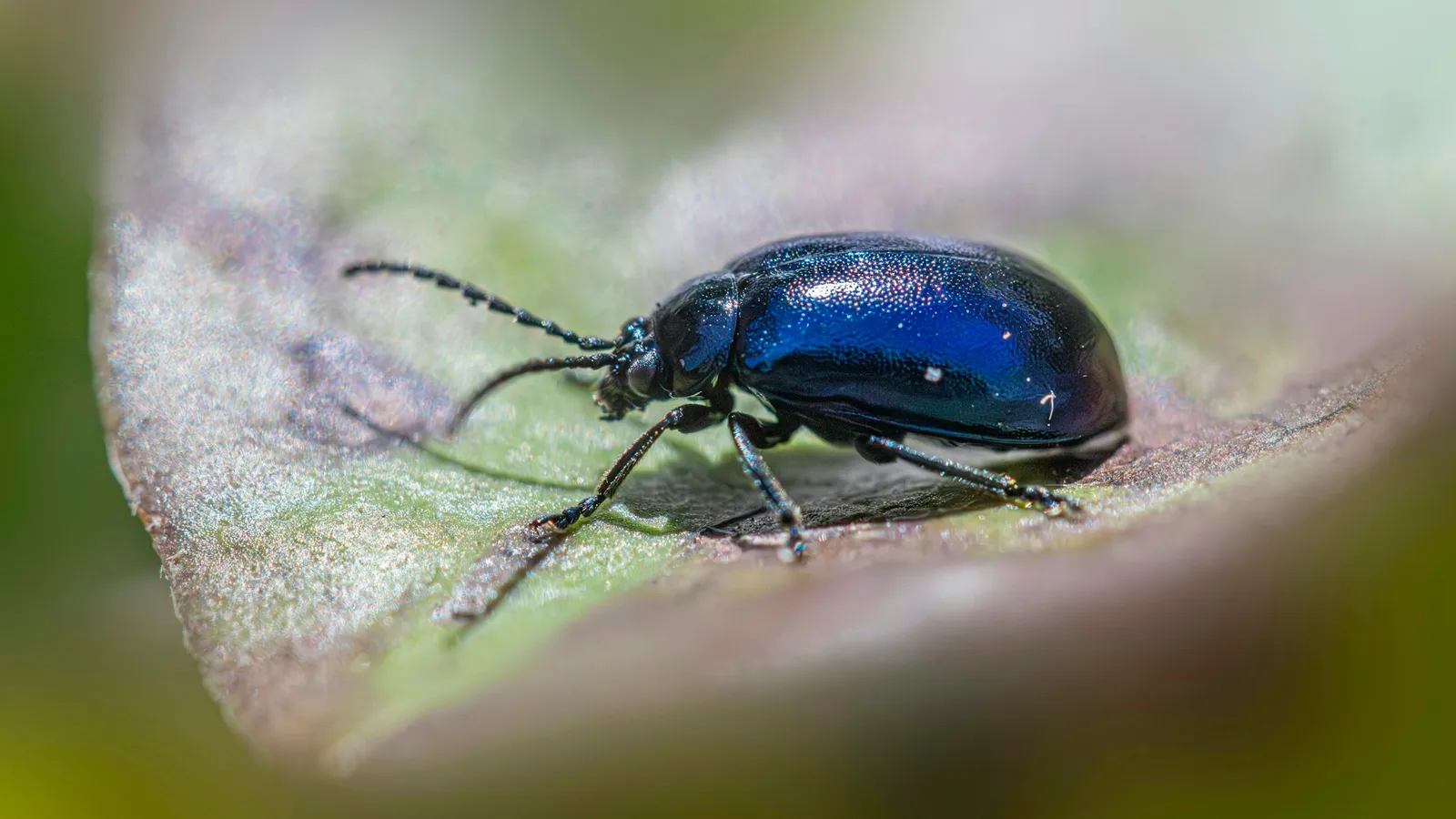
Her report, Studies in Spermatogenesis with Especial Reference to the "Accessory Chromosome", was published by the Carnegie Institution of Washington as Publication No. 36 in September 1905. She studied several insects. The clearest case was Tenebrio molitor, the mealworm beetle.
She counted chromosomes in the body cells of both sexes:
Female body cells had 20 large chromosomes.
Male body cells had 19 large chromosomes and 1 small one.
She then looked at the sperm-forming cells. Half of the developing sperm cells had 10 large chromosomes, and half had 9 large and 1 small. Her conclusion, in her own words: "it seems certain that an egg fertilized by a spermatozoon which contains the small chromosome must produce a male, while one fertilized by a spermatozoon containing 10 chromosomes of equal size must produce a female."
Can you check her logic with numbers?
Yes. Work it through like a genetics problem.
Female cells have 20 large chromosomes, so every egg gets half: 10 large.
Male cells have 19 large plus 1 small. Meiosis gives two kinds of sperm in equal numbers: 10 large, or 9 large plus 1 small.
Egg (10 large) plus sperm (10 large) gives 20 large: a female pattern.
Egg (10 large) plus sperm (9 large and 1 small) gives 19 large plus 1 small: a male pattern.
Because the two sperm types are equally common, you expect about equal numbers of sons and daughters. Today we call the large partner X and the small one Y, and the human version is the same logic with 44 non-sex chromosomes plus XX or XY. A human sperm carries 22 non-sex chromosomes plus either X or Y, 23 in all.
Was she alone in this?
No. The Nature Education article notes that Edmund Wilson reached a similar finding at about the same time, and that Stevens is generally credited with the larger theoretical step. In her 1906 follow-up, Part II of the same series, she compared many more beetles, bugs and moths. She still held back: whether these chromosomes should be called sex chromosomes, she wrote, "one can not decide without further evidence". The historian Stephen Brush later reviewed her role in Nettie M. Stevens and the Discovery of Sex Determination by Chromosomes, published in the journal Isis in 1978.
What can a student take from her way of working?
Count, don't guess. Her argument rests on plain counts: 20 versus 19 plus 1. Many board and NEET genetics questions also reward careful counting before any theory.
Follow the numbers to their end. She traced chromosomes from body cells to sperm to the fertilised egg. When you solve a cross, write every generation, not just the last.
Say exactly how sure you are. She separated what was "certain" from what needed "further evidence". In long answers, examiners reward that precision.
Start late, still go far. She began research near 40 and published her key finding about five years later. If you feel behind, steady, focused work still counts.
For practice on chromosome-linked questions, see our guide to chromosomal disorders and pedigree analysis. If sex-linked crosses keep tripping you up, the Fermi Problem Library has worked problems with a step-by-step solver that explains the reasoning rather than printing an answer.
Next step: redo Stevens' four-line calculation for a human cell, using 44 plus XX and 44 plus XY.


