

On this page
Every time you steep a cup of green tea, you are experiencing the chemical compounds that Michiyo Tsujimura spent her life uncovering. Before her work in the 1920s, the exact composition of green tea remained a mystery, and its nutritional properties were mostly a matter of folklore. Her rigorous research fundamentally changed our understanding of the beverage's health benefits, laying the early groundwork for modern nutritional science.
Who was Michiyo Tsujimura?
Michiyo Tsujimura (1888–1969) was a Japanese agricultural scientist and biochemist who dedicated her career to understanding the chemical components of green tea. Born in Okegawa, Saitama, she initially started her career as a science teacher. After graduating from Tokyo Women's Higher Normal School in 1909, she taught at various women's schools in Kanagawa and Saitama prefectures. Her interest in scientific research was sparked by the pioneering biologist Kono Yasui, who inspired her to push beyond the traditional boundaries expected of women in that era.
In 1920, determined to pursue scientific research, she joined Hokkaido Imperial University. Because the university did not yet accept female students, she took an unpaid position as a laboratory assistant in the Food Nutritional Laboratory, where she researched the nutrition of silkworms.
She later moved to RIKEN in 1923, joining the laboratory of the renowned chemist Umetaro Suzuki, who was famous for discovering vitamin B1. Her groundbreaking thesis, "On the Chemical Components of Green Tea", earned her a doctorate from Tokyo Imperial University in 1932, making her the first woman in Japan to receive a doctoral degree in agriculture. Following her research career, she became a professor at Ochanomizu University in 1949 and was appointed the first dean of the Faculty of Home Economics in 1950.
Why is vitamin C in green tea important?
In 1924, Tsujimura and her colleague Seitaro Miura made a crucial breakthrough: they discovered that green tea contains significant amounts of vitamin C. They published their 1924 findings in the journal *Bioscience, Biotechnology, and Biochemistry* (then known as the *Bulletin of the Agricultural Chemical Society of Japan*).
At the time, finding natural sources of vitamin C was critical for preventing scurvy, a severe disease caused by vitamin C deficiency. Their discovery proved that green tea was an excellent, accessible source of the vitamin. This finding contributed to an increase in green tea exports from Japan to North America, cementing the drink's reputation as a healthy beverage rather than just a cultural staple.
In 1935, she went a step further and successfully registered a patent for her unique method of extracting vitamin C crystals directly from plant materials.
How did Michiyo Tsujimura discover green tea catechin?
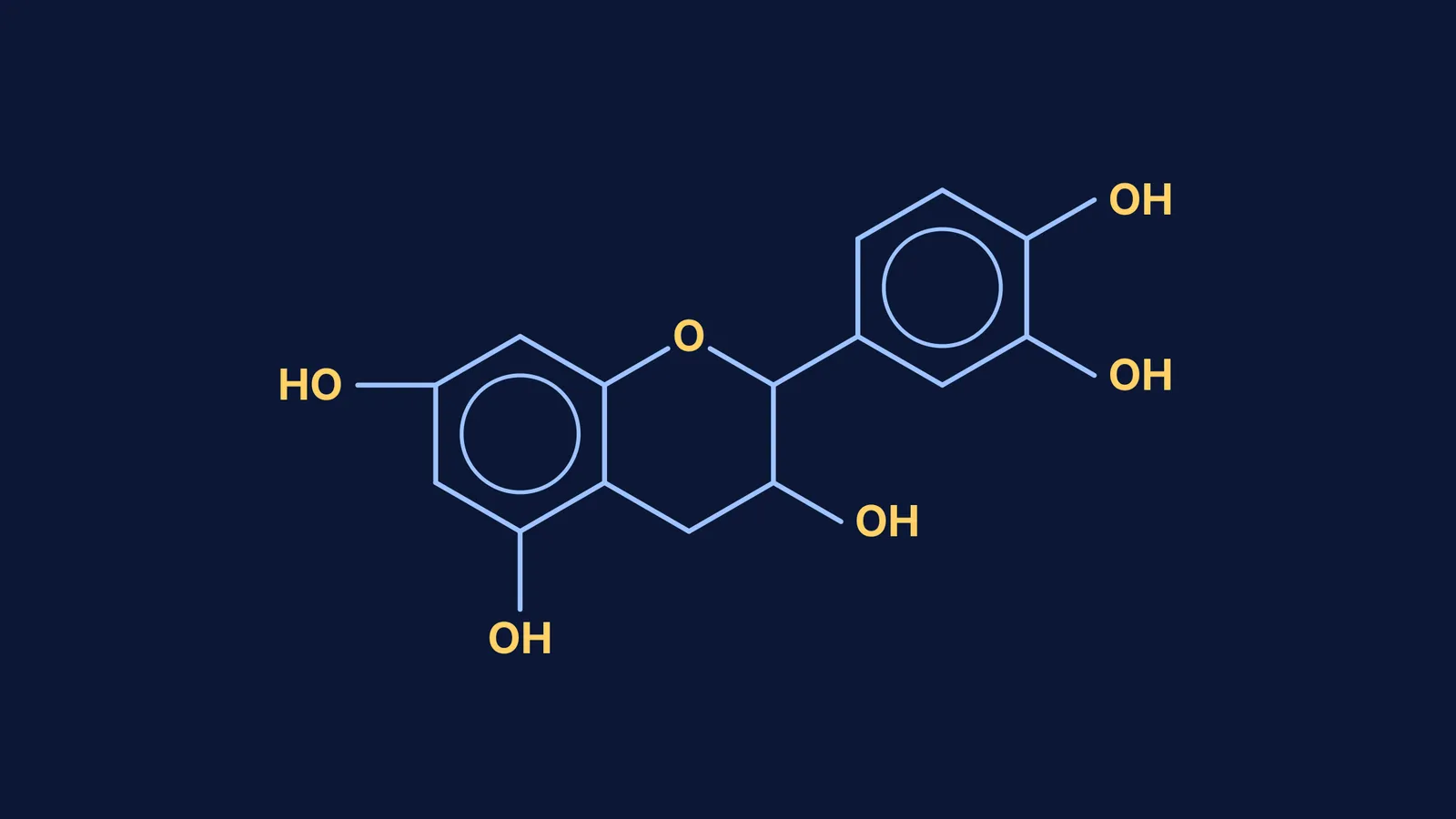
Tsujimura did not stop at vitamins. In 1929, she became the first person in the world to isolate catechin from green tea. Catechins are a type of flavonoid—a class of secondary plant metabolites—responsible for the tea's astringent taste and its high antioxidant activity.
She continued mapping the chemistry of the leaf, extracting tannin in crystal form in 1930 and isolating another related compound, gallocatechin, in 1934. Her meticulous extractions, using the relatively rudimentary equipment of the era, demonstrated an incredible level of precision and chemical intuition. If you enjoy learning about historical figures in chemistry, you might also like the story of Jane Marcet and the chemistry book that inspired Faraday.
For students struggling to grasp how these complex molecules behave, the Fermi Concept Library maps out the chemical structures and reactions of organic compounds like flavonoids.
How can her career inspire your study habits?
Tsujimura faced significant barriers as a woman in early 20th-century Japanese science, including working unpaid simply to access a laboratory and waiting years before universities would officially award degrees to women. She persisted by focusing on rigorous, undeniable experimental results. Her achievements were eventually widely recognised; she received the Japan Prize of Agricultural Science in 1956 and the Order of the Precious Crown in 1968.
Her success teaches a clear lesson: meticulous, step-by-step problem solving builds a foundation that cannot be ignored. When you study complex topics, break them down into smaller, verifiable parts just as Tsujimura isolated individual compounds from a tea leaf. For example, mastering organic reactions like phenol from cumene requires understanding each intermediate step before looking at the overall process.
If you are tackling advanced biochemistry problems and getting stuck on the mechanisms, Fermi's AI tutor can help by holding a line of reasoning and walking you through the structure of molecules step by step, rather than just giving you the final answer.


