

On this page
You may have seen photographs of a man followed by a line of young geese. The man was Konrad Lorenz, and the behaviour was imprinting. This post explains what Lorenz found, what later scientists corrected, how honest he was about his own past, and what you can take from his way of working.
Who was Konrad Lorenz?
According to his Nobel Prize facts page, Lorenz was born in Vienna on 7 November 1903 and died there on 27 February 1989. He shared the 1973 Nobel Prize in Physiology or Medicine with Karl von Frisch and Nikolaas Tinbergen "for their discoveries concerning organization and elicitation of individual and social behaviour patterns". The field they helped found is called ethology, the biological study of animal behaviour.
In the autobiography he wrote for the Nobel Foundation, Lorenz says he grew up with a large garden and parents tolerant of his love of animals. He wanted to study zoology but studied medicine at his father's wish, and kept birds the whole time, especially jackdaws.
What is imprinting?
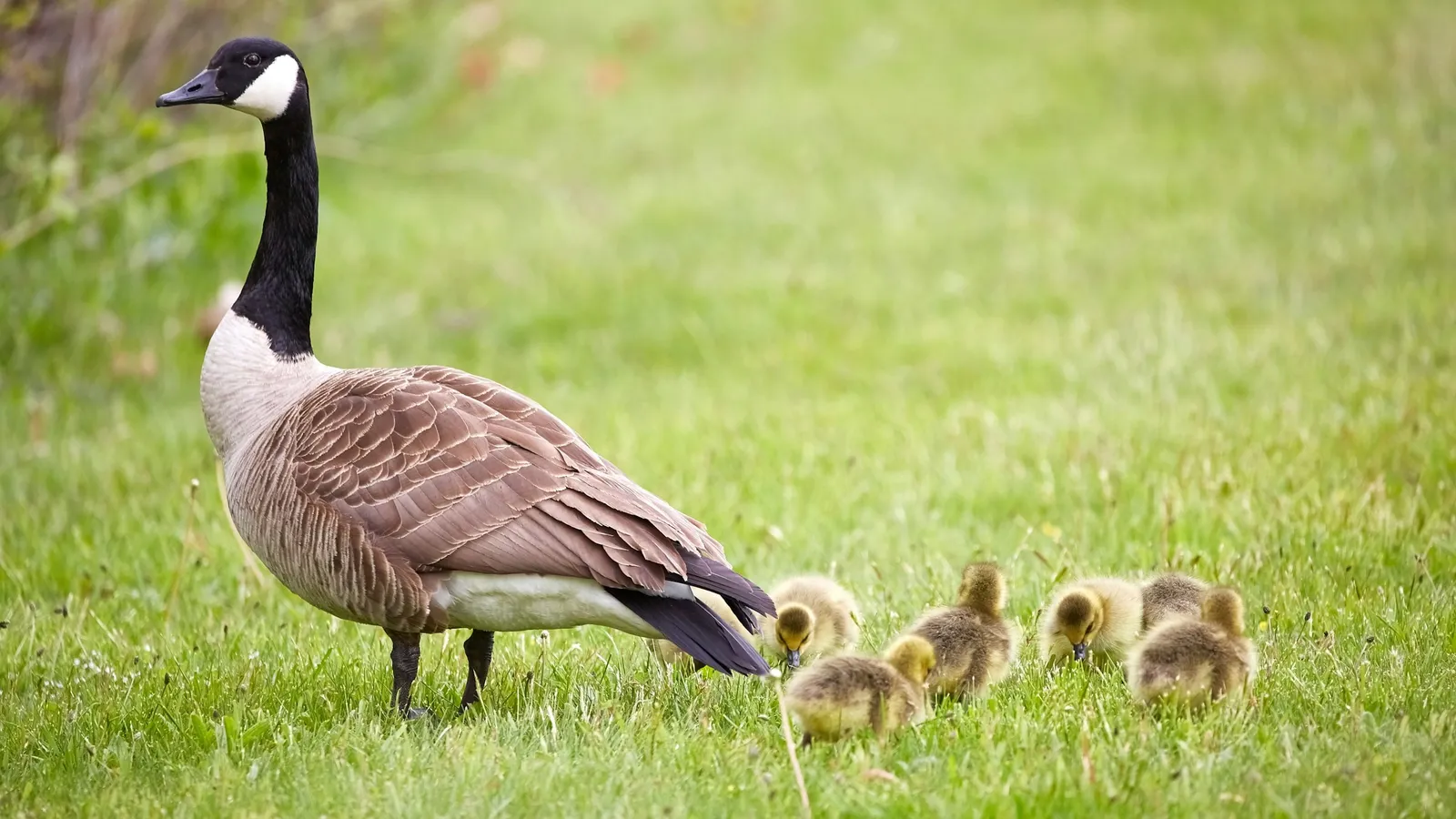
The Nobel Foundation's summary puts the core finding simply: in the 1930s, Lorenz showed that birds hatched in an incubator, without their parents present, follow whatever they first catch sight of. They can become fixated on a person.
Lorenz traced the idea back to his childhood. He wrote that a neighbour gave him a one-day-old duckling, which "transferred its following response to my person". In his words, "I discovered imprinting and was imprinted myself." His major paper on how a bird's companions shape its behaviour, Der Kumpan in der Umwelt des Vogels, appeared in the Journal für Ornithologie in 1935 and runs to more than 70 pages.
Is imprinting in the NEET or CBSE syllabus?
No chapter of the current NCERT Class 11 and 12 biology books (2026-27 reprints) discusses imprinting or animal behaviour; we checked all 32 chapter PDFs on the NCERT textbooks page. You will meet it in psychology, zoology and animal behaviour courses at university. It is still worth knowing, because it is a clean example of how behaviour can be partly innate and partly learned.
What did later research change?
Lorenz's first findings were striking, and later scientists tested them carefully. A 1991 review by Johan Bolhuis, Mechanisms of avian imprinting, pulled the evidence together. It found:
Preferences form not only through exposure to an object but also through built-in visual and auditory predispositions.
There was little evidence for a fixed, internally timed sensitive period. It is more likely that sensitivity ends because imprinting itself has happened.
Filial and sexual preferences can be reversed, although the first object a young bird is exposed to may still have a greater influence than later ones.
So the goslings were real, but the rules are more flexible than the famous photographs suggest. That is normal in science: a first discovery is refined by people who test it from other angles.
How did Lorenz work?
Three habits stand out in his own account.
He lived with his animals. He raised birds himself, which let him see behaviour that short laboratory visits would miss.
He read across fields. He describes how Oskar Heinroth's book on the birds of central Europe showed him that someone had already observed animal behaviour in detail, and how he joined psychology seminars while working at an anatomy institute.
He worked with people who thought differently. He credits Tinbergen, who stayed at Altenberg in the summer of 1937, with driving their experiments on the egg-rolling response of the greylag goose, and says Tinbergen probably contributed key concepts.
What about his past?
Students should know the whole record. In the same Nobel autobiography, Lorenz writes that soon after Germany invaded Austria he wrote about the "dangers of domestication" in "the worst of nazi-terminology", calls it "a very ill-advised thing", and says he does not want to excuse it. He was later sent to the front in 1942 and taken prisoner, and he wrote a book manuscript in a Soviet prison camp. Admiring a scientific discovery does not mean accepting everything a scientist wrote or did.
What can a student take from Lorenz?
Watch closely before you theorise. Lorenz's insight came from noticing what one duckling did, then building systematic observations on top. You can do the same with any topic: before memorising a definition, describe the phenomenon in your own words and ask what would happen if one condition changed. If you want to connect imprinting to other kinds of learning, compare it with the trial-and-error learning in our post on B. F. Skinner and reinforcement, and read about Lorenz's co-laureate in our post on Karl von Frisch and the waggle dance.
When a concept refuses to settle, explaining it aloud to someone who asks follow-up questions helps. Fermi's AI tutor notices where a student is stuck and decides whether to explain, ask or show, so you can test whether you really understand the difference between innate and learned behaviour.
Next step: write three sentences on imprinting, one each for what is innate, what is learned and what later research revised.


