On this page
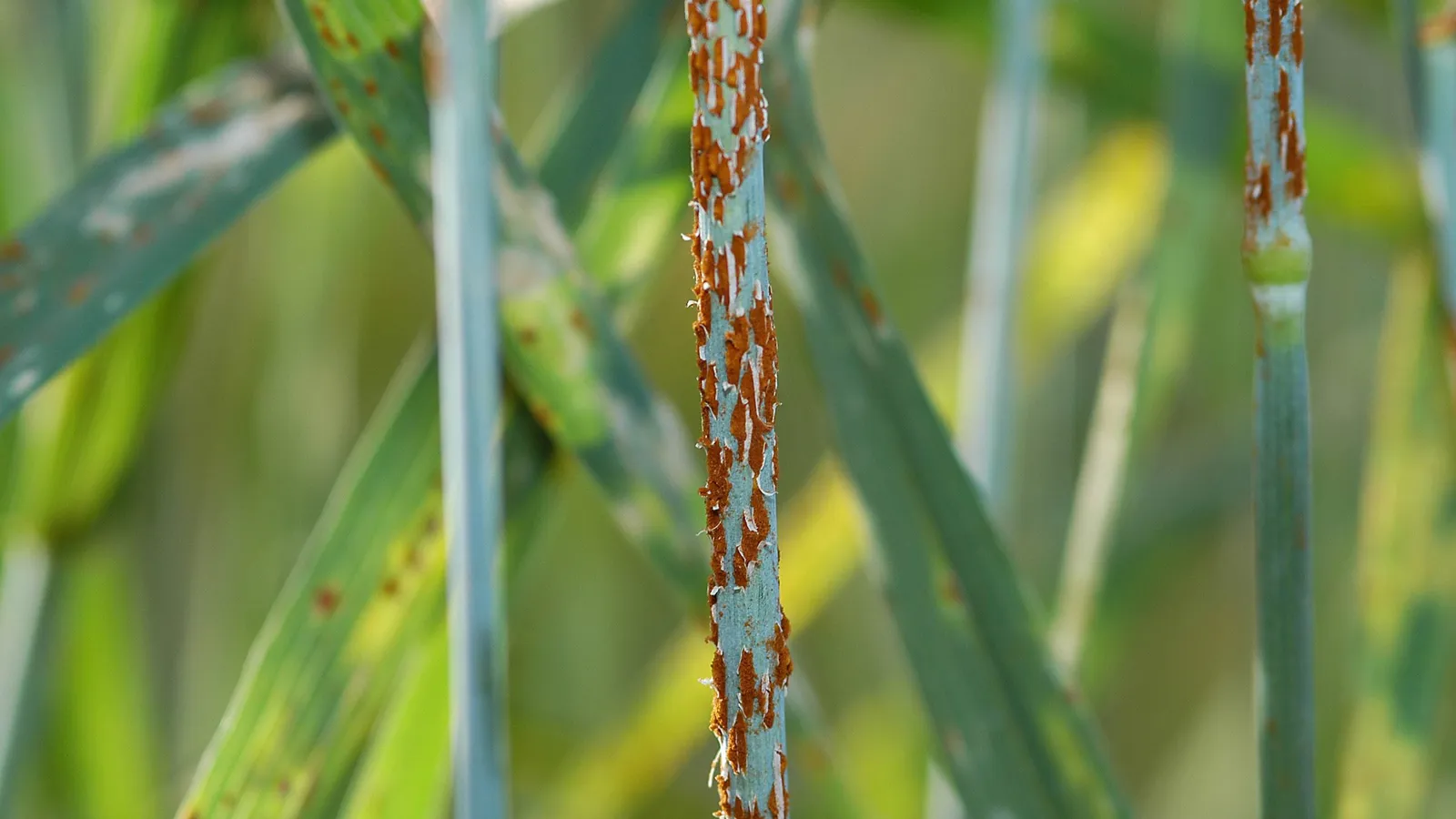
Every winter, wheat in India's plains turned rusty, and for decades it was unclear where the disease came from. Rust is a fungus that covers wheat stems and leaves with pustules full of powdery spores. Karam Chand Mehta, a professor at Agra College, worked out the answer: the rust spends the hot months in the hills and returns to the plains each season. If you want a refresher on the group these organisms belong to, start with our guide to the kingdom Fungi and its classes.
Who was K. C. Mehta?
Mehta was born in Amritsar on 20 June 1892 and died in Agra on 8 April 1950, according to his profile on Neglected Science. The same profile notes that his monograph Control of Cereal Rusts in India (1940) brought him worldwide recognition.
He began systematic work on cereal rusts at Agra College around 1922. In 1930, with help from the Imperial Council of Agricultural Research, he widened the work to Shimla, Almora and Murree, according to a 2016 review in the Indian Journal of Agricultural Sciences. Flowerdale in Shimla proved the best place to keep rust cultures alive all year, and the station he founded there was still identifying rust strains when that review appeared.
How did K. C. Mehta trace wheat rust survival in India?
He started from a biological fact. Wheat rusts are obligate parasites: they need living plant tissue to survive, as the 2016 ICAR review explains. So the question became where living wheat, and rust on it, could last through an Indian summer.
Mehta showed that the high temperatures of the plains in summer and the rainy season that follows stop wheat rusts from surviving there, according to a 1985 review by L. M. Joshi and colleagues. In the cooler hills, the rust lives through summer on self-sown wheat, on regrowth from harvested plants (ratoon tillers) and on the regular summer crop of the Nilgiri and Pulney hills.
Mehta and B. P. Pal summed it up in Nature in July 1940: "in the plains of India the severe summer heat kills the rust spores and ... the wheat crop is infected anew each season by spores blown down from the hills, where wheat is cultivated up to an altitude of about 9,000 ft. above sea-level."
He also named the sources. The 1985 review records that he traced infection to the sub-Himalayan ranges, particularly central Nepal, and to the Nilgiri and Pulney hills in the south. For stem rust, he considered the northern hills, particularly central Nepal, "the most dangerous foci of infection". Yellow rust lived through summer at several Himalayan sites, but not at Narkanda in the Shimla hills (2,850 m), where it was too cold.
Why didn't barberry matter in India?
In other countries, black (stem) rust completes its life cycle on barberry bushes, its alternate host. Mehta reported that barberry plays no real part in keeping black rust going in India, the 2016 ICAR review notes. One reason the review gives is timing: tender barberry leaves are not out when the spores that could infect them are released. So clearing bushes would not help; breaking the yearly relay from hill wheat to plains wheat could.
How did his findings guide disease control?
Mehta and Pal's 1940 note was titled "Rust-resistant wheats for India", and it pointed towards breeding wheat that the rust could not attack. You can follow that thread in our profile of B. P. Pal and wheat rust resistance.
The 1985 review notes that hardly any work on rust epidemiology appears to have been done after 1940. A national wheat disease survey began in 1967 and revived the field, and that work refined Mehta's map. For stem rust, the southern hills turned out to be the chief source. Cyclones in the Bay of Bengal help carry stem and leaf rust spores from the Nilgiri and Pulney hills to central India, and leaf rust can spread 600 km or more this way. Scientists then proposed growing genetically different resistant varieties along this "Puccinia Path" to slow the rust's spread.
How can you think like Mehta?
Mehta's method works for any disease that comes back season after season. Here are four questions, with his answers for wheat rust:
Where can it not survive? The plains in summer and the monsoon, because of the heat.
Where does it hide? Hill wheat: self-sown plants, ratoon tillers and summer crops.
How does it travel? As spores carried by wind and, later work showed, by cyclones.
Where can you break the chain? At the source areas and along the path, with resistant varieties rather than barberry clearance.
Try them on cholera, the way John Snow traced it with a map, or on a long answer about a parasite's life cycle. If terms like alternate host are blocking you, the Fermi Concept Library gives every biology concept its own lesson and shows where it sits in the map.
Next time you see an orange-streaked wheat stem, ask Mehta's question: where did this spend the summer?