

On this page
In 1783, Spanish scientist José Celestino Mutis led the Royal Botanical Expedition to New Granada, exploring 8,000 square kilometres of territory. Over 25 years, his team discovered approximately 6,000 new species and rigorously documented the cinchona plant, which provided the only known treatment for malaria at the time.
Who was José Celestino Mutis?
José Celestino Mutis (1732–1808) was a prominent Spanish physician, mathematician, and botanist who arrived in South America in 1761. He initially travelled to modern-day Colombia, acting as the private physician to the Viceroy Pedro Messía de la Cerda. Mutis possessed a remarkably broad scientific background, having famously defended Copernican astronomy before the Inquisition in 1774 and successfully determined the geographical longitude of Bogotá. His intellectual range was vast; he even developed elementary vocabularies for various indigenous languages by order of the Spanish Crown.
However, his primary passion remained the natural world. After proposing a large-scale botanical study twice in the 1760s, King Charles III finally approved his plan in 1783. Mutis's systematic approach to biology required students to actively engage with their subjects rather than passively observing them. If you are studying classification, reading about it is not enough. You need to map out the characteristics yourself. The Fermi Concept Library holds every concept in physics, chemistry, biology, mathematics and computing, each with its own lesson and its place in the map, allowing you to trace the relationships between different plant groups.
What was the Royal Botanical Expedition to New Granada?
The Royal Botanical Expedition to New Granada officially began in 1783 and continued until 1816, operating well after Mutis's death in 1808. It stands as one of the most ambitious and comprehensive scientific surveys of its era, marking a definitive turning point in the systematic study of South American flora.
The expedition systematically explored approximately 8,000 square kilometres of territory, operating from headquarters in Mariquita and eventually Santa Fe de Bogotá. The scale of their botanical work was staggering: the team discovered approximately 6,000 new species and collected 24,000 dried plants to establish a comprehensive museum collection.
To record these findings accurately, Mutis trained a dedicated team of artists who produced 6,717 highly detailed botanical drawings and 20,000 plates. This level of precise visual documentation is crucial when mastering biology. When studying topics like phototropism, geotropism and other tropic movements in Class 10, drawing the mechanism of auxin distribution helps you retain the facts far better than memorisation alone.
How did Mutis study the cinchona plant?
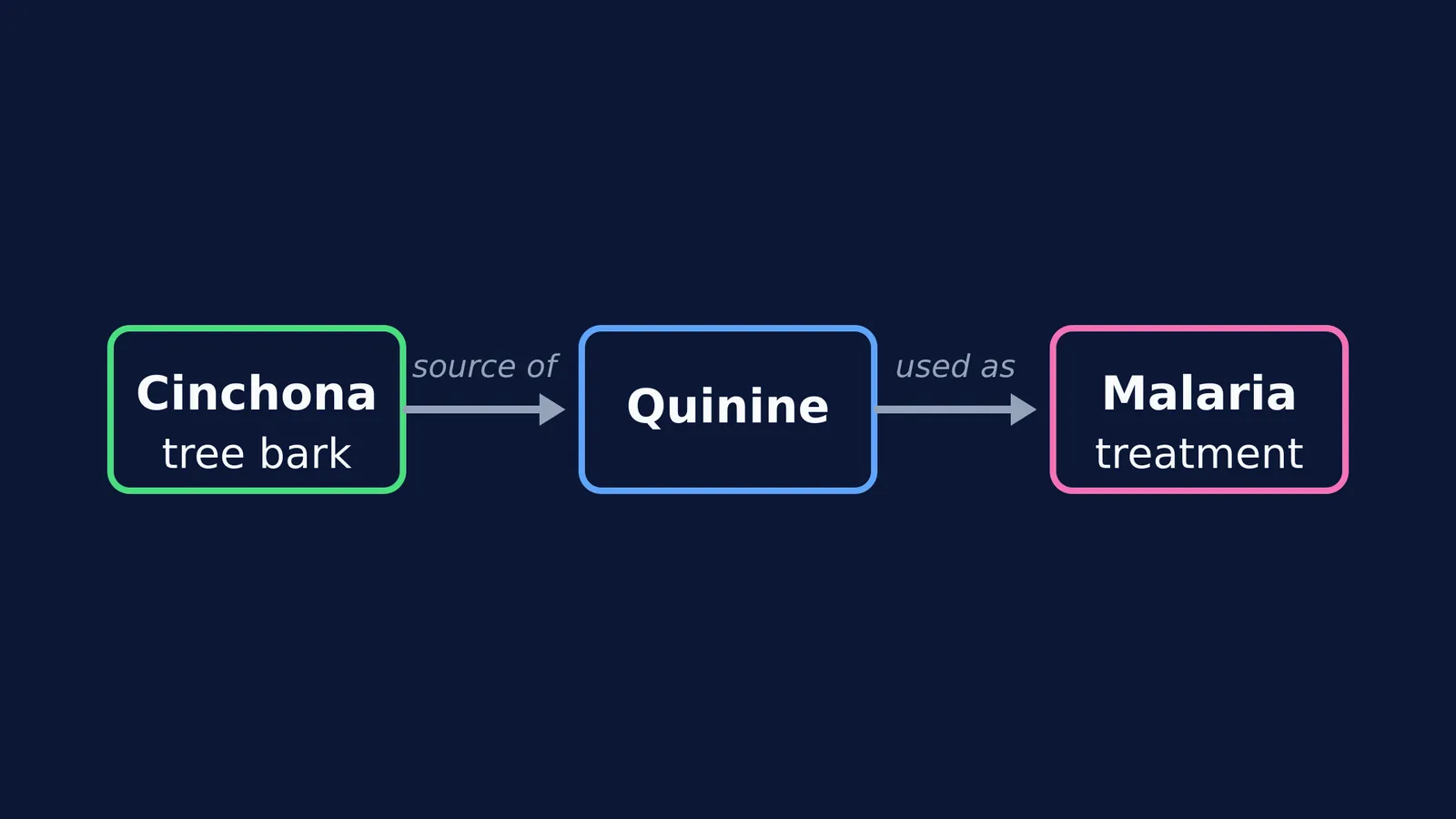
One of the expedition's primary goals was the detailed study and commercialization of the cinchona tree. At the time, the bark of the cinchona plant was the only known natural source of quinine, making it the sole globally effective treatment for malaria.
Mutis identified several distinct species of cinchona with varying medicinal properties and documented its numerous varieties in a major work, *El Arcano de la Quina* (The Secret of Cinchona). His research was not purely academic; he investigated the plant's potential for trade and detailed its medical and therapeutic uses for the Spanish Crown.
His deep, sustained focus on a single, vital plant illustrates how structured scientific problem-solving works. When you face a difficult topic, you must break it down into its core components rather than skimming the surface. Fermi's AI tutor teaches in this exact way—it holds a line of reasoning across a whole session, notices where a student is stuck, and decides whether to explain, ask, or show.
How can you document biology like a botanist?
Mutis did not just passively look at plants; he systematically recorded their every feature. You can apply his rigorous approach to your own study habits to improve your grades and understanding.
Draw what you see: Do not just rely on textbook images. Sketch the structures yourself, whether it is the anatomy of a leaf or the misfits of five-kingdom biology.
Label the parts precisely: Write down the functions next to the anatomical structures to connect form with function.
Compare and contrast: Group similar items together, just as Mutis carefully identified different varieties of cinchona based on their medicinal potency.
Review your notes actively: Treat your notebook as your own expedition log, updating it as you learn more about a species or system.
By adopting the active observation methods of the Royal Botanical Expedition, you can turn passive reading into deep, lasting biological understanding.


