

On this page
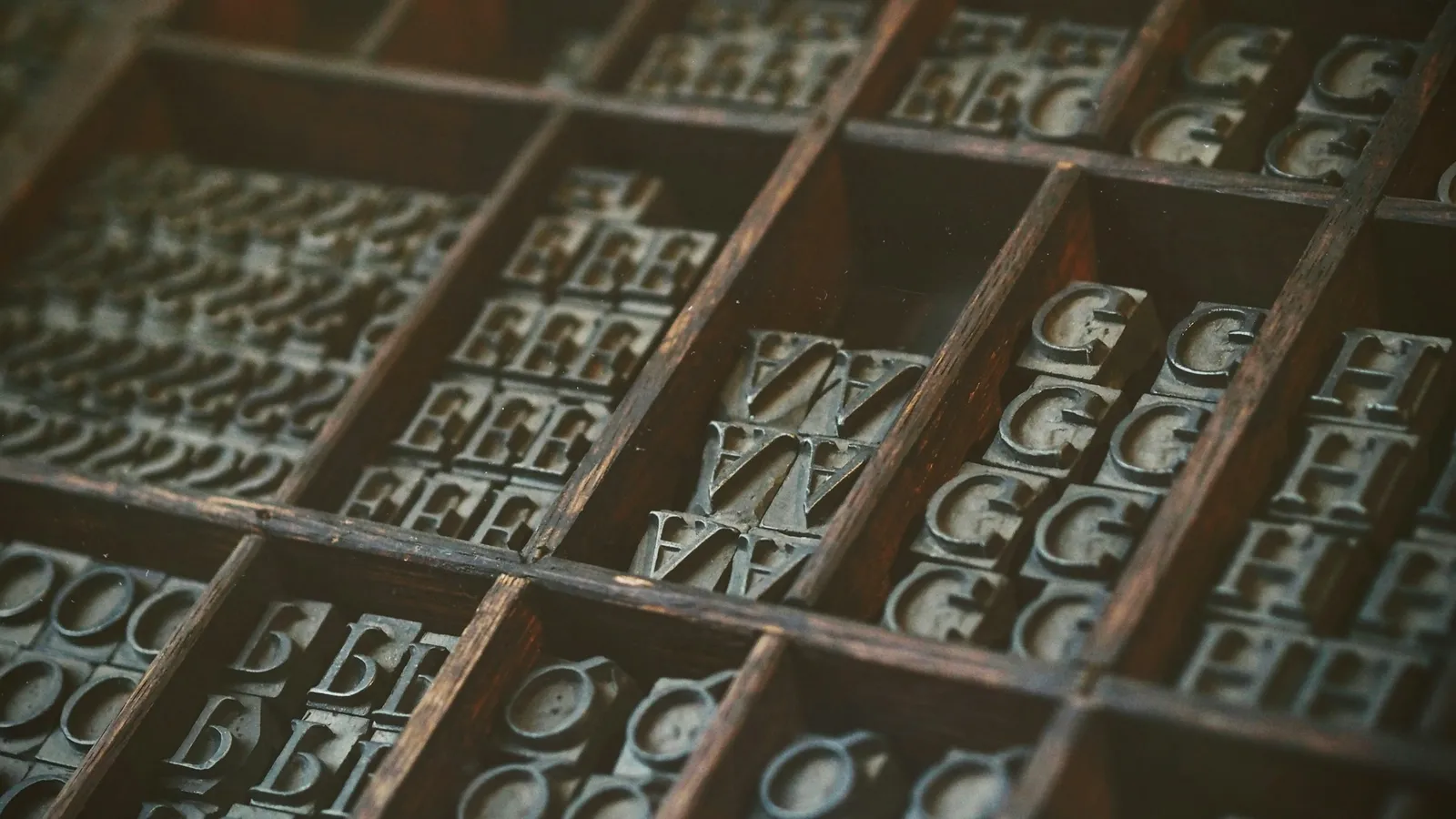
Every textbook, question paper and printout you use depends on an idea that sounds obvious now: make letters as separate, identical pieces, arrange them into a page, print as many copies as you need, then break the page up and reuse the letters. Johann Gutenberg made that idea work in Mainz in the 1450s. This post covers what is known about him, what made his method different, a worked example on the scale of his Bible, and lessons for how you work.
Who was Johann Gutenberg?
Much of his life is poorly documented. The Library of Congress says he "lived from about 1400 to about 1468" and "is generally credited for inventing the process of making uniform and interchangeable metal types and for solving the many problems of finding the right materials and methods for printing."
The Harry Ransom Center at the University of Texas, which owns a copy of his Bible, says he "may have begun developing a new printing technology as early as the 1430s". In Mainz, in the mid-1450s, Gutenberg and his partner Johann Fust published more than 150 large-format copies of the Bible in Latin.
What was new about movable metal type?
Before this, European books were mostly copied by hand. The key ideas in Gutenberg's method were:
Uniform pieces. Every copy of a letter had the same size and shape, so pieces could sit side by side in straight lines.
Interchangeable pieces. Any "a" could replace any other "a", so type could be broken up and reset for the next page.
A whole working system. The Library of Congress stresses "finding the right materials and methods", not one gadget.
The Library of Congress calls his Bible "the first great book printed in Western Europe from movable metal type." The Ransom Center adds that completing it showed that "a press that used individual pieces of metal type" could "mass-produce books".
What does the Gutenberg Bible look like?
The Library of Congress describes its copy: the Latin Vulgate text, "printed throughout in double columns, for the most part, with forty-two lines to a page", with capital letters and headings added by hand in colour. Its copy is printed on vellum, made from animal skin, and is one of only three perfect vellum copies known.
UNESCO's Memory of the World register lists the Göttingen vellum copy. It says about 30 Bibles were printed on vellum, and only four survive complete "with all their 1282 pages". The Ransom Center says its paper copy is one of only 20 complete copies of any kind that survive.
Worked example: how big was the job?
Use the sourced figures: 1,282 pages, mostly 2 columns of 42 lines, and more than 150 copies.
Lines per page. 2 × 42 = 84 lines.
Lines per Bible. 84 × 1,282 = 107,688 lines. Since not every page has 42 lines, call it about 108,000.
Pages printed. At least 150 copies × 1,282 pages = 192,300 printed pages.
Type setting. In principle, each of the 1,282 pages needs setting only once for the whole run, while all 192,300 printed pages come off the press.
Ratio. 192,300 / 1,282 = 150. Each set page is used for at least 150 impressions.
A scribe copying by hand does the full work for every copy. A printer does the hard work once per page and then repeats a quick step. That trade-off is the economic heart of printing.
What mistakes do people make about Gutenberg?
Saying he invented printing itself. The Library of Congress credit is specifically for uniform, interchangeable metal type and the methods around it, and it calls his Bible the first great book from movable metal type in Western Europe, not the world.
Treating dates as exact. Sources say "about 1400", "mid-1450s" and "probably completed late in 1455". Keep the hedges.
Forgetting he had partners. The Ransom Center names Johann Fust as his partner in publishing the Bible.
Our post on Louis Braille and the six-dot code tells how reading reached people who could not see the printed page.
What can you take from how Gutenberg worked?
Build a system, not a trick. Type, ink, paper and press all had to work together.
Invest effort where it repeats. Making identical letters was slow, but every page after that was faster. Your own notes work the same way: a clear summary sheet made once saves time every time you revise.
Test on a hard project. A 1,282-page Bible was a demanding proof that the method worked.
If you want to turn that "make it once, reuse it" habit into a revision plan, Fermi's AI tutor can work out what you already know and build a plan for the session, so each study block starts from a clear next step.
Practice routine: a book has 320 pages and 2,000 copies are printed. How many printed pages is that, and how many times is each set page used?
Next step: pick one chapter you revise often and make a single summary sheet you can reuse, the way a printer reuses a set page.


