

On this page
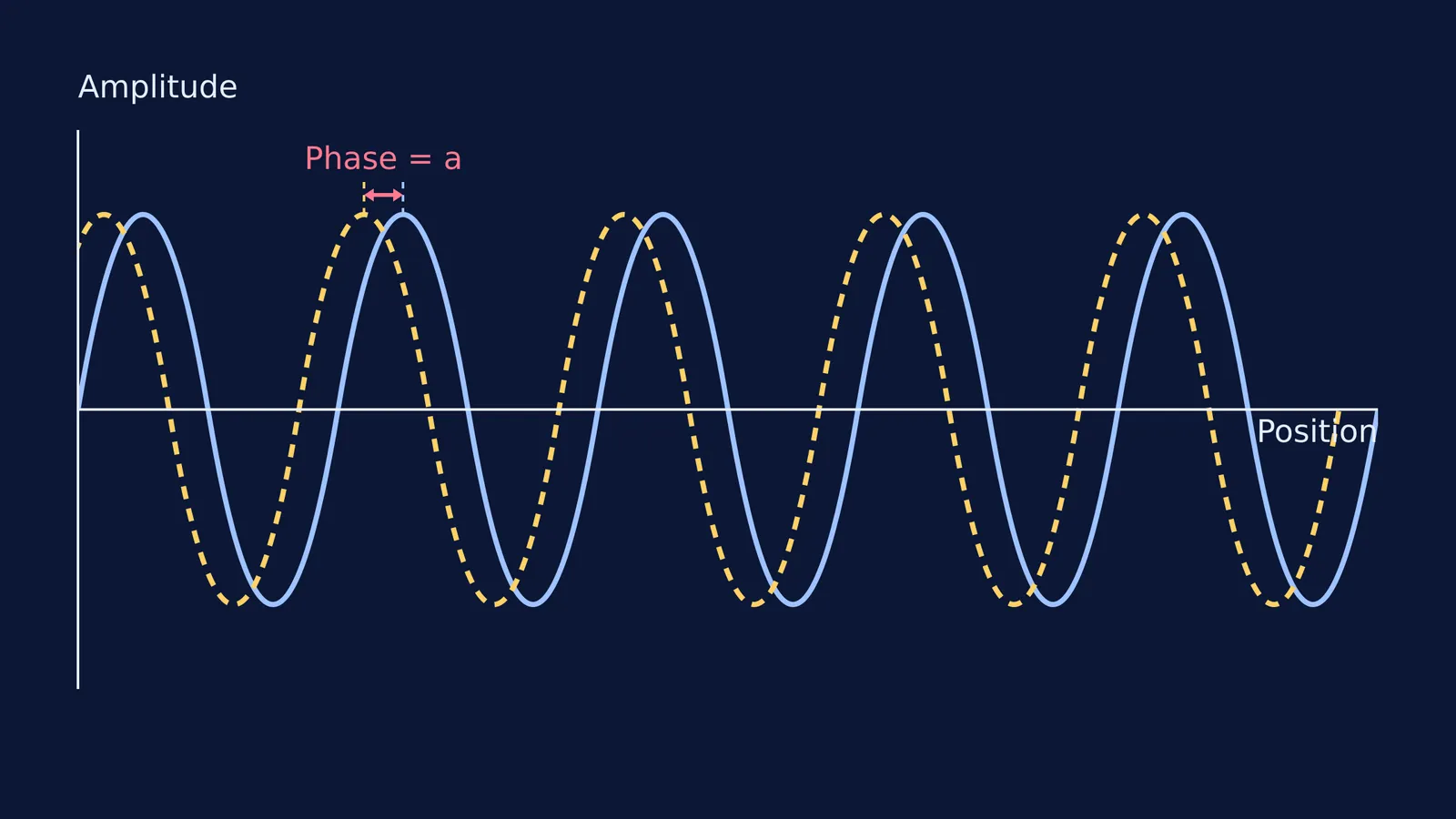
In X-ray crystallography, scientists bounce X-rays off a crystal to determine where its atoms are. While the detectors can easily measure the intensity of the scattered rays, they cannot record the phase—the timing of the wave's peaks and troughs. Without this phase information, working backwards to build a 3D model of the molecule is mathematically impossible.
This missing information is known as the phase problem. In the 1950s, physical chemist Jerome Karle and mathematician Herbert Hauptman proposed a set of equations to calculate the phases mathematically from the intensities. Their theoretical framework, called "direct methods," was met with deep scepticism. The mathematics was incredibly dense, and for years, crystallographers ignored it, sticking to slower, traditional methods like the heavy-atom techniques that were pivotal for Dorothy Hodgkin: how X-rays revealed penicillin, B12 and insulin.
How did Isabella Karle make direct methods practical?
Isabella Karle, a physical chemist and Jerome's wife, realised that the brilliant mathematics was useless unless scientists had a step-by-step way to apply it to real experimental data. She developed the Symbolic Addition Procedure, publishing its definitive form in 1966.
Instead of trying to crunch all the numbers at once, her procedure started small:
Assign symbols: The method selects a few of the strongest X-ray reflections and assigns them algebraic symbols (such as a, b and c) to represent their unknown phases.
Iterative expansion: Using probability relationships, the phases of other reflections are expressed in terms of these initial symbols.
Solve the chain: As the chain grows, enough equations are generated to reveal the numerical values of the symbols, cracking the entire structure open.
If you struggle to break down complex procedures into logical steps, the Fermi Problem Library has worked problems with a step-by-step solver that explains the reasoning rather than printing an answer.
How did she solve the structure of frog venom?
To prove the Symbolic Addition Procedure worked, Karle took on molecules that had completely baffled the scientific community. Among her most famous achievements was determining the structure of batrachotoxinin A in 1968.
Batrachotoxin is a powerful neurotoxin found in the skin of South American poison dart frogs. It paralyses muscles by locking the nerve's sodium channels open. Chemists had managed to isolate only a tiny amount of the purified toxin, not enough for standard chemical analysis. Using her direct methods and a minuscule crystal sample, Karle solved its complex 3D structure. The geometric mapping built upon the foundations laid by early pioneers like Max von Laue and X-rays diffracted by crystals and the insights of Lawrence Bragg and the X-ray law that maps atoms in crystals. If visualising complex molecular geometry or wave interference is challenging, the Fermi Simulation Lab provides interactive simulations for the ideas that are easier to see than to read.
What was her legacy in crystallography?
Before Isabella Karle's procedure, solving a single complex molecular structure could take years of trial and error. By combining her step-by-step method with early computers, scientists could map out a molecule in a matter of days. The number of structures published each year skyrocketed, accelerating the development of new antibiotics, vaccines and drugs.
In 1985, Jerome Karle and Herbert Hauptman were awarded the Nobel Prize in Chemistry for developing direct methods. Many scientists, including Jerome himself, argued that Isabella should have shared the prize, as it was her practical translation that turned an abstract idea into one of the most powerful tools in science. She went on to receive numerous other honours, including the National Medal of Science in 1995, for laying the foundation for modern molecular biology.


