

On this page
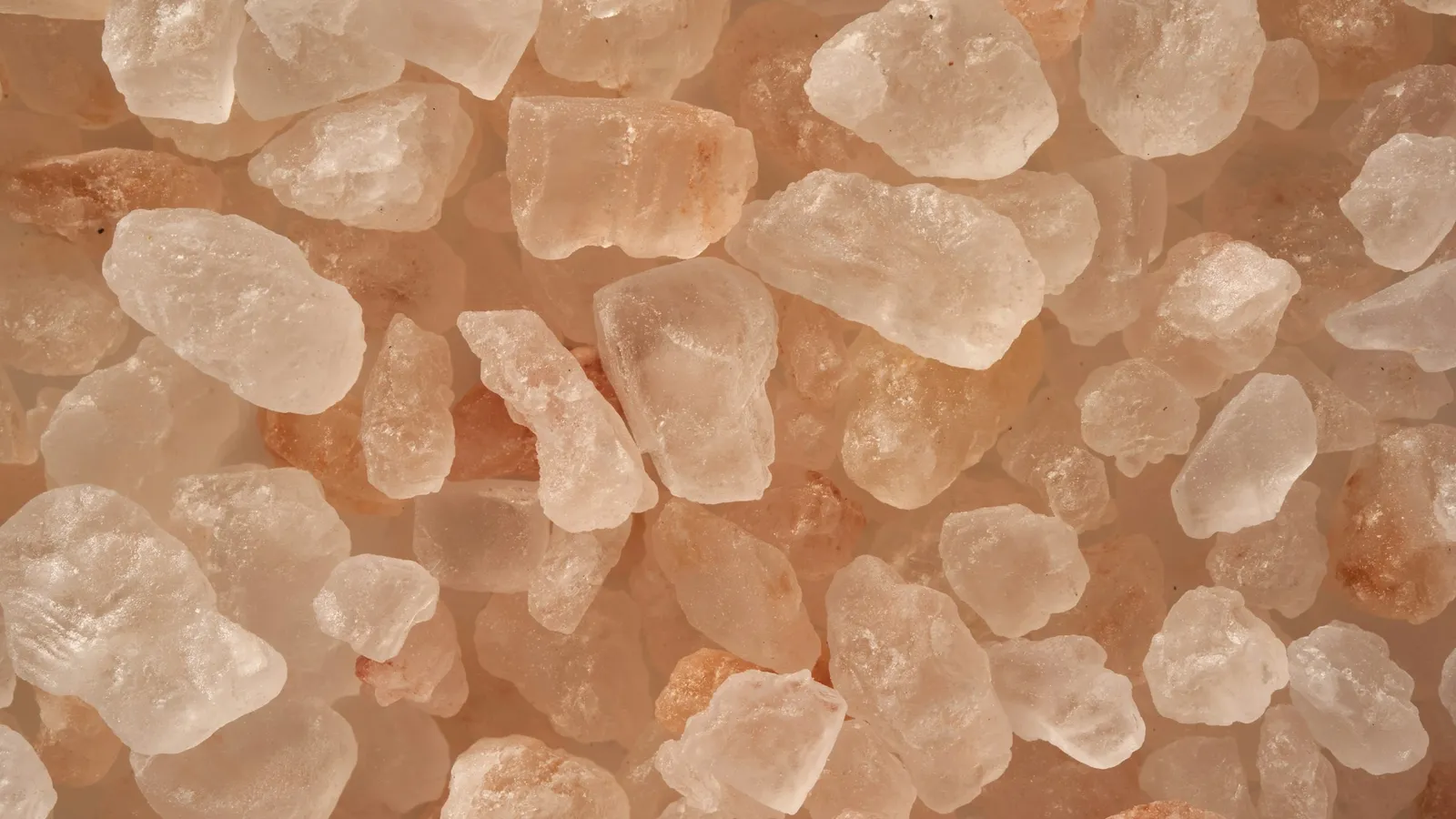
How do we know that table salt is a cube of alternating sodium and chlorine atoms? Nobody has looked at those atoms with a lens. The answer is a one-line relation that a 22-year-old Cambridge student worked out in 1912. This post tells the story of Lawrence Bragg, explains where his law comes from, works through an example and lists the slips students make with it.
Who was Lawrence Bragg?
The Nobel Prize biography records that William Lawrence Bragg was born in Adelaide, Australia, on 31 March 1890, the son of the physicist William Henry Bragg. He took a mathematics degree at Adelaide, moved to England with his father in 1909 and entered Trinity College, Cambridge. In the autumn of 1912 he began studying the "von Laue phenomenon", and his first paper on it appeared in the Proceedings of the Cambridge Philosophical Society that November.
That paper, The diffraction of short electromagnetic waves by a crystal, was read to the Society on 11 November 1912, according to the reprint record. Father and son shared the 1915 Nobel Prize in Physics, according to the Nobel Prize facts page, "for their services in the analysis of crystal structure by means of X-rays". The same page notes he did the prize-winning work when he was only 23. The Nobel Prize facts list names him the youngest physics laureate, awarded at 25.
What problem did Bragg solve?
Shortly before, Max von Laue and his colleagues had passed X-rays through a crystal and found a pattern of spots. Von Laue explained it with the mathematics of a three-dimensional grid of scatterers, and he suggested that only certain wavelengths in the X-ray beam made spots.
In his Nobel lecture, Lawrence Bragg explains that he looked for the answer in the crystal instead of the beam. He imagined the atoms arranged in "series of planes, parallel and equidistant from each other". Each plane reflects a little of the wave, like a faint mirror, and the reflections from successive planes add up only at certain angles. That picture gives the relation now called Bragg's law:
nλ = 2d sin θ
Here n is a whole number, λ is the X-ray wavelength, d is the spacing between planes and θ is the glancing angle between the beam and the planes.
How did the law reveal the structure of salt?
The lecture describes how he compared von Laue photographs of sodium chloride and potassium chloride and proposed the rock-salt structure, in which every corner of the cube is occupied by an atom and the two kinds alternate. His father built an instrument in which X-rays reflected from a crystal face entered an ionisation chamber. The Braggs' 1913 paper The reflection of X-rays by crystals describes this X-ray spectrometer. Measuring the angles of strong reflections confirmed the salt structure and opened the way to much more complex crystals.
Where does 2d sin θ come from?
Take two parallel planes a distance d apart. A ray reflected from the lower plane travels further than a ray reflected from the upper one. Drop perpendiculars from the point where the upper ray reflects onto the incoming and outgoing lower rays. Each extra segment has length d sin θ, so the extra path is 2d sin θ. The reflections reinforce when that extra path is a whole number of wavelengths.
This is the same reasoning you use for Young's double slit: bright fringes appear where the path difference is nλ. Bragg's law is not named in the JEE (Main) 2026 syllabus or the JEE (Advanced) 2026 brochure, but both list Young's double slit, so the skill carries over. Check the current year's documents before you plan.
Worked example: at what angles does a crystal reflect X-rays?
Sample numbers, close to real ones: an X-ray beam of wavelength λ = 0.154 nm falls on a set of crystal planes with spacing d = 0.282 nm. Find the glancing angles for the first three orders.
Rearrange. sin θ = nλ / 2d. Here 2d = 0.564 nm.
First order (n = 1). sin θ = 0.154 ÷ 0.564 = 0.273, so θ ≈ 15.8°.
Second order (n = 2). sin θ = 0.308 ÷ 0.564 = 0.546, so θ ≈ 33.1°.
Third order (n = 3). sin θ = 0.462 ÷ 0.564 = 0.819, so θ ≈ 55.0°.
Fourth order (n = 4). sin θ = 0.616 ÷ 0.564 = 1.09. A sine cannot exceed 1, so there is no fourth-order reflection.
The largest possible order is the biggest whole number below 2d/λ = 3.66, which is 3.
What mistakes do students make with Bragg's law?
Measuring θ from the normal. In optics you usually measure angles from the normal. Bragg's θ is the glancing angle from the planes. Lawrence Bragg's own lecture calls it "the glancing angle".
Dropping the 2. The ray goes down to the next plane and back up, so the path difference is 2d sin θ, not d sin θ.
Assuming any order exists. Always check that nλ/2d is at most 1.
Mixing units. Keep λ and d in the same unit, and set your calculator to degrees.
What can a student take from how Bragg worked?
Question the assumption. Von Laue looked for special wavelengths. Bragg asked whether the crystal was doing the selecting.
Turn a hard problem into a familiar one. Planes of atoms as mirrors made the maths simple.
Test the idea on a clean case. Salt, with two kinds of atom on a cube, was the right first crystal.
Keep going. The biography notes that he later led X-ray work on protein molecules at the Royal Institution. The story of Dorothy Hodgkin shows where that line of work led.
A practice routine: derive 2d sin θ from a sketch without notes, solve the example above for a new spacing of 0.200 nm, and then do two Young's double slit problems from your textbook to connect the ideas. If path difference is still hard to picture, the Fermi Simulation Lab has interactive simulations for ideas that are easier to see than read.
Next step: draw two crystal planes, mark the extra path, and write Bragg's law from your own diagram.


