

On this page
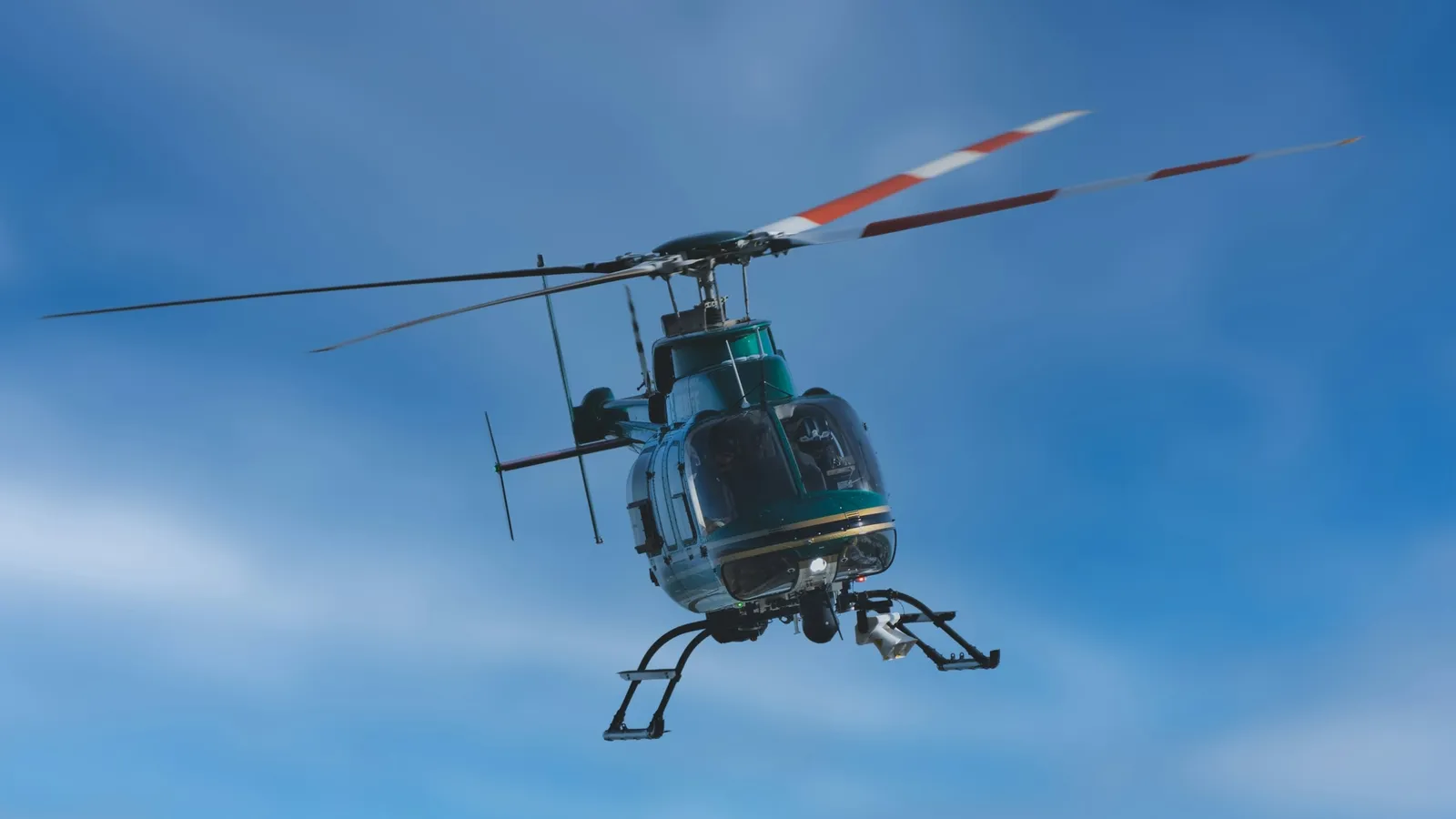
Spin a rotor one way and the body of the machine wants to spin the other way. Every helicopter designer has to deal with that, and the layout most helicopters use today came from Igor Sikorsky's VS-300. This post covers who he was, how the VS-300 developed, a worked example on tail rotor thrust, the mistakes students make with torque, and what you can take from his way of working.
Who was Igor Sikorsky?
The Vertical Flight Society gives his birth as 25 May 1889 in Kiev, then in the Russian Empire, his US citizenship in 1928, and his death on 26 October 1972. The ASME landmark brochure for the VS-300 says that at twelve he built a rubber-band model helicopter. In 1909 and 1910 he built two coaxial helicopters that produced lift but could not carry a pilot, so he turned to fixed-wing aircraft, including the "Grand Baltic" of 1913, which ASME calls the first four-engined aeroplane.
The Sikorsky Archives say he reached the United States in 1919 and in 1923 started the Sikorsky Aero Engineering Corporation on Long Island. His company became part of United Aircraft in 1929, building large flying boats.
Was the VS-300 the first helicopter?
Not quite, and the ASME brochure is careful about this. It names the French Breguet-Dorand of 1935, with two rotors on one shaft, and the German Focke-Achgelis Fw-61 of 1936, with side-by-side rotors, which it says "is considered to be the world's first practical helicopter". What made the VS-300 different was its layout. ASME calls it America's first practical helicopter and the first successful one in the world with a single main rotor and a tail rotor to cancel torque, the configuration most makers have used ever since.
How did the VS-300 develop?
According to ASME, Sikorsky proposed the project on 12 March 1939. The first version had a three-bladed main rotor 28 feet across and a 75 horsepower engine. He piloted its first flight on 14 September 1939; it lasted about ten seconds and rose a few inches. A gust rolled it over in December 1939. He then tried two extra horizontal tail rotors for control, made the first free flight on 13 May 1940, and on 6 May 1941 set an endurance record of 1 hour, 32 minutes and 26 seconds. The final version, first flown on 8 December 1941, used full cyclic pitch on the main rotor and a single tail rotor.
In a paper he presented in January 1941, Sikorsky explained that the vertical tail rotor did two jobs: counteracting the torque of the main rotor and changing the direction of flight. He also described a free-wheeling drive so the rotors would keep turning in autorotation if the engine failed. The National Air and Space Museum says the follow-on XR-4 was the prototype of the R-4B, the world's first mass-produced helicopter.
Worked example: how hard must the tail rotor push?
Sikorsky's 1941 paper gives the main rotor blades a 14-foot radius, about 4.27 m. The other numbers here are sample numbers: 40 kW of power reaches the main rotor, which turns at 250 rpm, and the tail rotor sits 6.0 m from the main shaft.
Angular speed. ω = 250 × 2π / 60 = 26.2 rad/s.
Torque on the rotor. Power = τω, so τ = 40,000 / 26.2 = 1,530 N m (1,528 N m).
Reaction on the body. By Newton's third law, the body feels an equal and opposite torque. Without a fix, it would spin the opposite way to the rotor.
Tail rotor thrust. It must supply the same torque about the shaft: T × 6.0 = 1,528, so T = 255 N.
Blade tip speed. v = ωR = 26.2 × 4.27 = 112 m/s.
When the pilot increases blade pitch for more lift, more power goes in, torque rises and the tail rotor must push harder. Sikorsky's paper describes linking the pitch lever to the throttle for this reason.
What mistakes do students make with torque problems?
Using rpm in P = τω. Convert to rad/s first.
Using the wrong distance. Torque uses the perpendicular distance from the axis to the line of the force.
Thinking the tail rotor gives lift. It pushes sideways to balance torque.
Forgetting the reaction. A motor turning a rotor exerts an equal and opposite torque on whatever holds the motor.
The JEE (Main) 2026 syllabus lists torque, angular momentum and its conservation in Unit 5. Check your own year's syllabus. Our post on conservation of angular momentum has more practice.
Rotating systems are easier to picture when you can change a value and watch the result. The Fermi Simulation Lab has interactive simulations for ideas that are easier to see than read.
What can a student take from Sikorsky's way of working?
Keep the goal and wait for the tools. His 1909 machines failed for lack of light engines; he returned when engines improved.
Change one thing at a time. The VS-300 went through four major configurations before he settled on the one that worked.
Explain your design. His 1941 paper set out why each rotor was there.
Next step: find the tail rotor thrust if the main rotor turns at 300 rpm with the same 40 kW.


