On this page
NCERT gives the C4 pathway a name, the Hatch and Slack pathway, and a diagram. It does not say who Hatch and Slack were or how they found it. This post covers the experiment, the carbon bookkeeping you need for exams, and why the pathway lets maize and sugarcane photosynthesise so well in heat.
Who were Hatch and Slack?
Marshall Davidson Hatch was born on 24 December 1932 and later became a chief research scientist in CSIRO's Division of Plant Industry in Canberra, according to his Who's Who entry. Charles Roger Slack (22 April 1937 to 24 October 2016) later worked at New Zealand's Institute for Crop and Food Research, according to Who Was Who.
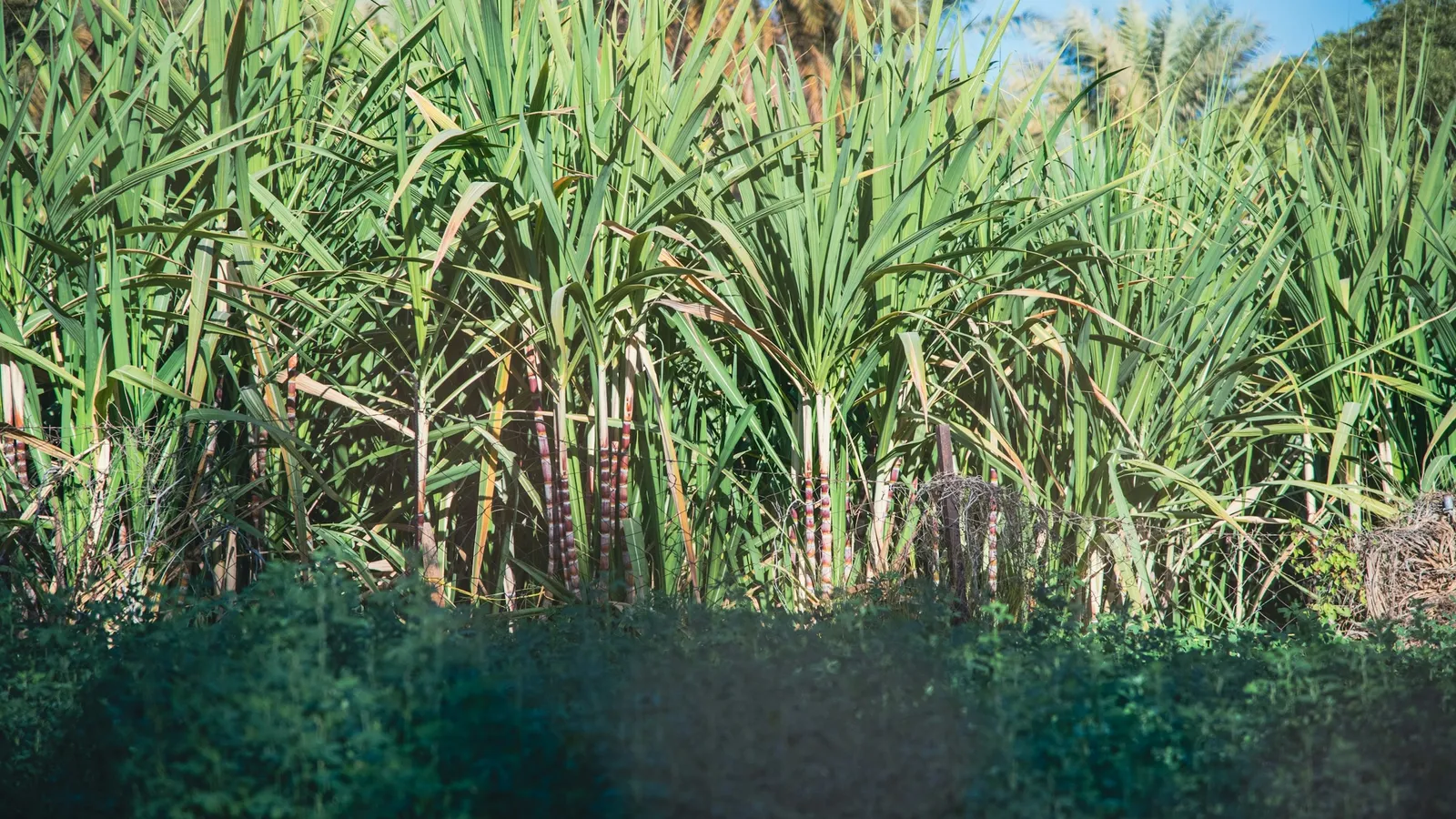
In the mid-1960s both were at the David North Plant Research Centre of the Colonial Sugar Refining Company in Indooroopilly, Queensland. That is the address given in their 1966 paper. They were working for a sugar company, on sugarcane.
What puzzle were they trying to solve?
Melvin Calvin's work had shown that in most plants the first stable product of CO₂ fixation is the three-carbon acid 3-phosphoglycerate (PGA), made by the enzyme RuBisCO. Our post on Melvin Calvin tells that story.
Sugarcane was already under study elsewhere. In 1965, Hugo Kortschak, Constance Hartt and George Burr at the Experiment Station of the Hawaiian Sugar Planters' Association published Carbon dioxide fixation in sugarcane leaves in Plant Physiology. Hatch and Slack set out to trace, step by step, where the carbon fixed by sugarcane leaves goes first and where it ends up.
What did the 1966 experiment show?
Their paper in the Biochemical Journal (1966) used detached sugarcane leaf segments photosynthesising steadily in ¹⁴CO₂. The abstract reports:
After about 1 second, more than 93% of the fixed radioactivity was in malate, aspartate and oxaloacetate, all four-carbon acids.
After longer times, large amounts of label appeared in PGA, hexose phosphates and sucrose.
Label appeared first in carbon 4 of the four-carbon acids and carbon 1 of PGA.
Leaves still attached to the plant gave similar results.
Their reading: the four-carbon carboxylation is the only significant first step, and the carbon is then passed on to sugars by way of PGA. In other words, sugarcane still uses the Calvin cycle, but feeds it through a four-carbon shuttle.
Worked example: following the carbons
Use NCERT Class 11 Biology, Chapter 11. Count carbons at each step:
Mesophyll cell: PEP (3C) + CO₂ (1C) → oxaloacetic acid, OAA (4C). Enzyme: PEP carboxylase. NCERT stresses that mesophyll cells lack RuBisCO.
OAA becomes malic acid or aspartic acid (still 4C), which moves to the bundle sheath cells.
Bundle sheath: the 4C acid is broken down to CO₂ (1C) and a 3C molecule. 4 = 1 + 3.
The 3C molecule returns to the mesophyll and is converted back to PEP. The cycle closes.
The released CO₂ enters the Calvin cycle in the bundle sheath, which has RuBisCO.
Now the energy count for the Calvin cycle, from the same chapter: each CO₂ needs 3 ATP and 2 NADPH, and one glucose needs 6 turns.
ATP: 6 × 3 = 18
NADPH: 6 × 2 = 12
That matches NCERT's "In: six CO₂, 18 ATP, 12 NADPH; Out: one glucose". The C4 shuttle sits in front of this; it does not replace it.
Common mistakes:
Saying C4 plants "do not use the Calvin cycle". NCERT is explicit that the Calvin pathway occurs in all photosynthetic plants.
Putting RuBisCO in the mesophyll of C4 plants. It is in the bundle sheath.
Calling PEP a 4-carbon compound. It is the 3-carbon acceptor; OAA is the first 4-carbon product.
Why does the shuttle help in hot climates?
NCERT explains that RuBisCO can also bind O₂, leading to photorespiration, which wastes fixed carbon and makes no ATP or NADPH. In C4 plants the breakdown of the four-carbon acid in the bundle sheath raises the CO₂ concentration around RuBisCO, so it acts as a carboxylase and photorespiration is minimised. The chapter links this to higher productivity and tolerance of higher temperatures. The special leaf anatomy with large bundle sheath cells is called Kranz anatomy.
For a full exam walkthrough of light reactions, Calvin cycle and C4 plants, read Photosynthesis for NEET.
What can a student take from Hatch and Slack's way of working?
Follow the anomaly. Sugarcane's odd labelling pattern was the starting clue, and they chased it rather than explain it away.
Read time as evidence. One-second and longer exposures revealed the order of steps.
Count everything. Carbon atoms and label positions had to balance at each step.
If the two cell types and two cycles are hard to picture together, the Fermi Concept Library covers every concept in physics, chemistry, biology, mathematics and computing, so you can revise the C3 and C4 routes one at a time.
Next step: draw a mesophyll cell and a bundle sheath cell side by side and write the carbon count on every arrow.