On this page
In the late 19th century, universities across Europe were largely closed to women, especially in mathematics and the sciences. Grace Chisholm Young broke through these barriers to become one of the most prolific mathematicians of her time. In 1895, she made history as the first woman to be awarded a formal doctorate in Germany through the standard examination process.
Who was Grace Chisholm Young?
Born in England on 15 March 1868, Grace Chisholm Young initially faced significant resistance to her educational ambitions. Her mother originally forbade her from studying medicine, but with her father's support, she decided to pursue mathematics instead. She entered Girton College, Cambridge, in 1889.
By 1892, she had passed the Cambridge Mathematical Tripos with the equivalent of a first-class degree (Wikipedia). Not stopping there, she took the Final Honours School examinations at the University of Oxford on a challenge. She outperformed all the students, becoming the first person to achieve the equivalent of a first-class degree at both institutions. However, because neither university formally awarded degrees to women at the time, her official academic record remained incomplete in her home country.
Despite her brilliance, she could not officially receive a degree in England. Determined to continue her research and follow an academic career, she travelled to the University of Göttingen in Germany to study under the renowned mathematician Felix Klein, whose research group was one of the leading mathematical centres in the world.
How did she earn her doctorate in Germany through normal exams?
While a few women had previously been granted honorary degrees or doctorates *in absentia* (such as Sofia Kovalevskaya in 1874), Young was the first to complete the full, rigorous requirements of a German university in person. In 1895, at the age of 27, she was awarded her Ph.D. (Wikipedia).
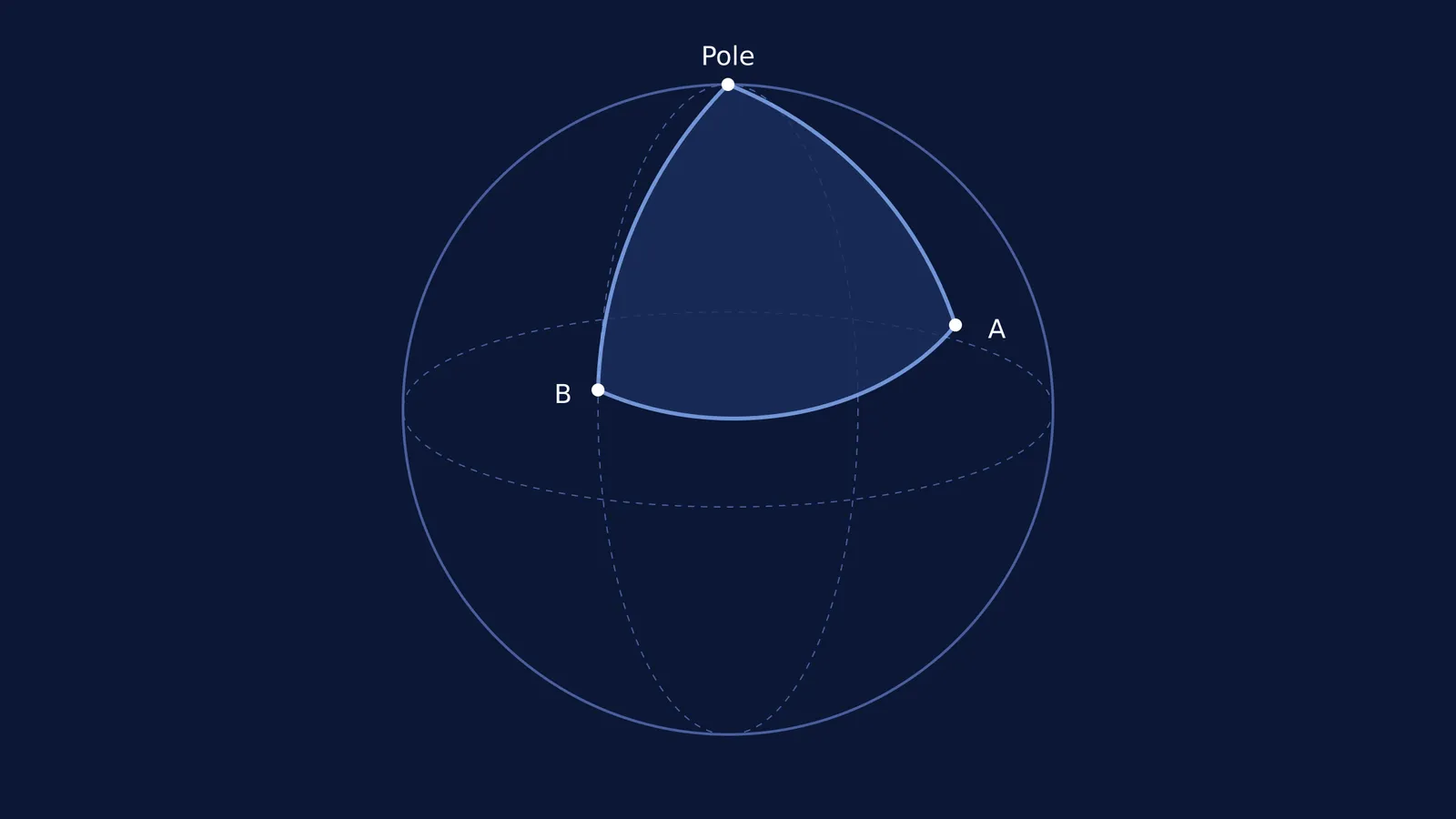
To earn this, she had to obtain special permission from the Berlin Ministry of Culture just to sit the exams as part of an experiment in admitting women. Her final oral examination was conducted entirely in German. It required her to answer probing questions from several professors on geometry, differential equations, physics and astronomy, and to confidently defend her thesis on spherical trigonometry.
If you are preparing to explain your own mathematical reasoning, whether in a university viva or at the board, Fermi's AI tutor can act as a sounding board. It holds a line of reasoning across a session, notices where you are stuck, and checks your understanding as it goes.
A checklist for oral mathematics exams
If you are facing an oral examination like Young did, use this framework to prepare:
Map the fundamentals: Be ready to define every key term in your work perfectly without looking at your notes.
Practise out loud: Mathematics is written, but in a viva, you must speak it. Practise reading your equations aloud so the symbols feel natural.
Anticipate the boundaries: Examiners will ask what happens if a condition in your theorem is dropped. Know the limits of your proofs.
Admit what you don't know: If a question extends beyond your scope, state how you would begin to solve it rather than guessing an answer.
What was her contribution to calculus and set theory?
After returning to England and completing her doctorate, she married her former tutor, William Henry Young, in 1896. Together, they formed a formidable mathematical partnership, eventually publishing over 200 papers and four books. In 1906, they wrote *The Theory of Sets of Points*, which was the first textbook on set theory (Wikipedia).
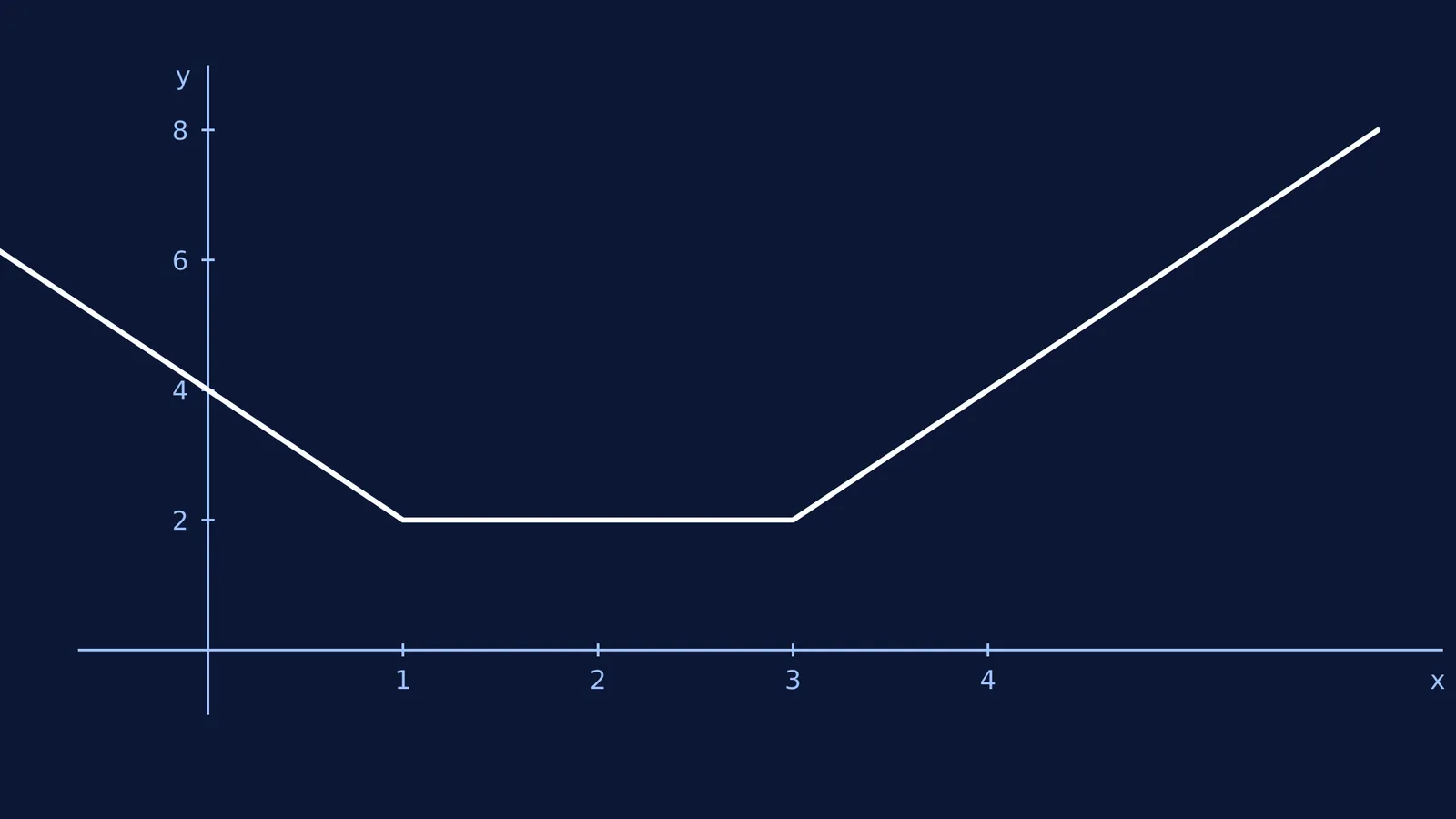
While much of their joint work was published under William's name so it would be taken seriously by the academic establishment of the era, Grace produced profound independent research. In 1915, she was awarded the Gamble Prize by Girton College for her essay *On infinite derivates*. Her independent work between 1914 and 1916 on the derivatives of real functions contributed to what is now known as the Denjoy–Young–Saks theorem, a fundamental result in real analysis that describes the possible values of the four Dini derivatives of a function.
If you are learning how to handle rates of change, from differentiating one expression with respect to another to proving relations with second-order derivatives, you are building on the foundations laid by mathematicians like Young and Maria Gaetana Agnesi. For students exploring these foundations today, the Fermi Concept Library maps out every concept in mathematics, giving each idea its own lesson and its place in the map.
Young's achievements extended well beyond mathematics. She learned six languages, completed all the requirements for a medical degree except the internship, and raised six children, teaching them all musical instruments (Wikipedia). She even wrote children's books on biology, taking care to educate the next generation. Her legacy remains a powerful example of intellectual courage and the pursuit of knowledge.