

On this page
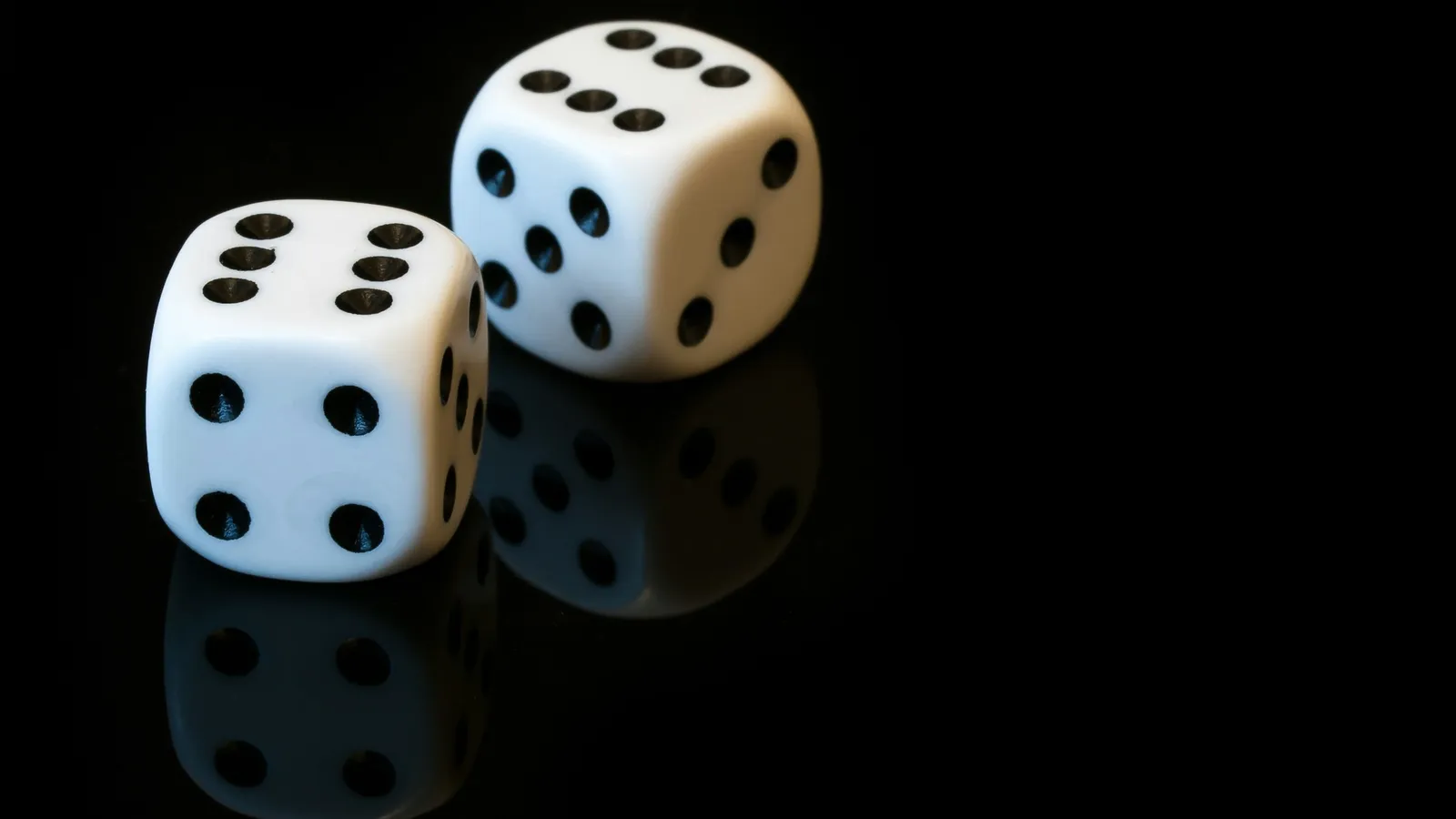
Probability questions in Class 10 and JEE often start with dice. Two dice, 36 outcomes, count the favourable ones. It feels obvious now, but someone had to be the first to write it down as mathematics rather than luck. One of the earliest was a brilliant, difficult Italian doctor who gambled for a living. This post covers Cardano's life, what is known about his book on chance, and the counting methods behind it, with the mistakes students still make.
Who was Gerolamo Cardano?
The MacTutor biography from the University of St Andrews gives his birth as 24 September 1501 in Pavia. His father, a Milan lawyer, taught him mathematics. Cardano studied medicine at the University of Pavia, but the College of Physicians in Milan repeatedly refused him membership, and for years he turned to cards, dice and chess to make a living. MacTutor notes that his understanding of probability gave him an advantage and that he generally won more than he lost, but that gambling became an addiction that cost him time, money and reputation.
He later became a celebrated physician. The Stanford Encyclopedia of Philosophy entry on Cardano describes him as one of the most original physicians, mathematicians and astrologers of his time, and records that he was arrested by the Inquisition in 1570, spent his last years in Rome as a physician to two popes, and died there in 1576.
What was the Book on Games of Chance?
MacTutor reports that Liber de Ludo Aleae was probably completed by 1563 but only published in 1663, nearly a century after his death. It describes the book as the first study of things such as dice rolling based on the premise that there are scientific principles governing the likelihood of an outcome like a double six, rather than mere luck.
How do you count outcomes for dice? A worked example
The modern method rests on one idea: list the equally likely outcomes, then count the ones you want.
One die: 6 equally likely outcomes, so P(six) = 1/6.
Two dice: treat them as different colours, red and blue. Each red result pairs with each blue result, so there are 6 × 6 = 36 outcomes.
P(double six) = 1/36, since only (6, 6) works.
P(sum is 7) = 6/36 = 1/6, from (1,6), (2,5), (3,4), (4,3), (5,2), (6,1).
P(at least one six) = 11/36. Count: 6 outcomes with red six, 6 with blue six, minus the one counted twice, (6, 6). That gives 6 + 6 − 1 = 11.
Repeated throws: what is the chance of at least one six in four throws of one die? Use the complement. P(no six in one throw) = 5/6, so P(no six in four) = (5/6)⁴ = 625/1296 ≈ 0.482. So P(at least one six) ≈ 1 − 0.482 = 0.518, just over a half.
For at least one double six in 24 throws of two dice, the same method gives 1 − (35/36)²⁴ ≈ 1 − 0.509 = 0.491, just under a half.
What mistakes do students make with dice problems?
Adding chances that overlap. P(at least one six with two dice) is not 1/6 + 1/6 = 12/36. The outcome (6, 6) has been counted twice; the answer is 11/36.
Multiplying the chance by the number of tries. Four throws do not give 4 × 1/6 = 2/3. That method would give more than 1 for seven throws, which is impossible.
Treating sums as equally likely. A sum of 7 has six ways, a sum of 2 only one. Always go back to the 36 ordered outcomes.
Our posts on probability for Class 10 and common probability mistakes have more practice.
What else did Cardano contribute to mathematics?
In 1545 he published Ars Magna, which MacTutor calls the first Latin treatise devoted solely to algebra. It gave methods for solving cubic equations, which he had learned from Tartaglia under a promise of secrecy, and quartic equations, solved by his assistant Ferrari. Publishing led to a bitter dispute with Tartaglia. MacTutor also credits Ars Magna with the first calculation using complex numbers. Cardano multiplied 5 + √−15 by 5 − √−15 to get 25 − (−15) = 40, then dismissed this kind of arithmetic as subtle but useless. Check it: the two numbers add to 10 and multiply to 40. The person who showed it was useful was Rafael Bombelli.
What can a student take from Cardano?
He treated chance as something to analyse, not something to fear or hope about. That shift, from luck to counting, is the whole of school probability. He is also a warning: his gambling, by his biographers' accounts, cost him years. If you get stuck choosing between adding and multiplying probabilities, the Fermi Problem Library has worked problems with a step-by-step solver that explains the reasoning rather than printing an answer.
Try this tonight: list all 36 outcomes for two dice in a 6 by 6 grid and use it to find the chance that the larger number is exactly 4.


