On this page
Galen is one of the strangest figures in the history of biology. He ran experiments that would make sense in a modern physiology lab, and he also made anatomical claims about the human body that were wrong because he had studied apes, pigs and oxen. For about fifteen centuries, doctors in Europe and the Middle East learned his conclusions and mostly forgot his methods. This post explains who he was, walks through one of his experiments step by step, and shows what went wrong with his legacy.
Who was Galen?
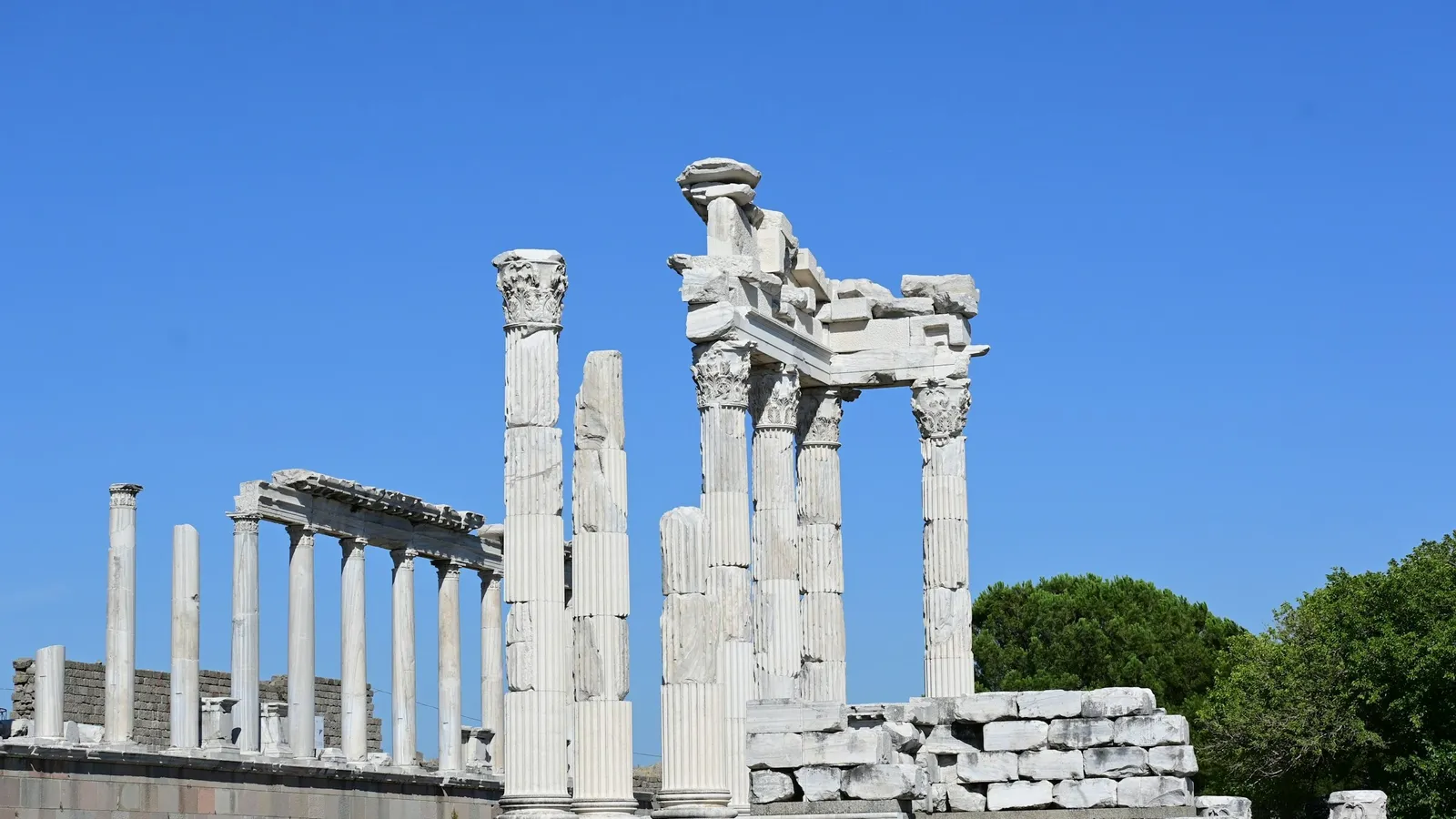
According to the Stanford Encyclopedia of Philosophy entry on Galen, he was born in 129 CE in Pergamon, a Greek city in what is now western Turkey, the son of an architect. He began medical studies at sixteen. After his father died in 149 he travelled to study with leading teachers in Smyrna, Corinth and Alexandria, where, the entry notes, dissection at that time was restricted to non-human animals. In 157 he returned home as doctor to the gladiators, then moved to Rome in the early 160s. He became court physician to the emperor Marcus Aurelius and continued at court under later emperors.
He wrote an enormous amount. The same entry counts 21 volumes of roughly 1,000 pages each in the standard Greek edition, more than 4 million words in total. Sources disagree on when he died: the encyclopedia gives about 200 CE, while a historical review by Matthew Cobb in Nature Reviews Neuroscience gives about 216 CE.
How did Galen prove that urine comes from the kidneys?
This is Galen at his strongest. In On the Natural Faculties, available in the Arthur John Brock translation on Project Gutenberg, he describes opponents who said the ureters, the tubes running from the kidneys to the bladder, served no purpose or carried semen. He answered with a demonstration in a living animal. Here is the logic, step by step.
State the two ideas. Idea A: the kidneys make urine, which flows down the ureters into the bladder. Idea B: the ureters do not carry urine to the bladder.
Tie both ureters. Galen secured both with ligatures and let the animal go, noting it "will not continue to urinate". On reopening, the bladder was empty and the ureters were "quite full and distended". Idea A predicts exactly this. Idea B gives no reason for the ureters to swell.
Untie them. When the ligatures came off, "one then plainly sees the bladder becoming filled with urine."
Test for backflow. With the outlet of the bladder tied, he squeezed the full bladder. Still "nothing goes back through the ureters to the kidneys", so flow runs one way.
Tie only one side. The tied ureter swelled on the kidney side while the free one stayed slack and filled the bladder. One animal now carries its own control.
That last step is the clever one. Comparing a treated side with an untreated side in the same animal rules out differences between animals. You will meet the same structures in the NCERT Class 11 chapter on excretory products, which describes the human system as a pair of kidneys, a pair of ureters, a urinary bladder and a urethra.
The Stanford entry describes another live-animal experiment in which Galen tied the spinal cord of a live pig to show the role of the brain, which he took to be the seat of the soul's leading part. The NLM's history of Greek medicine calls him one of the first experimental physiologists for exactly this kind of controlled work on the kidneys and spinal cord.
Where did Galen's anatomy go wrong?
The problem was the material. Because human dissection was not practised, Galen worked mostly from animals. The University of California Museum of Paleontology's page on Vesalius and comparative anatomy says that instead of humans, Galen was often writing about oxen or Barbary macaques. A recent review in the Journal of Anatomy lists two errors that lasted into the Renaissance: a network of vessels at the base of the brain, the rete mirabile, which Vesalius showed is absent in humans, and invisible pores in the wall between the ventricles of the heart, which Galen thought linked its right and left sides.
His physiology had a bigger flaw. The IEP article on Galen explains that, in his system, blood was made in the liver and heart, flowed out one way, and was used up by the body. It took William Harvey, in 1628, to show that blood circulates instead.
Why did his mistakes last so long?
The NLM history puts it directly: his message of observation and experiment was "largely lost", and his theories became dogma. Medieval and early Renaissance teachers read Galen's text aloud while someone else dissected, so there was little reason to check. The errors were not really Galen's fault. They came from later readers who copied his conclusions but not his habit of testing them. Our post on Andreas Vesalius and the Fabrica picks up the story of how that habit returned.
What can a student learn from how Galen worked?
Write down what each idea predicts. Galen's ureter test works because idea A and idea B predict different results for each step. Before any experiment question, list the predictions of each hypothesis.
Build a control into the design. Tying one ureter and leaving the other free is a model of a good control.
Know where your evidence comes from. Galen's ape anatomy was careful but it was not human anatomy. In NEET or board answers, be clear whether a fact is about humans, frogs or plants.
Respect authorities, then check them. Galen himself argued with the authorities of his day. Students who later treated him as beyond question kept his errors alive.
If you find it hard to picture how the kidney, ureter and bladder fit together, the Fermi Concept Library covers every concept in physics, chemistry, biology, mathematics and computing, so you can revise the excretory system one structure at a time.
Practice routine for this week: take one experiment from your biology book, write the hypothesis, the alternative, and what each predicts, then say what the control is.
Next step: read Galen's ureter passage on Project Gutenberg, then redraw his five steps as a flow chart in your notebook.