

On this page
Enzymes are the catalysts of life, and chemists would love to make them do new jobs. For years the plan was to design changes by reasoning about the protein's structure. Frances Arnold tried that and then chose a different route: copy evolution, in a test tube. This post covers who she is, what her first experiment did, the arithmetic of improvement, and what students can learn from her change of approach.
Who is Frances Arnold?
Her Nobel facts page says she was born on 25 July 1956 in Pittsburgh, Pennsylvania. She studied mechanical and aerospace engineering at Princeton, then earned a doctorate in chemical engineering at the University of California, Berkeley, in 1985, and has since worked at the California Institute of Technology (Caltech). She was interested in energy technology early and in 2005 formed a company to make renewable fuels.
She received one half of the 2018 Nobel Prize in Chemistry "for the directed evolution of enzymes". The other half went to George P. Smith and Gregory P. Winter for phage display.
Why did she give up on designing enzymes?
The Nobel Committee's popular science background for 2018 explains that proteins are so complex that rational design kept falling short. Arnold, it says, decided to abandon what she called a "somewhat arrogant approach" and take inspiration from nature's own method for optimising chemistry: evolution.
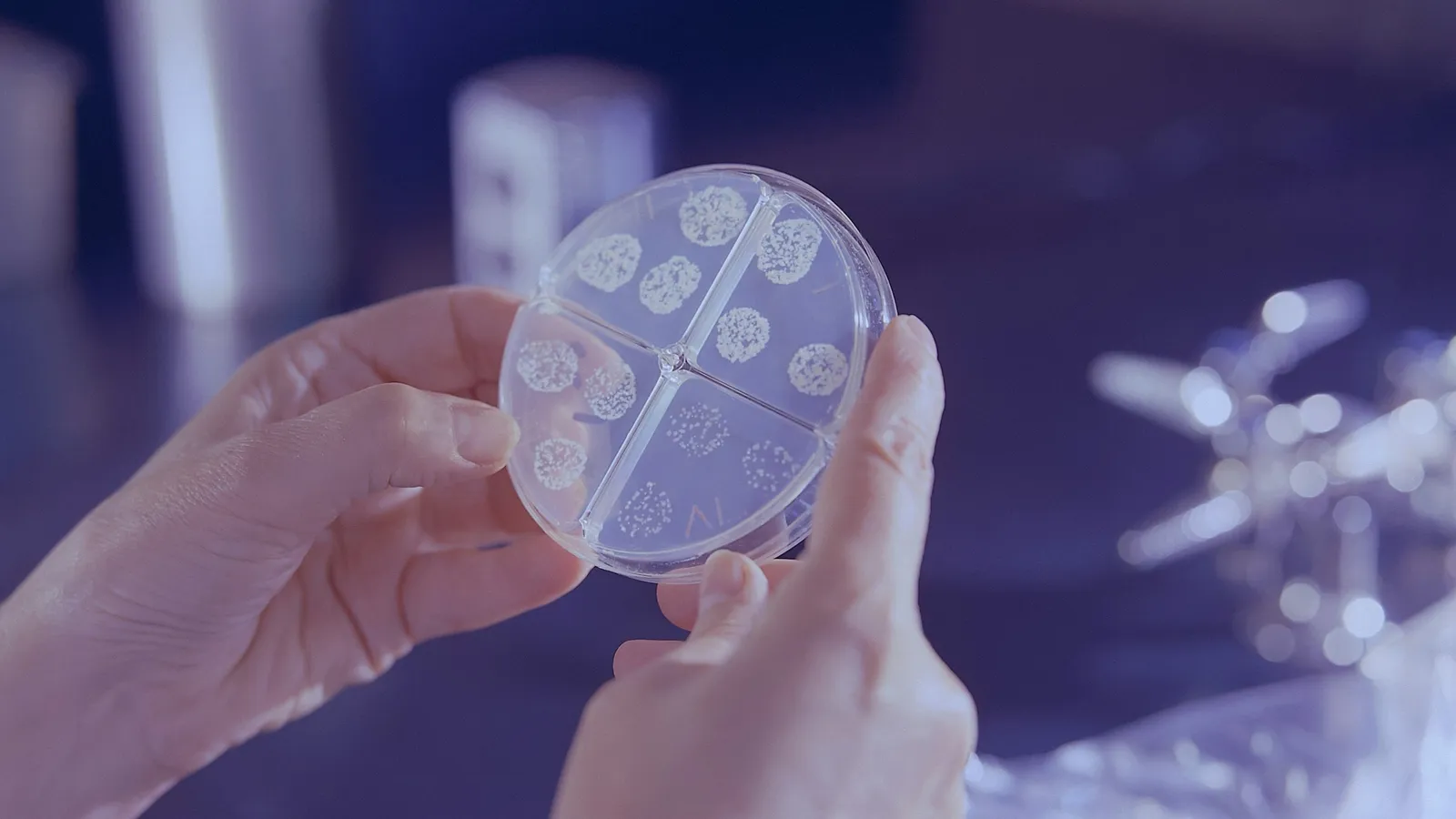
Evolution needs two things: variation and selection. In the lab, that means making random changes in a gene, letting bacteria produce the many enzyme variants, and then testing which variants do the job you care about most effectively.
What was the 1993 experiment?
The target was subtilisin E, an enzyme that breaks down proteins. Normally it works in water. Arnold wanted it to work in dimethylformamide (DMF), an organic solvent useful in chemical manufacturing that tends to stop enzymes working.
Her paper with her colleague Chen, Tuning the activity of an enzyme for unusual environments in PNAS, reports the result. Starting from a variant that already carried four useful amino acid changes, three rounds of random mutation and screening added six more. The final variant, called PC3, broke down a test peptide 256 times more efficiently than the original enzyme in 60 per cent DMF. It carried 10 substitutions in total (4 + 6 = 10). The popular background notes that nobody could have worked out the benefits of that combination in advance.
The arithmetic of rounds
How big is each step if three rounds give 256 times better? Suppose, just for the arithmetic, that every round gave the same improvement factor k. Then k × k × k = 256, so k is the cube root of 256.
6 × 6 × 6 = 216, too small.
7 × 7 × 7 = 343, too large.
6.35 × 6.35 × 6.35 ≈ 256.
So three rounds of about 6.35 times each multiply to 256. Real rounds were not necessarily equal; the point is that improvements multiply, not add. Three rounds of +6 would give only about 18 if they added, compared with 256 when they multiply. That is why repeating the cycle is so powerful.
What came next?
The popular background describes how Willem Stemmer added recombination, a test-tube version of mating, in 1994. His Nature paper on DNA shuffling cut versions of a gene into pieces and reassembled them. After cycles of shuffling and selection, a bacterial enzyme's resistance to the antibiotic cefotaxime rose 32,000-fold, compared with 16-fold from earlier methods in the same system.
Arnold kept refining the methods. According to the Nobel material, enzymes from her lab are used in making pharmaceuticals with fewer by-products, and her group developed enzymes that turn simple sugars into isobutanol, which can be used for biofuels and greener plastics. You can link this to the enzyme kinetics and specificity in our enzymes guide for NEET biology, and to variation and selection in our post on evolution for NEET.
What can a student take from her way of working?
Change the method when the method is the problem. Arnold did not try harder at rational design; she switched approach. If rereading is not working for a chapter, switch to self-testing.
Let feedback choose. She did not predict which mutations would help. She tested many and kept the winners. Practice questions do the same for your study: they tell you what works.
Iterate from your strongest version. Each round started from the previous winner. Each revision session should start from your last corrected attempt, not from scratch.
Carry skills across fields. An engineer by training, she brought a designer's goal and a biologist's tool together.
If a concept like enzyme specificity or activation energy is the gap, the Fermi Concept Library has every concept in physics, chemistry, biology, mathematics and computing, so you can fix that one idea first.
Next step: work out how many rounds of a steady 4-fold improvement it takes to pass 256, then check: four rounds give exactly 256.


