

On this page
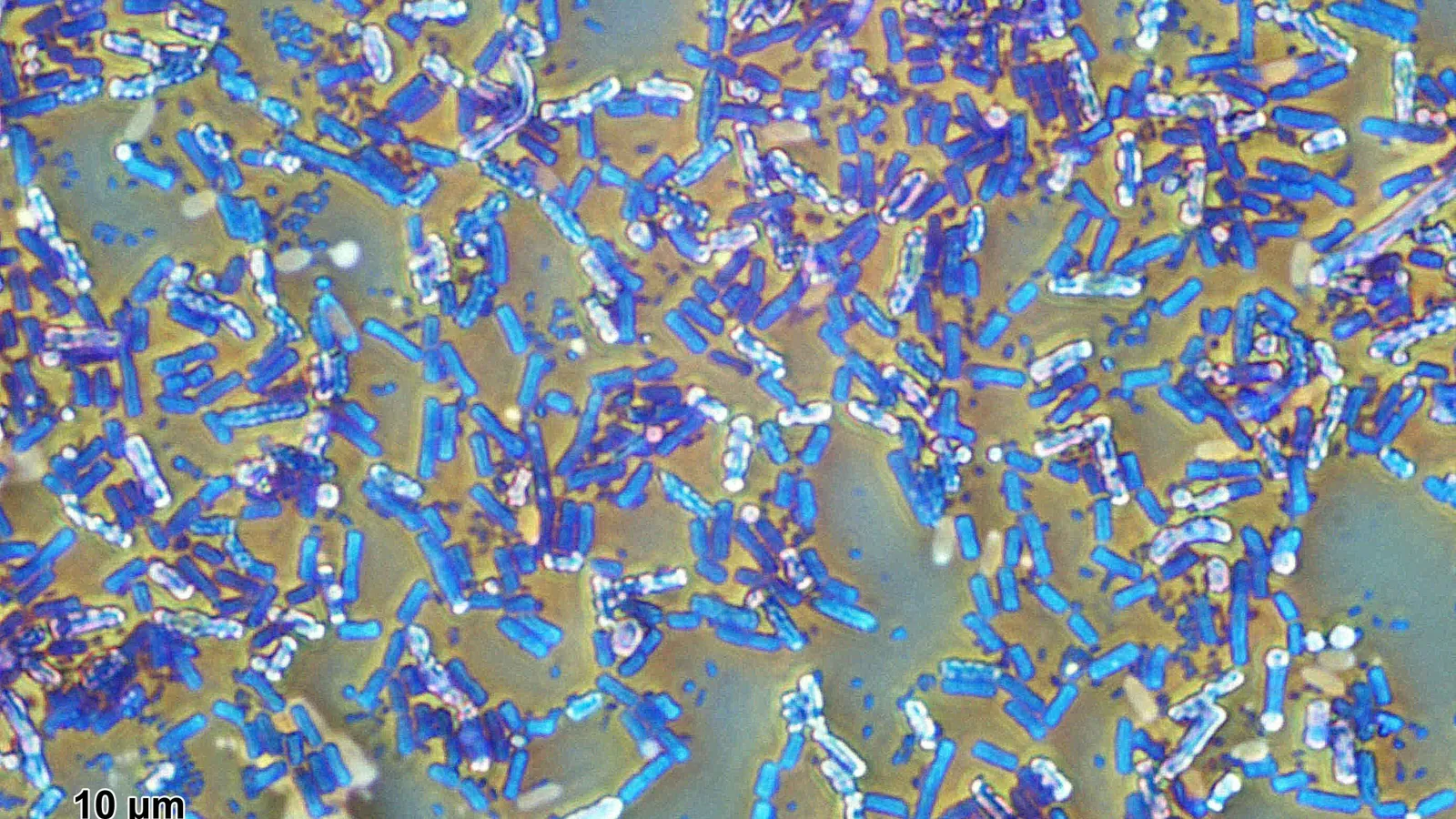
In 1876 the German botanist Ferdinand Cohn published an answer to a stubborn puzzle: why a boiled flask of hay broth could still turn cloudy with bacteria. His answer was the endospore, a dormant form made by *Bacillus subtilis* that survives boiling. That finding helps explain why hospitals sterilise with pressurised steam, not a pot on the stove.
How did Ferdinand Cohn discover bacterial endospores?
Cohn (1828 to 1898) was born in Breslau, now Wrocław in Poland, and worked at its university, according to EBSCO's research summary of his life. It says he set out to understand why some bacteria in hay infusions could withstand high temperatures.
Spores had been glimpsed before. A 2021 review in Microbial Cell by Riley and colleagues dates the first report to 1838, when Christian Gottfried Ehrenberg noted refractile bodies inside bacterial cells. What Cohn added was the link to survival: the review credits him with starting the study of spore resistance through his observation that *B. subtilis* spores survive periods of boiling.
He published the work in 1876 as "Untersuchungen über Bakterien IV" in the journal Beiträge zur Biologie der Pflanzen. The Riley review lists Robert Koch's anthrax study right after it in the same volume, and says Koch, working with Cohn, realised that spores and active cells are different forms of the same species. EBSCO records that Koch visited Breslau for three days to convince Cohn, who published Koch's paper in 1876. Read where that led in our post on Robert Koch's postulates for linking a germ to a disease.
Why did boiled broths still spoil?
Scientists had long argued over spontaneous generation, the idea that life could appear on its own in broth; see Lazzaro Spallanzani's boiled-broth experiments and Louis Pasteur's germ theory. If a boiled, sealed broth still went cloudy, either new life had arisen or something had survived the heat.
Cohn's spores pointed to the second. EBSCO notes that his discovery helped Pasteur, and later John Tyndall, back up the case against spontaneous generation.
Tyndall, working independently, turned the idea into a method. In an 1877 Royal Society paper, "On heat as a germinicide when discontinuously applied", he described heating in rounds, as summarised in the Riley review. Heat kills the active cells, surviving spores germinate during the pause, and the next round kills the new, fragile cells. The method is still called tyndallisation.
That definition follows OpenStax Microbiology.
Why can bacterial spores survive boiling?
A 2006 review by Peter Setlow explains that a spore's resistance to wet heat depends largely on the water content of its core, which is much lower than in a growing cell. The same review says small proteins bound to the spore's DNA protect it against several kinds of damage. Moist heat kills microorganisms by denaturing their enzymes and structural proteins, says the US CDC. Exactly how wet heat kills spores is still not clear, Setlow notes, though it is not through DNA damage.
What temperature is needed to kill bacterial spores?
The CDC's guideline on steam sterilisation gives the recognised minimum for wrapped healthcare supplies as 30 minutes at 121°C in a gravity displacement steriliser, or 4 minutes at 132°C in a prevacuum steriliser. Open boiling water at sea level stays at 100°C, so sterilisers use pressure; the CDC says pressure is how they reach the high temperatures needed to kill microbes quickly.
Sterilisers are tested with spores, not ordinary bacteria. The CDC defines the D-value as the time needed to cut a surviving population by 90%, and gives D-values of 1 to 2 minutes at 121°C for the test spores of *Geobacillus stearothermophilus*.
How many spores survive an autoclave run?
Use the CDC's numbers above.
Take the slow end of the range: D = 2 minutes at 121°C.
A 30-minute run is 30 ÷ 2 = 15 D-values.
Each D-value divides the survivors by 10, so 15 D-values divide them by 10^15.
Start with a million spores (10^6). Expected survivors: 10^6 ÷ 10^15 = 10^-9.
In plain words: about one surviving spore per billion such runs.
This simplified model shows why the toughest spores set the sterilising time.
How do you explain Cohn's discovery in an exam answer?
Show the chain of reasoning, not just the name:
Observation: some broths spoiled even after boiling.
Two explanations: new life arose (spontaneous generation), or something survived.
Evidence: Cohn found heat-resistant spores of *Bacillus subtilis*, published in 1876.
Consequence: sterilisation needs temperatures above 100°C (steam under pressure) or repeated heating (tyndallisation).
If one link feels shaky, such as why pressure raises the boiling point, the Fermi Concept Library has a lesson for every concept in biology, chemistry and physics. If microbiology feels like a pile of names, Fermi's AI tutor can work out what you already know and build a plan for the session.
Next time you see an autoclave in a lab or clinic, think of Cohn's hay broth: the extra pressure is there for the spores.


