

On this page
Michael Faraday had little formal schooling, yet James Clerk Maxwell wrote that Faraday's way of conceiving the phenomena "was also a mathematical one, though not exhibited in the conventional form of mathematical symbols" (Maxwell's preface, Wikisource). The idea at the centre of that thinking, the field line, is in every Class 12 electrostatics and magnetism chapter you will study.
Who was Faraday?
Faraday was born on 22 September 1791 in Newington Butts, south London, the son of a blacksmith (Royal Institution). He attended what he later called a "common day-school"; his "education was of the most ordinary description, consisting of little more than the rudiments of reading, writing and arithmetic" (Royal Institution blog on his notebooks). At 13 he started work as a newspaper and errand boy for George Riebau and soon became an apprentice bookbinder, a post the Royal Institution dates from 1805 to 1812 (Ri biography). He read the science books he was binding.
How did note-taking get him into science?
According to the Ri's account of his notebooks, from February 1810 to September 1811 he paid a shilling a time to attend 13 lectures by John Tatum, and wrote them up into four bound notebooks. Showing those notebooks led, in early 1812, to his attending the last four lectures given by Humphry Davy at the Royal Institution. Faraday wrote those up as a fifth book, which the Ri describes as the tool he used to meet Davy and, within several months, to be employed there.
His major discoveries, as the Ri biography lists them, include electromagnetic rotations (1821), benzene (1825) and electromagnetic induction (1831). On 29 August 1831 he succeeded with an iron ring wound with two coils, the device the Ri describes as the first transformer (Ri, Faraday's ring-coil apparatus).
What are lines of force?
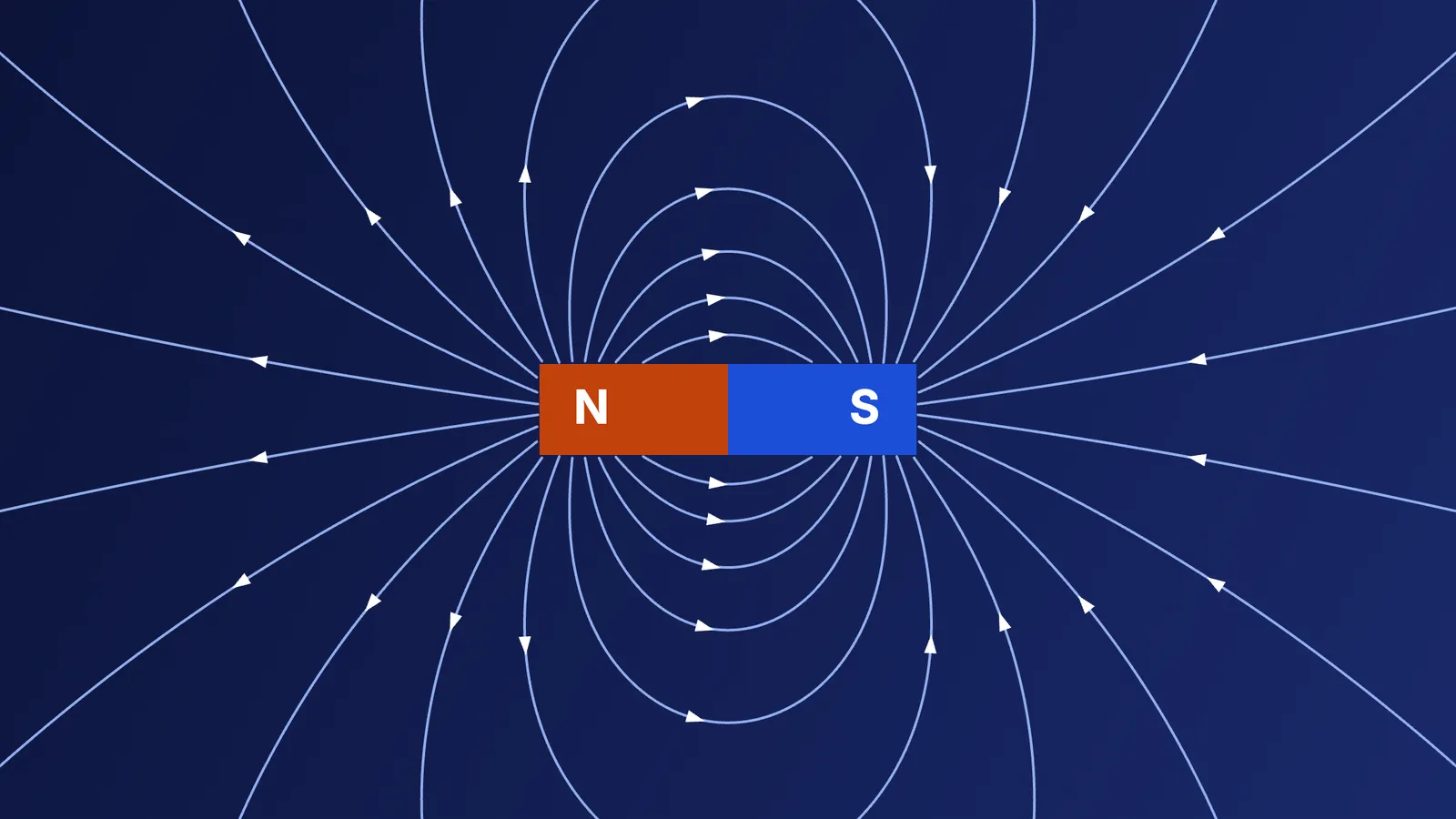
In a paper published in 1852 Faraday wrote that from his earliest experiments he had had to think of "lines of magnetic force as representations of the magnetic power; not merely in the points of quality and direction, but also in quantity." He defined a line of magnetic force as the line traced by a very small magnetic needle moved so that it is always a tangent to its path (Faraday, Philosophical Transactions, 1852). The Ri holds iron-filing diagrams he made in 1851 to show these lines (Ri biography).
Maxwell, in the preface to his *Treatise on Electricity and Magnetism* (dated 1873), described the contrast: "Faraday, in his mind's eye, saw lines of force traversing all space where the mathematicians saw centres of force attracting at a distance." When he translated Faraday's ideas into mathematics, Maxwell found that "in general the results of the two methods coincided" (Maxwell's preface, Wikisource). He also advised students to read Faraday's *Experimental Researches* for themselves.
How to read field lines without mistakes
The NCERT Class 12 physics book says the picture of field lines was "invented by Faraday" as an intuitive, non-mathematical way to picture fields, and lists their properties (NCERT Class 12 Physics, Chapter 1). Turn those into a checklist:
Direction: the tangent at any point gives the direction of the net field there; the arrow chooses between the two directions along the tangent.
Start and end: electric field lines start on positive charges and end on negative ones; with a single charge they may start or end at infinity.
Never crossing: two lines cannot cross, because the field at that point would have two directions.
No closed loops for electrostatic fields: this follows from the field being conservative. Magnetic field lines are different; check your magnetism chapter.
Crowding: where lines are closer together the field is stronger. NCERT shows that, for a point charge, counting lines through an area gives the 1/r² dependence.
Two common slips: reading a field line as the path a charge will follow (it gives the direction of force, not the trajectory), and forgetting that a flat drawing shows lines that really spread in three dimensions. Our guides to reading electric and magnetic field lines and common electrostatics mistakes go further.
Faraday the lecturer
Faraday also founded two lecture series at the Royal Institution that still run. The Ri says the CHRISTMAS LECTURES began in 1825 and that Faraday presented 19 series, the most by any one person, and that he gave *The Chemical History of a Candle* in 1860 after giving it twice before, in 1848 and 1854 (Ri history of the lectures). The Friday Evening Discourses, for adults, also began in the mid-1820s (Ri biography).
Faraday's own route into science, careful notes from public lectures, is open to anyone. If field lines are still hard to picture, the Fermi Simulation Lab has interactive simulations for ideas that are easier to see than to read. Sketch your prediction first, then check it.


