

On this page
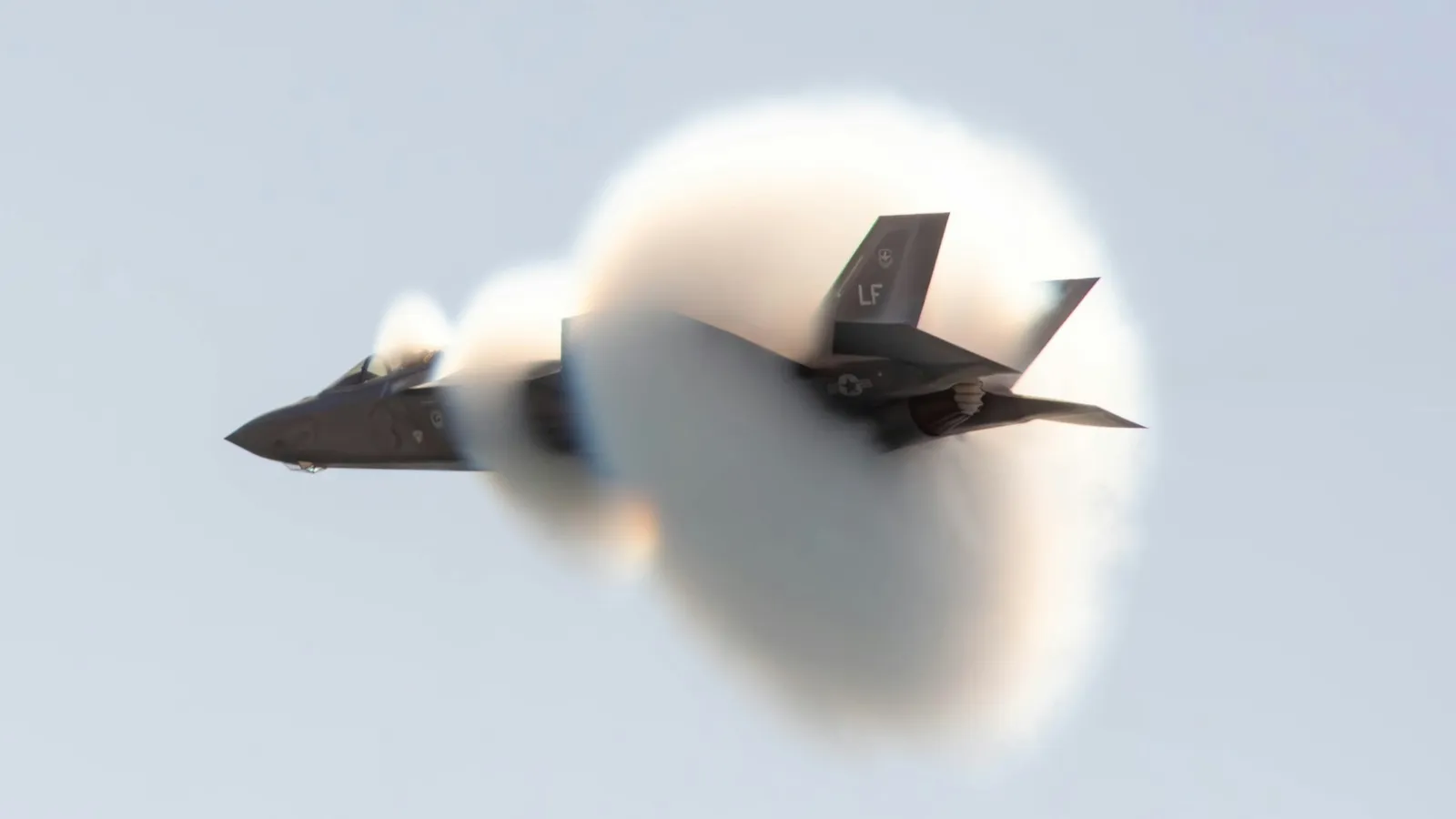
When a pilot says "Mach 2", they are using the name of a physicist who never flew. Ernst Mach made the invisible shock wave around a fast bullet visible on a photograph, and showed how its shape depends on speed. This post covers his life, the experiment, the geometry of the Mach cone with a worked sonic boom problem, and what students can learn from him.
Who was Ernst Mach?
The Stanford Encyclopedia of Philosophy records that he was born on 18 February 1838 in Chirlitz (Chrlice), now part of Brno in the Czech Republic. He entered the University of Vienna in 1855 to study physics and took his doctorate in 1860. After posts at Graz, he held the Chair of Experimental Physics at the University of Prague from 1867 to 1895, serving twice as rector.
In 1895 he moved to a chair in the history and philosophy of science in Vienna. A stroke in 1898 paralysed the right side of his body, and he retired in 1901, though he kept writing and doing experiments with his son Ludwig's help. He died on 19 February 1916 near Munich.
He was as much a philosopher as a physicist. His critique of Newton's ideas of absolute space influenced later debates about the foundations of physics. He also did research on the Doppler effect, on visual perception (the "Mach bands" you see at edges between shades), and on supersonic motion.
How did Mach photograph a shock wave?
The SEP entry describes how the work grew. In the 1870s, studying the sharp crack of electric sparks, Mach and his students found that the measured speeds of these pressure waves approached or exceeded the speed of sound. That moved him from treating them as ordinary sound to treating them as shock waves.
In the 1880s, with Peter Salcher, he used a schlieren apparatus, which makes differences in air density visible, together with photography. They captured the compressed-air cone at the nose of a flying projectile and interpreted it as a stationary shock linked to supersonic motion. Mach and Salcher introduced the term "head wave" and related the cone's geometry to the ratio of projectile speed to sound speed in 1887. The SEP notes that this work underlies terms such as Mach cone, Mach angle and Mach number.
What is the Mach number?
NASA's guide to the speed of sound defines the Mach number M as the ratio of an aircraft's speed to the speed of sound. Below M = 1 is subsonic; near 1 is transonic; 1 to 3 is supersonic; above 5 is hypersonic. The speed of sound depends on temperature, a = √(γRT), and NASA gives about 761 mph, roughly 340 m/s, for a standard day at sea level.
For M > 1, NASA's page on the Mach angle shows that the cone's half-angle μ obeys sin μ = a/v = 1/M.
Worked example: timing a sonic boom
Step 1, the bullet. A bullet flies at 680 m/s, and a = 340 m/s.
M = 680/340 = 2.
sin μ = 1/2, so μ = 30°.
Step 2, a jet. A jet flies level at the same speed, 680 m/s, at a height of 3000 m. When do you hear the boom after it passes directly overhead?
The cone trails behind the jet. It reaches you when the jet is a horizontal distance x past you, where tan μ = height/x.
x = 3000 / tan 30° = 3000 / 0.577 ≈ 5200 m.
Time for the jet to cover that: 5200 / 680 ≈ 7.6 s.
So you see the jet overhead and hear the boom about 7.6 s later, with the jet more than 5 km away. In real air the temperature changes with height, so the cone bends a little; this is the simple straight-line model.
Mistakes to avoid:
Using tan in the Mach angle formula. The cone angle uses sin μ = 1/M. The tan comes in only when you turn the angle into a distance on the ground.
Expecting a cone below Mach 1. If M < 1, 1/M > 1 and there is no angle. No shock cone forms.
Using the wrong speed of sound. It falls in colder air, so the same speed gives a higher Mach number at altitude.
For the sound-wave physics behind this, see our guide to the Doppler effect for sound. Mach also devised new experiments on the Doppler effect, the idea introduced by Christian Doppler. If the piling-up of wavefronts is hard to picture, the Fermi Simulation Lab has interactive simulations for ideas that are easier to see than read.
What can a student take from how he worked?
Make the invisible visible. A shock wave is just a change in air density, and the right optics turned it into a picture.
Change your interpretation when the numbers demand it. Waves faster than sound could not be ordinary sound.
Find the ratio that matters. One dimensionless number, speed over sound speed, sorted all the cases.
Keep asking what concepts mean. His questions about space and motion mattered as much as his photographs.
Try it: a jet at 3 km makes a Mach angle of 45°. What is its Mach number, and how long after it passes overhead do you hear the boom if a = 340 m/s?


